The Pro-Black Deception: Thoughts On Sudan (Part 1)

While most of the world focused on the atrocities happening in Gaza, despite the Sudan conflict predating it, I watched young Sudanese social media influencers struggle to gain their footing over the years. Most Americans had never even heard of Sudan unlike Palestine, which is understood to hold religious significance to even the most ignorant Americans. Israel is clearly the villain in Gaza and their crippling grip on U.S. politicians, media, business people, and intelligence agencies has been exposed. Unfortunately, the villains in the Sudan crisis were largely nameless and faceless until recently and it suffered the stigma of being “just another African conflict” that average Americans are helpless to solve.

Occasionally, misguided African American social media influencers would mention the Sudan (often in the same breath as the Congo) in a lame attempt to appear pro-black. While they rightly highlighted the racial dynamics with regards to international solidarity, they also effectively discouraged people from taking action on either of these causes, which I suspect is their mission.

I am a rare breed of African American Muslims who has lived in the Sudan for an extended period of time. Therefore, the Sudan crisis has been personal for me. I lived, learned, loved, and lamented in the Sudan for three years. Since, I published my memoirs from my sojourn, Thoughts From Sudan: An American Muslim Experience in 2022, I found it difficult to return to the words in my book. The years I spent in the Sudan from 2008 to 2011 seems so far removed from the current news I’ve been hearing about the Sudan, it might as well be Mars. But it’s not. And a friend of mine who has been trapped in Khartoum throughout the conflict has constantly reminded me that it’s the same Sudan. The problems I observed and wrote about in my memoirs are exactly the same problems we are seeing manifest on our social media feeds but the conflict is not as simple as we might think.

As someone raised in the ways of Black political consciousness, Afrocentrism, and African American Islam, I was able to make some pertinent observations in my book. And as someone who had acquired a level of proficiency in Arabic, I was able to interpret and articulate aspects of Sudanese culture and society in a way that is digestible to Black American audiences. I say this not to make some grandiose claim to authority, but to distinguish myself from the myriad of chatter from misinformed African Americans who have spoken publicly about the crisis in the Sudan. In this post and its follow-up, I will address some of the misinformation regarding Sudan emanating from the Black American community.

The Pro-Black Deception

When the Umar Johnson types make benign statements like “why doesn’t anyone talk about Sudan?” rarely is it followed up with a proper background and analysis of the situation. They are content to mic drop and high five each other for championing some sort of redneck-in-black-face sentiment, while leaving their ignorant followers in the dark about what is actually happening in the Sudan and Congo. Such disingenuous mumbo jumbo should not be taken seriously. They offer no information and no solutions; not even the innocuous “thoughts and prayers.” Additionally, some ill-informed Afrocentric historians, whose latest update on Sudan pertains to events that happened a thousand years ago, have popped up on the web to appear relevant and promote their inaccurate views of history. It is better for such people to remain silent, because their reactionary diatribes are counterproductive.

Until now, I have deferred to the international Sudanese diaspora to educate the public and advocate for their own solutions in public. The most notable analysis on the Sudan has come from journalist Ahmad Kaballo of the pan-African media organization Africa Stream, now “de-platformed.” I would also recommend the work of UK-based journalist Nesrine Malik. The strategy of most Sudanese youth in the West has been to target the government of the United Arab Emirates (UAE) for their support of the Rapid Support Forces (RSF) who have been responsible for the genocidal killings in Darfur and Kordofan that we have been witnessing lately.

The RSF, who were better known as the Janjaweed (Horseback Jinns) in the early 2000s, were also the so-called Arab militia the deposed president Omar Bashir used to subdue dissent in the Dar Fur region. The Arab identity of some RSF members has caused some race-conscious African Americans to conclude that the conflict is a concerted Arab genocide against Africans in the Sudan. They often conflate the Dar Fur conflict with the north’s dissension with South Sudan but interestingly they had nothing to say when South Sudan was suffering from its own civil war following their succession. In both situations, the main issue was not Arab vs. African or Muslim vs. non-Muslim and seeing it this way only obscures the real problems. In fact, the RSF brands themselves as being anti-Islamist, accusing the Sudan Armed Forces (SAF) as being led by the Muslim Brotherhood. I caution African Americans from approaching issues in Sudan and elsewhere through an Americanized lens that sees race as the only motivating factor in conflict between people, especially when they do not know what they are talking about.

Race & Ethnicity in Sudan

Sudan is an African country populated by African people. However, like many places in Africa, it is made up of a diverse conglomerate of people who, prior to European colonialism, never saw themselves as one people. They spoke different languages and had different ancestral lineages. They did not always get along with each other but there was some coexistence in the absence of firearms. There were many kingdoms and civilizations that persisted for hundreds of years, even beyond the well-known ancient civilizations of Kush and Nubia.

African Americans are sensitive to words that signify racial division: African, Arab, slavery, invasion, etc. However, understanding them only according to American and European sensibilities will not yield an accurate understanding of Sudanese ethnic conflicts. It was Africans’ contact with Europeans that made them one nation-state and one continent. In order for us to truly understand Africa, the African people, and their current events, we must understand them as they are and not as we imagine them to be.

Many associate north Sudan with Arabs, but the country covers a wide swathe of land consisting of many different ethnic groups. Sudan consists of the Red Sea Hills in the east, the Nile Valley, and the highlands in the west, which include the Nuba mountains and Dar Fur. The east consists of non-Arab Hamitic people like the Beja. The Nile Valley consists of the various Nubian tribes some of whom are the main propagators of Arabization in Sudan. In the west are Fur people and the other Nuba (who are considered African and distantly related to the Nubians of the Nile Valley). The Fur people are more closely related to the people of Chad and West Africa, but some consider themselves Arab. There are also states like Maiurno and Sennār that have significant Hausa and Fulbe speaking populations and Gaḍārif, and Kasala with large Tigray and Tigrinya speaking populations. Almost all of them are Muslims.
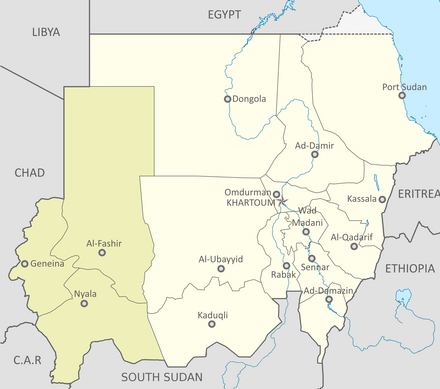
All Sudanese are Africans, but some of them also identify as Arabs. Arab identity is contested and debated among the Sudanese themselves. Arabness is defined as speaking Arabic as one’s first language and the absence of a raṭānah (an epithet for local African languages). There are real and imagined Arab identities in the Sudan. Some like the Rashāyidah only migrated within the borders of Sudan in the 19th century, while others like the Juhaynah and the Rufāʿah started to migrate there as early as the 15th century. While these groups are by necessity minorities in the Sudan, we can say that the primary ethnic group in North Sudan is Nubian. Among them there are families and sub-clans who intermarried with Arabs. Most Arabized Nubians trace their Arab ancestry to Ibrāhīm Jaʿal, who is said to be a descendant of the Prophet Muhammad’s uncle al-ʿAbbās. (Holt, 2011, p. 4) Hence, the name of one of the most powerful ethnic groups in the Sudan, the Jaʿalīyyah, to which former president Omar Bashir belongs.

While slavery had been practiced by the indigenous African populations in the Sudan, which included the Nubians the descendants of Kush, the Ottoman Turks (Central Asians/East Europeans) sought to acquire enslaved people for their armies under Muhammad ʿAli Pasha as his previous Albanian (Eastern European) servicemen were insubordinate. Since the Turks ruled Egypt, and the British eventually ruled the Turks, they sought incursions into current-day Sudan for economic and political reasons. The Sudanese saw all European-looking people as Turks (Khawājah), whether they were British or Albanian.(Holt, 2011, pp. 35-37)

Under the British-run Anglo-Egyptian Condominium (1899–1955), the English sought to exacerbate the tensions between the north and south by allowing missionaries to spread Christianity in the south in a way that fomented hatred against Muslims and Arabs.(Mahdi, 1965, p. 150) In the meanwhile, the north formed its own prejudices against the South. In post-independent Sudan, doctrines of Islamism, Arabism, and anti-African sentiment began to spread in the north culminating with Omar Bashir and the Muslim Brotherhood taking power in a 1989 coup. Contrary to popular belief, Jaʿfar Nimeiri, an initially socialist and Pan-Arab leaning president, imposed so-called “sharīʿah law” on all Sudanese in 1983, north and south, six years before Bashir took power.(Holt, 2011, p. 134)

Conclusion

In summary, the current conflict in Sudan is not Arab vs. African or Muslim vs. non-Muslim. Furthermore, we should not reduce Sudanese ethnicity to a simple Arab vs. African dichotomy. This erases the Sudanese people’s agency in defining themselves, which will not match pervading American concepts of race, which most Americans find difficult to let go. We as conscious Black Americans should avoid projecting our racial constructs onto other societies. The situation in Sudan is bad enough without mucking it up with lies and personal agendas.

I do not deny that the fighting and killing happening in the Sudan is a political conflict with ethnic components. Yet, if we only look at the ethnic components, we will not see the problem in its entirety. And if we only look at the political aspects, we will not fully see the real problems. We must look at the full picture of what is happening in Africa and the world to reach viable solutions. In my next post, I will discuss Sudanese politics, the African gold rush, and the complex web of actors fueling this conflict.

References

Holt, P. M. (2011). A History of the Sudan: From the Coming of Islam to the Present Day (6th ed.). Routledge Taylor & Francis Group.

Mahdi, M. E. (1965). A short history of the Sudan. Oxford University Press.

Nationalism in the Nile: Egyptians, Afrocentrism, and Kevin Hart

A small faction of Egyptian neo-nationalists on social media has announced that the wholesome American comedian, Kevin Hart, is not welcome in Egypt leading up to his February 21, 2023 performance in the country. Behind this supposed “viral” campaign is a small cadre of under-educated Egyptians who have recently learned of something called Afrocentrism. In turn, they have erroneously made him the symbol of Afrocentrism due to some internet pictures of him dressed as an ancient Egyptian and some vague statements he made. A few people have brought this controversy to my attention and sought my opinion on it as someone who has bridged the gap between Afrocentricity and the Arab world in the past. As perhaps my final post from the city of Cairo, I will address this controversy and offer a voice of reason on the topic that I hope all interested parties can benefit from.

The Egyptian Neo-Nationalists Behind the Posts

The people behind the hashtags and the posts reflect a misplaced Egyptian nationalistic sentiment that only directs their energy at topics of no consequence for their country. They offer no solutions to class disparities, education, or discrimination within Egyptian society but they seem adamant that confronting Afrocentrism and banning African Americans will solve their problems. These neo-nationalists reject the fact that many of the ancient Egyptians were dark skinned; which can be considered a central tenant of Afrocentric thought. Furthermore, they might have encountered a hostile Hotep who might have spewed some rhetoric about taking back their ancestral homeland of Egypt in one of their vitriolic rants. But does this really warrant a protest movement? And what does it have to do with Kevin Hart?

Ahmad Youness

On December 13, he posted a video speaking out against the upcoming Kevin Hart show and Afrocentrism in general. He claims that the Egyptians of today are the Egyptians of the ancient past and he encouraged Egyptians to not tolerate the appropriation of their history by anyone, especially not “Africans.” Ahmad Youness is a 40-something year old radio personality who has been in the business since 2003. He is known for telling horror stories on the Radio 9090 station. According to his Wikipedia page, has a “license” (a low-level degree) in the English language but not much more of an educational background beyond that.

In one video, he states what could be translated as the following:

This is Ahmad Youness with you, an Egyptian media personality. Recently we heard about a show that will be held by the African actor, Kevin Hart. It should be a comedy show, but I don’t really see anything funny about it. The only funny thing about it is that there are people within Egypt who invited him and there is an Egyptian company that supports and organizes it…

This guy called Kevin Hart is one of the supporters of Afrocentrism. Afrocentrism, if you don’t know, is a movement that says that the ancient Egyptian civilization is not ours but it belongs to Africans and that we stole it. It has since then been falsely attributed to us and that they will take it back one way or another. They have a lot of supporters within and outside their ranks as well. There are also those who secretly support them. You might think that the idea is not widespread but it is very popular. The topic of Afrocentrism is one that has been discussed at length and there are big names that support it.

He shouldn’t come here to Egypt and we shouldn’t welcome him. He is not here. He is not welcome here. And he will not enter Egypt!

Of course, there are many things wrong with his diatribe. Kevin Hart is not an African actor but an American actor who happens to be African American. Racist Arabs often drop the American aspect of an African American’s identity to demean them. This was done to Barack Obama often in the Arab media throughout his presidency. While Kevin Hart might believe how most African Americans (and probably most non-Black Americans) believe, that the ancient Egyptians were Black Africans or dark skinned people, but he is not the poster boy for Afrocentrism by any means. In the US, Kevin Hart has a reputation as a wholesome comedian who is funny but not as edgy or raunchy as other well-known comedians such as Dave Chappelle or Chris Rock. His opposition to Kevin Hart amounts to nothing but a safe target of his campaign. Ahmad Youness is a labeling Kevin Hart with a term that he never claimed in the first place. And he is accusing him of something so minute that Hart probably has no clear recollection of.

Egyptian History Defenders

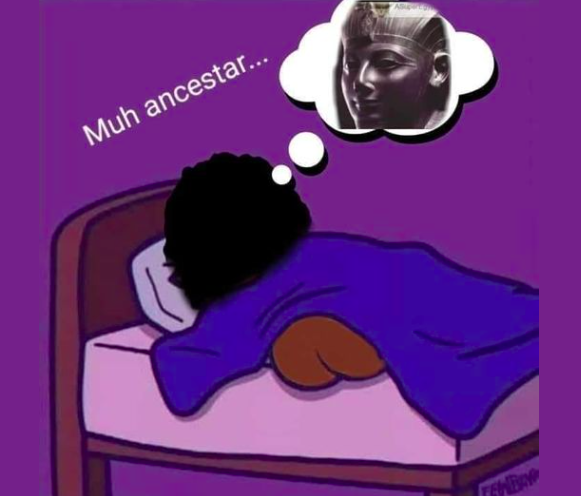
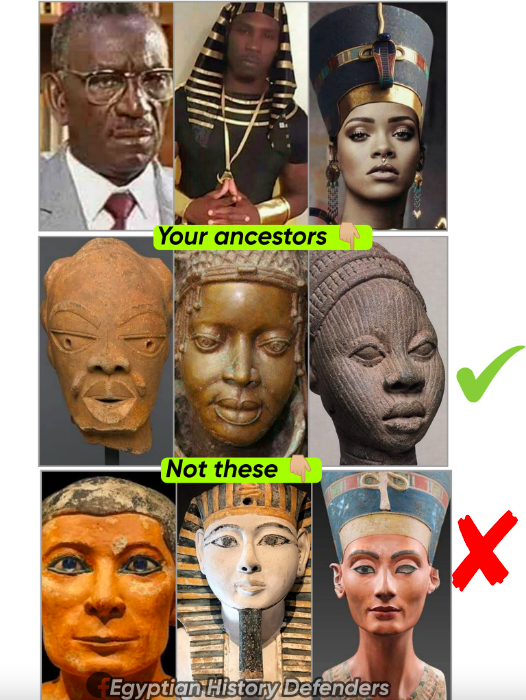
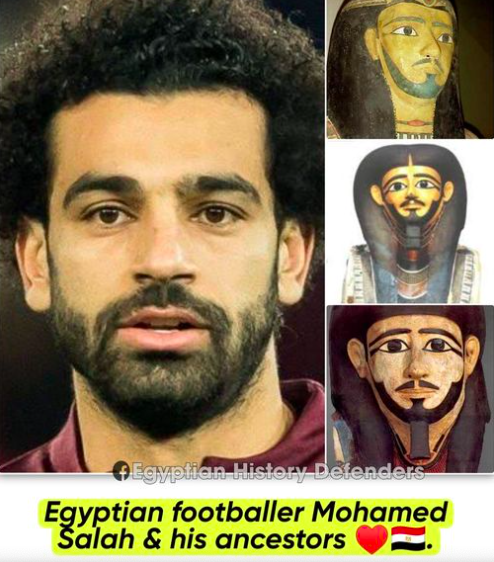
Another front in the campaign against Kevin Hart is the social media handle Egyptian History Defenders. Their social media accounts are full of anti-African American memes concerning their so-called appropriation of Egyptian history. These memes are directed at Afrocentric claims that Black people are at the root of Egyptian civilization. However, it is clear that they cannot differentiate between an Afrocentrist and an African American. Indeed, probably most African Americans believe that the ancient Egyptians were Black, but that does not make them Afrocentrists. This group probably only heard of the term Afrocentrism without researching it, then began to label everything that resembles it by that term. In truth, Afrocentrism is a scholarly approach stemming from the Black Studies movement that began to take shape in the mid-20th century. At its core, it intends to center the perspectives and experiences of Africans on the continent (Egyptians included) and throughout the diaspora in various fields of study starting with history. Molefi Asante, perhaps the most vocal proponent of the term who has since disavowed the concept, rejected the use of Afrocentrism as a response to Eurocentrism. Rather, he used the term Afrocentricity to denote a proactive cultural movement among Africans that shapes the adherent’s paradigm on various areas of human interest. The neo-nationalists have instead reduced Afrocentrism to a mere musing on the ancestors.

Interestingly enough, these Egyptian neo-nationalists in their anti-intellectualism have slipped into the same methodological fallacy as some Afrocentrists. Just as Afrocentrists juxtapose paintings and sculptures from ancient civilizations to pictures of contemporary African Americans to show that these ancient people would be classified as Black by present American standards, they too have taken to juxtaposing pictures of ancient Egyptians to show that they would be classified as Egyptians by today’s standards. While interesting to look at, this is not proof of descent, not for African Americans and not for current-day Egyptians.

On both sides, we should acknowledge that many changes have taken place on earth since the ancient days. While it is obvious that the original Egyptians were Black as we know it today that does not exclude any other people from greatness. Many of those dark skinned people continue to live in the region where you find most of the ancient Egyptian monuments in Luxor and Aswan along with many other Ṣaʿāyada (people of Upper Egypt), who all Egyptians identify as sumr (dark skinned). Why neo-nationalist Egyptians ignore them is indicative of their racism and colonial mindset. They are blinded by the metropolitan north which is dominated by descendants of Central Asians, Greeks, Anatolians, Circassians, and other people of European descent including the French and Germans, that they don’t even realize the dark skinned people that dominate the south of the country where the markers of ancient Egyptian civilization are found. But most Egyptians care nothing about ancient Egypt until foreigners show an interest in it.

No Protests Against European Egyptologists

Why don’t Egyptian neo-nationalists oppose European Egyptologists? They have done more damage than Afrocentrists ever have. In fact, Afrocentrists pose no threat to Egyptian society despite their fiery rhetoric. Yet, white Americans and Europeans are the only groups who have a proven track record of attacking Egypt and distorting its historical narrative under the guise of research. Not only did the French and British colonize Egypt, and the U.S. continues to influence its politics, but they stole artifacts, introduced the question of the ancient Egyptians’ race, and interfered in Egyptian politics, society, and media. Not only that, but it was the West who took the civilization away from Egypt and labeled it “world heritage,” effectively handing their history and artifacts over to the “world,” which just happens to be located in Western countries.

The debate over the race of the ancient Egyptians was started by European orientalists, who founded the field of Egyptology with the intention of barring indigenous scholarship and participation in it. But there are no hashtags and strong words from media personalities for them. The “red line” they draw supposedly at the tampering with Egyptian history is only for the imaginary threat of Black Americans and not the real threat of White Westerners. The neo-nationalist Egyptians should thank Africans and African Americans trained in the West like Carter G. Woodson, Cheikh Anta Diop, George G.M. James, Ivan van Sertima, and John Henrik Clarke among others, who loosened the grip of White colonialists on the narrative of ancient Egypt. In addition, it was the movie Black Panther that sparked the recent sentiment of returning antiquities to their countries of origin. This is an Afrocentric sentiment that Egyptians are tangibly benefiting from. If ancient Egypt is indeed world heritage, then scholars of all backgrounds with the interest and necessary qualifications should be able to contribute to the scholarship of that heritage.

Concluding Thoughts

One of the major accomplishments of the Afrocentric movement was that they dispelled the myth of colonizing European Egyptologists who spread the lie that the ancient Egyptians were “white” like them. I don’t know a single African American or other ethnicity from America for that fact who does not believe that the ancient Egyptians were dark skinned African people. Does Ahmad Youness and his cadre seek to disinvite all foreigners who hold these views regardless of race? Or is this ban exclusively for African Americans? I have lived in Egypt six years and met Egyptians who believe that the ancient Egyptians were Black Africans as well. Do they also think those Egyptians should be expelled? If so, when does the madness end?

Plus, who gave these people the authority to say who is and is not welcome in Egypt? They are not government officials or even intellectuals. They do not speak for the majority of Egyptians who have no idea what Afrocentrism is and more than likely do not care. Kevin Hart’s coming to Egypt would stimulate a depressed economy, which is suffering greatly now. It will also bring joy to a depressed people. Who are these protesters who care nothing about the poor condition of their country and their people? Tourists of all types, including African Americans, stimulate the Egyptian economy every year by taking tours throughout the country. What these protesters want to do effectively is deprive their country of this essential income for their economy. What did not make the headlines was the cancellation of the annual Afrocentric conference that takes place in Luxor. We can presume that it was at the behest of the same neo-nationalists. Baba James Small alerted me to this earlier in the year and I thought it was a bit uncharacteristic of the Egyptian tourist industry, which jumps at just about any and every opportunity to make a dollar. It is clear that Afrocentrism has benefited Egyptians financially and intellectually, more than it has harmed them. If only its detractors would research the matter more seriously.

What I see as vital to resolving the issues between my Afrocentric and Egyptian brethren is opening the lines of communication and the venues for dialogue. From my readings of contemporary Egyptian scholars like Okasha El Daly and Nadim al-Sayyar, as well as classical Arabic scholarship on ancient Egypt, I feel like the two sides have more in common than they might think. Currently, the exchange is almost all hostile and emotionally charged based on their own cultural sensitivities. But if a few level heads came together to discuss things on an intellectual level I am sure we will learn a lot from each other. If there is anyone out there interested in such an exchange please let me know. Until then, enjoy the Kevin Hart show.