The images of horrific killings and explosive clashes currently shattering El Fashir and Kordofan are not simply the sights of a localized power struggle between two warring Sudanese military factions, they are the visual symptoms of a new global African Gold Rush. There are ideological or ethnic divides, but the big picture shows the usual suspects of multinational corporations and imperialist interests meddling behind the scenes. Sudan is but one site in the a multi-billion-dollar, transnational exploitation collage where natural resources are being siphoned off to power Big Tech and provide an insurance policy against the looming instability of Western currencies. In this post, I will discuss some of the actors driving the war in Sudan and their interests and how we in the US are complicit in it.
Actors and Interests
Two men stand at the center of the Sudanese conflict: General Abdul Fattāḥ al-Burhān of the Sudanese Armed Forces (SAF) and Muḥammad Ḥamdān “Hemedti” Dagalo of the Rapid Support Forces (RSF). Once friends, and fellow war criminals, the two men previously served as henchmen for former president ʿUmar al-Bashīr. Hemedti was a leader within the mercenary forces known as the Janjaweed, who in addition to massacring hundreds of thousands of Darfurians, also fought against the people of Yemen and Libya.(Booty et al., 2025) Hemedti also became rich by controlling several gold mines in Darfur. While the two men were able to share in the overthrow of Bashīr, they were not able to share in their mutual avarice for power. Despite the people’s ardent rejection of military rule, the two men decided that their personal interests were more important than the will of the people. So they dragged the countrymen into a prolonged war to decide who will be the next leader of the Republic of Sudan.
In the words of Donald Trump, Sudan is just another sh•thole African country. So why would these two men fight over power in a country that has nothing? Again, the gullible American people have been lied to. Not only are states like Sudan, Niger, and Congo rich in minerals, they serve as the backbone of many American and European economies. Without them, the West would be full of… well… sh*thole countries.
This is the dark side of globalization that we used to hear about some 30 odd years ago. Every year, as much as $35 billion worth of gold produced by artisanal and small-scale mining (ASM) in Africa goes undeclared and is smuggled out. Between 80% and 85% of this illicit gold finds its way to the United Arab Emirates (UAE), which acts as a “golden gateway” of ill-gotten gold to the so-called legitimate world. (Soguel and Turuban, 2024) Apparently, owning gold mines is the secret to funding a paramilitary group which can operate beyond the reach of the local state, while avoiding being kidnapped in the darkness of night or bombed to smithereens by some of the world’s largest militaries. The money from this illicit trade could go to the Sudanese people to fund essential services like roads, health, and education. Instead, it is being used to beef up a murderous regime that seeks to establish their own state in Western Sudan at the very least.
The Rush for Sudan
The Republic of Sudan sits on several reserves of natural resources in addition to gold and oil like chromium ore, iron ore, uranium, and manganese.(naturalresourceinfo, 2025) Sudan is also home to much arable land around the Nile, at least 180,000 hectares of it is already used to feed oil-rich Gulf nations.(Guo, 2025) Anyone who rules over such a resource rich terrain will be rolling in the dough no doubt. However, the two contenders must first overcome a comparable antagonistic military from within Sudan. Secondly, they must deal with the interests of the international community, not the least of which are the US and Russia with two polar opposite interests, as well as the UAE, Egypt, Ethiopia, Iran, among others. Thirdly, they must deal with an impoverished, traumatized, dispersed, and revolution-thirsty citizenry who have mentally checked out of capitalist military dictator rule. Finally, they must come to terms with a new global reality and decide which side they will fall on. They can either join the ranks of the Sahelian Alliance and BRICS who will manage their resources on their own terms or remain in the old neo-colonial order.
The demand for African resources is driven by Western greed for industrial gold, a critical component in the medical, electronics, automotive, and aerospace industries. Our smartphones, EV cars, and server farms (the backbone of Big Tech) come from unregulated streams of African resources. A destabilized Sudan comes just in a nick of time as the Sahelian Alliance nationalize their resources and wrangle themselves free from French and American neo-colonialism and as more countries see BRICS as a way out. Seeing that some nations are waking up, the West (primarily the US and Israel) is scrambling to weaken and divide unwitting nations to doubly exploit. Among them are the Sudan and Congo, but are soon to include the recently invaded Venezuela and other countries on their hit list.
Beyond manufacturing, gold serves as the ultimate insurance policy against the inevitable collapse of the US dollar. This collapse results from over a century and running of senseless wars, corporate bailouts, and overall mismanagement of the US economy by the American status quo. Matthew Miller, vice president of the CFRA financial research firm, stated:
…this debasement of the U.S. dollar is the biggest reason why central banks continue to demand gold at a high level, despite really gold prices continuing to go up. Central banks are big buyers.(“How Illegally Smuggled Gold Is Fueling The U.S. Gold Boom”, 2025)
Sudan’s crisis is a Westerner’s convenience. By allowing this gold to enter the global market as refined, “legal” bars in Dubai, which then exports gold to Switzerland (the world’s top gold exporter), the UK, US, and Hong Kong, we choose to ignore that it was mined amidst genocide and ethnic cleansing. As long as the global high-tech and financial sectors require these materials to safeguard their own futures, the incentive to prolong the conflict in Sudan will continue.
Conclusion
In the 16th century, the Portuguese sought African gold and slaves to solve their domestic “bullion famine” and finance their presence in the world market.(Solow, 1993) Today, foreign interests deepen the Sudanese crisis by supplying weapons to ensure their continued access to these resources. This cycle of violence and extraction sacrifices the lives, sovereignty, and well-being of African for the prosperity of the global capitalist class.
The modern scramble for empire is like a screen time addicted child desperately looking for a charger. If we are not aware of global supply chains and if we do not hold guilty parties accountable for their smuggling and convenient oversights, luxuries will continue to come at the expense of African lives as we watch their massacres on devices made from the materials they dug up. The tragedy of the war in Sudan is not that the world has forgotten it, but that the world is actively, and profitably, ignorant of it. For the Sudanese, the price is of genocidal proportions; more than 150,000 people have died and 12 million have been displaced. While diplomats and corporations remain silent and social and traditional media misinform, the mines remain open and the minds remain closed. In the meanwhile, criminals continue to carry their heavy, golden cargo to Dubai, Switzerland and beyond.
References
Booty, Natasha, Farouk Chothia, and Wedaeli Chibelushi. “Sudan War: A Simple Guide to What Is Happening.” Africa. BBC News, November 13, 2025. https://www.bbc.com/news/articles/cjel2nn22z9o.
Pettitt, Jeniece, dir. How Illegally Smuggled Gold Is Fueling The U.S. Gold Boom. Produced by Comfort Woode. With Zinhle Essamuah. CNBC, January 16, 2025. 10:57. https://www.youtube.com/watch?v=3YWEy0ijeuo.
While most of the world focused on the atrocities happening in Gaza, despite the Sudan conflict predating it, I watched young Sudanese social media influencers struggle to gain their footing over the years. Most Americans had never even heard of Sudan unlike Palestine, which is understood to hold religious significance to even the most ignorant Americans. Israel is clearly the villain in Gaza and their crippling grip on U.S. politicians, media, business people, and intelligence agencies has been exposed. Unfortunately, the villains in the Sudan crisis were largely nameless and faceless until recently and it suffered the stigma of being “just another African conflict” that average Americans are helpless to solve.
Occasionally, misguided African American social media influencers would mention the Sudan (often in the same breath as the Congo) in a lame attempt to appear pro-black. While they rightly highlighted the racial dynamics with regards to international solidarity, they also effectively discouraged people from taking action on either of these causes, which I suspect is their mission.
I am a rare breed of African American Muslims who has lived in the Sudan for an extended period of time. Therefore, the Sudan crisis has been personal for me. I lived, learned, loved, and lamented in the Sudan for three years. Since, I published my memoirs from my sojourn, Thoughts From Sudan: An American Muslim Experience in 2022, I found it difficult to return to the words in my book. The years I spent in the Sudan from 2008 to 2011 seems so far removed from the current news I’ve been hearing about the Sudan, it might as well be Mars. But it’s not. And a friend of mine who has been trapped in Khartoum throughout the conflict has constantly reminded me that it’s the same Sudan. The problems I observed and wrote about in my memoirs are exactly the same problems we are seeing manifest on our social media feeds but the conflict is not as simple as we might think.
As someone raised in the ways of Black political consciousness, Afrocentrism, and African American Islam, I was able to make some pertinent observations in my book. And as someone who had acquired a level of proficiency in Arabic, I was able to interpret and articulate aspects of Sudanese culture and society in a way that is digestible to Black American audiences. I say this not to make some grandiose claim to authority, but to distinguish myself from the myriad of chatter from misinformed African Americans who have spoken publicly about the crisis in the Sudan. In this post and its follow-up, I will address some of the misinformation regarding Sudan emanating from the Black American community.
Standing in front of Africa University’s Language Insitute (Khartoum 2008)
Hanging out on the grounds of Africa University
Studying at the Language Institute
The Pro-Black Deception
When the Umar Johnson types make benign statements like “why doesn’t anyone talk about Sudan?” rarely is it followed up with a proper background and analysis of the situation. They are content to mic drop and high five each other for championing some sort of redneck-in-black-face sentiment, while leaving their ignorant followers in the dark about what is actually happening in the Sudan and Congo. Such disingenuous mumbo jumbo should not be taken seriously. They offer no information and no solutions; not even the innocuous “thoughts and prayers.” Additionally, some ill-informed Afrocentric historians, whose latest update on Sudan pertains to events that happened a thousand years ago, have popped up on the web to appear relevant and promote their inaccurate views of history. It is better for such people to remain silent, because their reactionary diatribes are counterproductive.
Until now, I have deferred to the international Sudanese diaspora to educate the public and advocate for their own solutions in public. The most notable analysis on the Sudan has come from journalist Ahmad Kaballo of the pan-African media organization Africa Stream, now “de-platformed.” I would also recommend the work of UK-based journalist Nesrine Malik. The strategy of most Sudanese youth in the West has been to target the government of the United Arab Emirates (UAE) for their support of the Rapid Support Forces (RSF) who have been responsible for the genocidal killings in Darfur and Kordofan that we have been witnessing lately.
The RSF, who were better known as the Janjaweed (Horseback Jinns) in the early 2000s, were also the so-called Arab militia the deposed president Omar Bashir used to subdue dissent in the Dar Fur region. The Arab identity of some RSF members has caused some race-conscious African Americans to conclude that the conflict is a concerted Arab genocide against Africans in the Sudan. They often conflate the Dar Fur conflict with the north’s dissension with South Sudan but interestingly they had nothing to say when South Sudan was suffering from its own civil war following their succession. In both situations, the main issue was not Arab vs. African or Muslim vs. non-Muslim and seeing it this way only obscures the real problems. In fact, the RSF brands themselves as being anti-Islamist, accusing the Sudan Armed Forces (SAF) as being led by the Muslim Brotherhood. I caution African Americans from approaching issues in Sudan and elsewhere through an Americanized lens that sees race as the only motivating factor in conflict between people, especially when they do not know what they are talking about.
Race & Ethnicity in Sudan
Sudan is an African country populated by African people. However, like many places in Africa, it is made up of a diverse conglomerate of people who, prior to European colonialism, never saw themselves as one people. They spoke different languages and had different ancestral lineages. They did not always get along with each other but there was some coexistence in the absence of firearms. There were many kingdoms and civilizations that persisted for hundreds of years, even beyond the well-known ancient civilizations of Kush and Nubia.
African Americans are sensitive to words that signify racial division: African, Arab, slavery, invasion, etc. However, understanding them only according to American and European sensibilities will not yield an accurate understanding of Sudanese ethnic conflicts. It was Africans’ contact with Europeans that made them one nation-state and one continent. In order for us to truly understand Africa, the African people, and their current events, we must understand them as they are and not as we imagine them to be.
Many associate north Sudan with Arabs, but the country covers a wide swathe of land consisting of many different ethnic groups. Sudan consists of the Red Sea Hills in the east, the Nile Valley, and the highlands in the west, which include the Nuba mountains and Dar Fur. The east consists of non-Arab Hamitic people like the Beja. The Nile Valley consists of the various Nubian tribes some of whom are the main propagators of Arabization in Sudan. In the west are Fur people and the other Nuba (who are considered African and distantly related to the Nubians of the Nile Valley). The Fur people are more closely related to the people of Chad and West Africa, but some consider themselves Arab. There are also states like Maiurno and Sennār that have significant Hausa and Fulbe speaking populations and Gaḍārif, and Kasala with large Tigray and Tigrinya speaking populations. Almost all of them are Muslims.
All Sudanese are Africans, but some of them also identify as Arabs. Arab identity is contested and debated among the Sudanese themselves. Arabness is defined as speaking Arabic as one’s first language and the absence of a raṭānah (an epithet for local African languages). There are real and imagined Arab identities in the Sudan. Some like the Rashāyidah only migrated within the borders of Sudan in the 19th century, while others like the Juhaynah and the Rufāʿah started to migrate there as early as the 15th century. While these groups are by necessity minorities in the Sudan, we can say that the primary ethnic group in North Sudan is Nubian. Among them there are families and sub-clans who intermarried with Arabs. Most Arabized Nubians trace their Arab ancestry to Ibrāhīm Jaʿal, who is said to be a descendant of the Prophet Muhammad’s uncle al-ʿAbbās. (Holt, 2011, p. 4) Hence, the name of one of the most powerful ethnic groups in the Sudan, the Jaʿalīyyah, to which former president Omar Bashir belongs.
While slavery had been practiced by the indigenous African populations in the Sudan, which included the Nubians the descendants of Kush, the Ottoman Turks (Central Asians/East Europeans) sought to acquire enslaved people for their armies under Muhammad ʿAli Pasha as his previous Albanian (Eastern European) servicemen were insubordinate. Since the Turks ruled Egypt, and the British eventually ruled the Turks, they sought incursions into current-day Sudan for economic and political reasons. The Sudanese saw all European-looking people as Turks (Khawājah), whether they were British or Albanian.(Holt, 2011, pp. 35-37)
Under the British-run Anglo-Egyptian Condominium (1899–1955), the English sought to exacerbate the tensions between the north and south by allowing missionaries to spread Christianity in the south in a way that fomented hatred against Muslims and Arabs.(Mahdi, 1965, p. 150) In the meanwhile, the north formed its own prejudices against the South. In post-independent Sudan, doctrines of Islamism, Arabism, and anti-African sentiment began to spread in the north culminating with Omar Bashir and the Muslim Brotherhood taking power in a 1989 coup. Contrary to popular belief, Jaʿfar Nimeiri, an initially socialist and Pan-Arab leaning president, imposed so-called “sharīʿah law” on all Sudanese in 1983, north and south, six years before Bashir took power.(Holt, 2011, p. 134)
Conclusion
In summary, the current conflict in Sudan is not Arab vs. African or Muslim vs. non-Muslim. Furthermore, we should not reduce Sudanese ethnicity to a simple Arab vs. African dichotomy. This erases the Sudanese people’s agency in defining themselves, which will not match pervading American concepts of race, which most Americans find difficult to let go. We as conscious Black Americans should avoid projecting our racial constructs onto other societies. The situation in Sudan is bad enough without mucking it up with lies and personal agendas.
I do not deny that the fighting and killing happening in the Sudan is a political conflict with ethnic components. Yet, if we only look at the ethnic components, we will not see the problem in its entirety. And if we only look at the political aspects, we will not fully see the real problems. We must look at the full picture of what is happening in Africa and the world to reach viable solutions. In my next post, I will discuss Sudanese politics, the African gold rush, and the complex web of actors fueling this conflict.
References
Holt, P. M. (2011). A History of the Sudan: From the Coming of Islam to the Present Day (6th ed.). Routledge Taylor & Francis Group.
Mahdi, M. E. (1965). A short history of the Sudan. Oxford University Press.
On the afternoon of November 5, 1979, Bronx activist Muntu Matsimela took to the stage in front of U.N. headquarters in New York for Black Solidarity Day. He announced that “comrade-Sister Assata Shakur was freed from racist captivity” just three days prior by members of the Black Liberation Army (BLA). (Holley, 2023, pp. 159-160) This news was celebrated in Black media at the time and remained a legendary moment in the minds of many conscious African Americans ever since. Her passing on September 25, 2025 marks another major victory for the Black Liberation struggle in the U.S. The fact that she was able to die a free woman under political asylum in Cuba is a defeat to the FBI, the Fraternal Order of the Police, the state of New Jersey, and several American presidents who were unable to extradite her and return her to an American prison. Her life and death should be a reminder to the world that resistance to oppression can and will lead to victory.
First, one might ask: in what way is Assata’s death in exile a victory? To answer this, we must consider Assata in her historical context. She follows in a long history of Maroons and resistance fighters who refused to accept life under oppressive conditions in the Americas. In his book, the Counterrevolution of 1776, Gerald Horne cites the Maroon communities of Jamaica as a prime example of African resistance to imperial powers. According to Horne, these Maroon fighters were able to attain a type of autonomy, fear, and respect in the Western Hemisphere because they resisted imperial oppression. For instance, under the leadership of Cudjoe, the Maroons of Jamaica (known as the “Madagascars”) staged a series of attacks on the British just as they had on the Spanish before them. This campaign led to a 1738 treaty with the Brits, thus recognizing their sovereignty. Such a treaty was deemed a humiliation for London and a victory for the Africans of Jamaica.(Horne, 2014, pp. 100-101) Resistance to slavery was a continuous campaign that lasted lifetimes but it was overcome. Assata’s revolutionary acts were only a moment, but her movement against racist imperialism will overcome.
Secondly, it is important to know that Assata, like Harriet Tubman and Ida B. Wells before her, belonged to a later iteration of those earlier movements. The New York Black Panther Party, Young Lords, and the BLA of the 1970’s forced the US government entities to respond to their actions. For instance, their activism at Lincoln Hospital in the Bronx led to the Patient’s Bill of Rights.(Holley, 2023, p. 99) Afeni Shakur’s work with the Black Panthers and Bronx Legal Services led to reforms to tenant’s rights and eviction laws.(Holley, 2023, pp. 83-84) Similarly, the targeted retribution of police guilty of extrajudicial corporal and capital punishments made police forces think twice about molesting the Black community. Additionally, they began to hire Black police officers to improve their image. In all of these examples and more, the movement to which Assata belonged forced the state to respond. The lesson in this is that the many protections we enjoy in the U.S. in health, housing, education, employment, roadways, and other areas comes from the activism of regular people and not the kind hearts of the capitalist and ruling class.
It must also be mentioned that Assata Shakur was a Black Nationalist in the true meaning of the term. That is to say, she was part of a movement towards nationhood outside of the constructs of the United States. She answered the call of Martin Delany, who wrote in 1852, that African populations within the US are “a nation within a nation.” This was exemplified by Maroon societies of Jamaica, the Seminoles of Florida, and various attempts in the piedmont and swamps of Virginia before him. And subsequently, the call for statehood was the position of every radical black political movement of the 19th and 20th centuries. They had different iterations, from Edward McCabe’s call for Black people to move en mass to the Oklahoma Territory to the Chicago-based National Movement for the Establishment of the 49th State, which aimed to establish an autonomous Black state in the South. African American Communists of the 1920’s and 30’s would imagine the “Black Belt Republic.” Likewise, the Nation of Islam would also advocate for a similar state to be established in the South. The movement that Assata Shakur was most closely associated with was the Republic of New Afrika whose modus operandi was to operate as a sovereign government until they achieved their goal of acquiring land. Assata and her comrades in the BLA were part of its armed wing.(Holley, 2023, pp. 91-94)
“Assata Shakur is Welcome Here” Poster (Red Bubble)
Concluding Thoughts
Every time I learn that another luminary of the revolution has passed away, my resolve strengthens for the renewed education about these individuals and the accurate preservation of their legacies. While we can never hope for fair treatment by corporate media outlets, I have watched more informed independent media like Marc Lamont Hill, Democracy Now!, and Willie D make Assata’s importance about her innocence. We should be clear that she was not simply a “leader by victimhood,” as her comrade Dhoruba Bin-Wahad would say. She was not like the many people who are convicted of a crime that she did not commit and was subsequently rescued and desperately fled to Cuba. Rather, she was an active member in a group that was dedicated to relieving Black communities of some of the pressure of police brutality in the 1970’s. Her service in the BLA as not only a soldier, but a theorist and a strategist, cannot go overlooked by history. Therefore, the central issues in Assata’s case was about the human right of the Black community to organize to defend itself and its human right of self-determination.
This does not mean that the actions of the BLA should not be analyzed and scrutinized or repeated. Indeed, Assata and surviving BLA members were able to reflect on their actions as they matured. But the world could use their bravery, audacity, and fortitude to combat the forces of genocide and imperialism today, just as we see in the Global Sumud Flotillas to Gaza. The BLA were aware of the consequences, repercussions, and sacrifices of their actions. Many did not survive, many remain in prison, and many remained in prison several decades before being released. Assata was unique because she was able to break free and remain free. In this people can find strength, inspiration, and hope, whether in Gaza or Chicago. In the infamous words of Assata:
And, if i know anything at all,
it’s that a wall is just a wall
and nothing more at all.
It can be broken down.(Shakur, 1987, p. 2)
In some instances, a wall can be climbed and burrowed underneath. Occasionally it can be restored or rebuilt. But to anyone paying attention it is obvious that the wall is crumbling.
References
Holley, Santi Elijah. 2023. An Amerikan Family: The Shakurs and the Nation They Created. First edition. Mariner Books.
Horne, Gerald. 2014. The Counter-Revolution of 1776: Slave Resistance and The Origins of the United States of America. New York University Press. Shakur, Assata. 1987. Assata: An Autobiography. With Angela Davis. Zed Books / Lawrence Hill and Company.
Anthony Browder recently posted to his blog a piece titled 5 Patterns of Historical Erasure That Have Hidden Africa’s Greatest Civilization in Plain Sight promoting his final two tours to Luxor, Egypt (which he calls by its ancient name Waset). Although I’m sure Mr. Browder is well-intentioned (for Black people) in writing this post, his five patterns of historical erasure are weak, ill-informed, and antiquated. Not only are some of his assertions simply not true but they speak to the lack of sophistication and intellectual integrity that plagues Black Conscious circles that keep open-minded and educated individuals from ascribing to their theories. In the post, he wishes to highlight five recurring ways an unnamed villain uses to hide African history:
The Name Change Pattern
The Impossible Achievement Pattern
The Religious Theft Pattern
The Systematic Burial Pattern
The Compartmentalization Pattern
Beyond the fact that the article reads like an AI generated blog post, I will take issue with points 1, 3, 4, and 5, and the anti-intellectual dichotomy between seeing primary evidence and textbooks.
Rebuttal of #1 The Name Change Pattern
Mr. Browder contends that the name of the city of Waset was changed by “conquerors” for sinister reasons. He does not mention what those reasons were, but the reader is left to assume that the Greeks, Arabs, and (Western) Europeans wanted to make their mark on the great civilization they conquered.
His claim that the name Luxur, the European pronunciation of the Arabic name al-’Uqṣur meaning castles is the origin of the word “luxury” is false. The English word actually has two Latin roots: luxus (excess) and luxuria (offensiveness). The two meanings were merged when it reached old English. As such, the word not only meant lasciviousness, but also debauchery and adultery. Spreading the idea that the word luxury has an African origin is not only wrong, but demonstrates a lack of academic negligence on his part. Furthermore, it might lead to some cognitive dissonance for his Afrocentric constituents who may consider Arabic, the language from which the name Luxor is derived, as non-African.
What is the issue with changing the name of a place if its history is preserved anyway? Many places around the world have undergone name changes, from ancient names to modern ones and vice versa. The people that live there have a right to change the name based on their current sentiments. Oftentimes, cities built around ancient sites have boarders and residences beyond the ancient city limits. So they are not the same exact cities from ancient times. Why can’t Afrocentrists acknowledge that over time people change, languages change, cultures change, and even religions change?
Rebuttal of #3 The Religious Theft Pattern
Mr. Browder claims that religious concepts such as the Annunciation, Immaculate Conception, Virgin Birth, and the Trinity of Ausar, Auset, and Heru were carved into the ancient monuments of Luxor. However, these concepts were appropriated and then plastered over and replaced with images of Jesus Christ and the 12 disciples by something he calls the “Coptic occupation” of 450 ACE. While it is true that certain religious concepts pass from one tradition to another and that there are Christians known as Copts in Egypt, Mr. Browder’s characterization of them is completely wrong.
First, the religious and linguistic traditions from ancient Egypt have been lost for at least two millennia (the coming of the Age of Pisces according to Bernal’s explanation of Egypt’s embrace of Christianity (Bernal and Gaballa, 1987, p. 125)). The Copts are the indigenous Egyptians. In fact, the name Egypt is a modern adaption of the word Copt, which the name of an Egyptian city Qifṭ. According to Medieval sources written by Egyptians themselves, Qifṭ was an ancestor of theirs. In some sources he is considered the son of Hermes (Ibn Nadīm, 1970) and in other sources he is one of the grandchildren of Ham (Suyuti and Ibrahim, 1968, page 35-36 vol. 1).
The Copts freely embraced Christianity shortly after what they consider the ascension of Christ by St. Mark, making them one of the oldest Christian traditions in the world. The fact that Copts are indigenous to Egypt and that their church dates back to the time of Christ makes me wonder what Mr. Browder is referring to when he says “Coptic occupation” at the date of 450.
Coptic Writing from the Tombs of Dayr al-Baḥrī
Perhaps a source of confusion for him is the Roman occupation of Egypt that extended from about 30 BCE until the Arab Muslim conquest of 641 CE. During that period the Copts were oppressed by the Romans, first due to the fact that they were Christians. Then, once the Romans officially embraced Christianity, they oppressed the Coptic Christians again because they did not accept the doctrine set at the Council of Chalcedon of 451 CE. The Copts, who see their version of Christianity and language as a continuation of their ancient religion and language, fled Roman persecution in the north of Egypt and naturally took refuge in the tombs and temples of southern Egypt. They repurposed those temples as monasteries and libraries for their monks and scholars. They added writing and imagery that reflected their current beliefs to some of the temples but did not deface all of them. Or else, we would not know about the ancient writing and imagery today.
It was the Muslims who ended Roman persecution of the Copts with their conquest. There was only a small faction of Arab Muslims who conquered Egypt in the 7th century, so the Muslim majority that you find in Egypt nowadays is largely pulled from Coptic converts as well as a myriad of non-Arab, non-Coptic ethnic groups who settled in the region. While Muslim – Coptic relations were turbulent at times in their history, Coptic Christians still make up about 10% of the population. In the same vein, while neither Muslims or Christians worship at the ancient Egyptian temples, they did not set out to systematically destroy or cover them up, which I will address in the next section.
Mr. Browder’s mischaracterizations of the Copts and their religion speaks to his dearth of knowledge about the full range of Egyptian language and history. Mr. Browder and other Egyptophiles only immerse themselves in a selective part of Egyptian history, to the neglect of other parts. This would not be so bad if only they would remain silent on aspects of history they have no knowledge of. Yet, they continually adopt/concoct spurious versions of subsequent Egyptian history that has no basis in reality.
Rebuttal of #4 The Systematic Burial Pattern
With regards to Mr. Browder’s points about “systematic burial,” this is yet another mischaracterization based on an ignorance of Egyptian history, environment, religion, and sociology. One need only to look at some of the early paintings and photos of ancient Egyptian monuments to find that many of the monuments we know and love today were actually covered in sand after being unused for several hundred years. This is why they required excavations to uncover. I lived in Egypt for several years and I can attest to the fact that if you leave your home for a few days without a thorough dusting, your home can easily succumb to the same fate.
Jokes aside. Obviously, this is not what Mr. Browder means by a “systematic burial.” Rather, he speaks of the Mosque of Abū al-Ḥaggāg (which he misspells as Abu el-Haggar). When I visited Karnak, I too was surprised to find a mosque decorated with hieroglyphs on its walls sitting on top of the temples. I entered and took a tour of the mosque. Unlike Mr. Browder in his 38 years of touring Egypt, I wanted to know the history of the mosque rather than just make my own assumptions.
Prior to becoming a mosque, it was a Coptic basilica and once occupied by a Coptic woman, Therese bint al-Qums. Yūsuf ibn ʿAbd al-Raḥīm ibn ʿĪsā al-Zāhid, known as Abū al-Ḥajjāj, was a Sufi teacher from Baghdad. He moved to the area teaching Sufism and ultimately attracting most of the inhabitants to Islam (who were predominantly Coptic Christians by then). He acquired a piece of property from Therese, and his son made the basilica into a mosque after the death of his father in 1286 CE.
The mosque speaks to the continuity of socio-religious culture in Luxor rather than “systematic burial.” In fact, nothing is covered up or systematically destroyed. The structure and material is actually preserved by its repurposing. This is nothing new. All over Coptic, Fatimad, Mamluk, and Ayyubid Cairo, one will find mosques, schools, and other structures used from the same materials of structures that once lay in ruins. In contrast to our present sentiments, preservation of unused structures was not always a priority for the people of Egypt. Our current-day obsession with artifacts is partially the result of the European materialist mindset that has been programmed in us, which ties civilization with advancements in technology and buildings. However, for most societies it appears that preservation of culture and traditions takes a higher priority, even after their material wealth and imperial power diminishes and their religion and language change. Although, celebrations like the Mawlid of Abū al-Ḥajjāj (El-Daly, 2005, p. 92) and the planting fenugreek seeds in remembrance of Osiris (El-Daly, 2005, p. 82) retain some pre-Islamic elements, they are largely considered Egyptian cultural holidays.
Misunderstanding these facts and immediately casting suspicions of a cover up of African civilizations makes me question the veracity of Mr. Browder’s conclusions and ability to give a tour based on sound information, not just his personal beliefs. Such a methodology defeats the purpose of in-depth study and traveling in the pursuit of knowledge. As someone who was immersed in Afrocentric thought as a youth, I dared to put my beliefs about ancient Egypt to the test while living and studying there. I believe Mr. Browder can do the same.
Rebuttal to #5 The Compartmentalization Pattern
Mr. Browder’s fifth point is embarrassingly oblivious to how knowledge works and it makes me cringe to have to explain this. Mr. Browder claims that “compartmentalized knowledge” keeps people from seeing the “bigger picture” of how spirituality was embedded into ancient Egyptian structures. First, we call them temples because we imagine they were used for a spiritual purpose. That is obvious to anyone reading about them or seeing images of them. It has only been in recent years that people have begun to theorize that ancient Egyptian structures were built for non-religious reasons like celestial observatories, to mark a king’s legacy, or simply to awe visitors.
Secondly, he may not realize it, but every building and piece of technology we use today is a result of “integrated knowledge systems,” or as academics call it “interdisciplinary knowledge.” Art, philosophy, architecture, and even religion are employed to create the many gadgets, buildings, and objects we use everyday. I will give the example of an apartment building found in an urban or suburban area of the U.S. Every apartment building is a complex integration of architectural design, carpentry, electrical work, plumbing, thermodynamics, and legal codes among other things. Each building has a philosophy – no matter how dumb – about how people should live or want to live. To only look at an apartment as a unified system i.e., as just an apartment building, is to not appreciate its complexity. Therefore, we must argue the opposite of what Mr. Browder is trying to say. The only way to proper appreciate the ancient Egyptian temples is through the various disciplines it took to create them.
Thirdly, I would take issue with his uncritical use of R.A. Schwaller de Lubicz as a source of information on this topic. For one, this is a selective use of European authors. If Mr. Browder, as an Afrocentrist, is going to cite an Egyptologist, he should at least cite someone who is respected in the field. Schwaller was not just a “mathematician” as Mr. Browder would have you believe, he was an occultist and Theosophist, who read his beliefs and theories into what he found in ancient Egypt. While interesting, his work, which was never accepted by other archaeologists, cannot serve as a definitive view on the temples of Luxor.
Rebuttal to “Why Primary Evidence Matters More Than Textbooks”
Finally, this faux pas in logic and scholarship have led him to make the statement:
“You cannot truly understand these patterns until you see the evidence with your own eyes.”
This is actually wrong. Many people think they can travel to Cairo and see all the sites they were shown on videos and in books, not realizing that only the pyramids and the Sphinx are located there. They will need to take another plane ride to Aswan or Luxor in the south of Egypt, and maybe take a ground trip to Abu Simbel and a boat ride down north (since the Nile flows north). This should let us know that a little bit of preliminary research can go a long way.
Mr. Browder’s above-mentioned quote also contradicts the point he was trying to make about “integrated knowledge systems.” It is possible to witness a thing and not understand it. Many of us use smart phones, but have no understanding of haptics or nanotechnology. Unless we have particular knowledge of a discipline it is difficult to appreciate a thing from that perspective.
Conclusion
It will behoove the potential traveler to learn all they can about Egypt (ancient, medieval, and modern) before traveling there. They should travel there with a well-researched an open-mind, rather than stirred by the emotionalism and anti-intellectualism Mr. Browder seeks to lure you with. Americans traveling to Egypt looking for remnants of ancient Egypt is like Egyptians traveling to the U.S. looking for remnants of the Native Americans. You can find what you are looking for if you researched it properly, but it might not be obvious in contemporary society. A lot has happened in America in the last 500 years. This is even more true of Egypt over the last 4000 years.
References
Bernal, Martin, and G. A. Gaballa. Black Athena: The Afroasiatic Roots of Classical Civilization. Rutgers University Press, 1987. El-Daly, Okasha. Egyptology: The Missing Millennium, Ancient Egypt in Medieval Arabic Writings. UCL Press, 2005.
Ibn al-Nadīm, Abū al-Faraj Muḥammad ibn Isḥaq. The Fihrist of Al-Nadim: A Tenth Century Survey of Muslim Culture. Translated by Bayard Dodge, vol. 2, Columbia University Press, 1970. Redford, Donald, et al. “East Karnak Excavations, 1987-1989.” Journal of the American Research Center in Egypt, vol. 28, 1991, pp. 75–106. JSTOR, https://doi.org/10.2307/40000573.
al-Suyuti, Jalal al-Din, and Muhammad Abu’l Faḍl Ibrahim. Ḥusn Al-Muḥāḍara Fī Tārīkh Miṣr Wa’l Qāhira. Dār Iḥyā’ al-Kutub al-’Arabīyya, 1968.
If you can control a man’s thinking you do not have to worry about his action. When you determine what a man shall think you do not have to concern yourself about what he will do. If you make a man feel that he is inferior, you do not have to compel him to accept an inferior status, for he will seek it himself. If you make a man think that he is justly an outcast, you do not have to order him to the back door. He will go without being told; and if there is no back door, his very nature will demand one.(Woodson, 1933, pp. 84-85)
Ryan Coogler’s Sinners attempts to bite the neck of black consciousness and drive a stake through the heart of whatever is left of it. In a day and age when “wokeness” has been weaponized against the people it was designed to inform, it is surprising to see my people blinded by yet another co-opting of and profiteering from our intellectual heritage. What’s worse is the uncritical nature in which large segments of our community have embraced this co-opting and appropriation. This is undoubtedly due to our continued miseducation and psychological entrapment that somehow we have grown to love.
The greater issue at hand is that the so-called conscious ones among us are some of the most miseducated. They have “suspended their disbelief” in American popular culture and media, the true religion of America, and have drunk the proverbial kool aid and are now sacrificing their moral integrity at the alter of the cinemas. Over the years, I have witnessed our people take events and symbols in movies as educational tools. While there is no doubt that Netflix, movie theaters, podcasts, and YouTube have replaced our once literate culture, they still do not realize how much facts and symbols can be distorted to fit someone else’s agenda. Despite the outdated themes addressed in Sinners, which has allowed it to be heralded as a beacon of wokeness, its themes appear carefully curated for domesticated Blacks. In this post, I will criticize the film for its promotion of three concepts that are leading to the death of black consciousness: 1) Black Hedonism, 2) Afro-Fetishism, and 3) Domestication.
Black Hedonism
A major aspect of the American racism project is to portray people of African descent as immoral and governed by their passions. Margaret Mitchell, author of Gone With the Wind, writes in the 1930s of African Americans who took part of the Great Migration:
…the former field hands found themselves suddenly elevated to the seats of the mighty. There they conducted themselves as creatures of small intelligence might naturally be expected to do. Like monkeys or small children turned loose among treasured objects whose value is beyond their comprehension, they ran wild–either from perverse pleasure in destruction or simply because of their ignorance. (Mitchell, 1936, p. 1249)
Sinners reinforces this stereotype. It portrays the Smoke-Stack twins as protagonists and heroes despite their link with the criminal underbelly of 1920s- 30s Chicago. According to the film’s backstory, they survived a brutal and treacherous life in the city to return to their hometown in Mississippi, home of the blues, and start a business, a juke joint, the early 20th century equivalent to a club. Much of the film’s rising action centers on their preparation and advertising for this club. In one scene, one of the twins shoots his friend in the buttocks unknowingly for rummaging through his truck. He then coldly shoots the man’s young accomplice in the legs. What is the point of this? Is black consciousness now promoting wanton black on black violence?
A common pretext of lynchings historically has been the ease with which official channels (law enforcement, media, etc.) can shape public opinion to believe that any black person who is accused of committing a crime must be guilty because black people are somehow predisposed to illegal and immoral behavior. Instead of opposing this construct by showing how European dominance is illegal and immoral in a universal sense, the writers of Sinners have embraced the hedonistic image of black people. This image makes crime, addiction, lack of sexual discipline, and violence a natural part of black culture. Not only have they accepted this image for their own generation, but have projected this image on generations past. This is not to say that there was no black underworld or social ills, but it is not representative of all black culture but for some reason it is repeatedly highlighted in American media.
An adulterous affair between Mary and Stack.
Sinners also promotes loose sexual behavior that is not even justified by secular culture. The fact that both Mary and Pearline are married to other men but are entertaining Stack and Sammie respectively as love interests promotes adulterous behavior that has historically destroyed our communities. The animosity and broken homes that result from adultery is debilitating to any type of black unity or solidarity. Even princes of Pan-Afrikanism, conscious kings, and champions of Black women like Dr. Umar Johnson and Brother Polight lose all credibility due to their lack of sexual discipline. Yet the same people blame religion for the problems of the Black community, when in actuality the average church, mosque, and temple only warns us of the dangers of self-destructive behavior. In actuality, people don’t have a problem with religion. They have a problem with self-control. They have a problem with accountability. They have a problem with systematic learning. And most of all they have a problem with discipline.
Additionally, the rhetoric of some pro-Black spiritualists that “religion” was forced on black people needs to stop. They have not yet received the memo that: “We is free now” and black people have been choosing their religion freely in the U.S. for over a century. When they say “religion” they usually mean Christianity, but extend this to mean Islam as well. Their logic is that Christianity was forced on enslaved Africans in the Americas. Enslaved Africans in America are Africans and Christianity is a religion. Therefore, all religions were forced on all Africans. The analogy is so weak that even a child can see the gaping hole in it. Just because Europeans forced Christianity on some Africans in the past does not mean that Christianity and other religions that Africans happen to follow was forced on them and will be perpetually in the future. Also, now that African Americans are no longer enslaved, whatever religion they choose to practice is of their own free will, be it Christianity, Islam, or Yoruba.
Our treatment of Christianity with regards to African populations must be studied in context, whether in Africa or in the Americas. Christianity in the context of colonial Nigeria was liberating in some regards. Conversion to Christianity gave rural Nigerians access to skills and resources that they could use to gain upward mobility and compete with more urbanized Nigerians. However, in the Americas conversion to Christianity did not accompany such perks. In Catholic controlled colonies, conversion was mandatory. And although Africans were baptized en masse, they received little to no religious instruction. So there is no wonder why the African expressions of Catholicism are folk and syncretic in nature.
In Protestant controlled colonies, African conversion to Christianity was treated with caution. On the one hand, the initial justification for the slavery of Africans was the fact that they were not Christians. Once they embraced Christianity their servitude should have been void but it was not. For this clear hypocrisy, Protestants feared the conversion of enslaved Africans and they tried unsuccessfully to emphasize verses encouraging submission to their human masters rather than the powerful narrative of Moses leading his people out of bondage (Curry, 1997, pp. 24-26). This fact is corroborated by Carter G. Woodson in his Education of the Negro. In the early 19th century, religious education for enslaved Africans was equivalent to training them for insurrection.
The push against organized religion in popular American culture is more of an emotional response to perceptions of religious institutions than an intellectual one. Most have never bothered to read widely and deeply on the histories of religions and it shows. Religious institutions have historically been one of our strongest institutions because they have brought people of like minds together, served as a base for exchanging ideas, and offered charitable services. Institutions, religious, political, financial, educational, or social, are means to power, influence, and freedom. Instead of strengthening our religious institutions, which we still retain some control over, black hedonists have worked to weaken these institutions in favor of fragmented and individualistic Afro-fetishism.
Afro-Fetishism
Afro-fetishism has risen in prominence since the inception of Afrocentrism. It is the tendency of African Americans to romanticize things they consider to be authentic African culture. In Sinners it manifests itself with the romanticism of southern root doctors, conjuring spirits, and the conflation of entertainment (music and dance) with spirituality. In reality, there is no one thing called “African spirituality.” Simply put, “spirituality” is a European concept developed primarily by Theosophists and occultists, which seeks to separate spirituality from religion. It represents one of the modern iterations of the so-called European Enlightenment, which promotes a Eurocentric view of religion and religious history; a history not experienced by most of the people of Africa.
Every religious system has a spiritual aim. “Religion” – as Afro-fetishists might call it – is the exoteric outer core that houses the esoteric inner core or “spirituality.” The doctrines, rules, rites, and rituals of religion must be upheld for people to achieve their spiritual goals. The morality, meanings, and heart-felt connection is cultivated through religious discipline. Both are necessary, otherwise, confusion and delusion prevails.
We witness this in Sinners and in real life. For instance, Smoke rightfully questions Annie’s Hoodoo practices, which she believes protected Smoke and Stack as they led a life of crime in Chicago. Yet, these same practices were not sufficient to thwart the death of Smoke and Annie’s baby daughter. Although, her herbs and concoctions helped her defend the non-dead at the juke box against the dead, we should remember that vampires are fantasy. Not only that, but potions and fetishes often tied to “African spirituality” are powerless against the spells of “niggerdom” and white supremacy.
The fact that their daughter passed away also poses an interesting question to those who venerate the ancestors. Is their daughter an ancestor because she passed away before her parents or is she still their “descendant?” Moreover, many of the people who talk about conjuring the spirits of the ancestors also speak about inter-generational curses and barely get along with their living family members. Why are they calling on the same people who caused the curse? Why do they want to build/continue relationships with the dead rather than the living? Are they not inviting vampires in their home?
Furthermore, every individual has an exponential number of ancestors, represented by the following equation: x=2n. This means that after three generations, a person has eight grandparents; after four generations, a person has sixteen grandparents, and so on. Once a person goes back ten generations, for instance, they have over a thousand grandparents. That is a lot of ancestors to make shrines to. Hardly anyone can remember the names of all of them let alone find pictures or memorabilia for them.
When people claim communion with the ancestors, how do they determine which ones to commune with? And if the ancestors speak to them, how do they know the person speaking from beyond the grave is not an imposter? The truth is that while it is essential to honor one’s ancestors by not speaking ill of them, speaking their names for as long as possible, and fulfilling any of their good endeavors, they are in more need of us than we are of them. Their lives are over and their affair is with their Creator. It is on us to live our lives, honor, and speak to our loved ones while they are still alive instead of seeking out mystical ways of communicating with them after they are gone.
While I understand the need of our people to connect with their roots, which were severed from us during our oppression in the western hemisphere, African Americans have the tendency to perform these so-called connections in a very superficial way that is more indicative of their Americanness than any real connection with actual Africans. Furthermore, much Afro-fetishism is based on marketing and consumerism. Things like red black and green flags, ankh jewelry, and incense are mainstays of an Afrocentric esthetic but are not items indigenous to Africa or are staples of any contemporary African culture. Yet, someone has convinced us through strategic marketing to pay top dollar for these things. From tours of ancient Egyptian temples to pathways towards citizenship for African Americans, even people from the continent have thought of ways to market to the emotional sentiments of African Americans because at the end of the day we are just consumers with US dollars.
Annie prepares potions of protection and healing through her knowledge of Hoodoo.
Domestication
Finally, Sinners speaks to the domestication of black consciousness. Domesticated black consciousness can only be militant about safe topics related to racial bigotry, cultural autonomy, and other corny topics that get black people riled up but will never spark a revolutionary consciousness or affect real change. The film is set in the 1930s and features a lot of details and covert commentary on that era but misses several opportunities to draw parallels and commentary to current events. However, as the famous Mozart quote goes: “The music is not in the notes, but in the silence between.”
While the film attempts to highlight complex racial dynamics from the 1930s such as colorism, European ethnic dynamics, Asian immigration, labor inequality, etc., it is completely silent on actual movements of Black people from that era to improve their political and social conditions. No attention is given to the influence of Marcus Garvey from the 1920s and the Communist movement of the 1930s. Garvey instilled pride in blackness and self-determining industriousness that had nothing to do with organized crime. Still intelligence agencies identified Garvey as an existential threat to the American order who would lead a Bolshevik-style revolution among African Americans. As perhaps the first target of J. Edgar Hoover’s terror campaign, Garvey became a victim of a government set up, which led to his imprisonment and deportation. In an odd, yet correct move, President Biden pardoned Garvey fully and unconditionally as one of his last acts as president. Nevertheless, a movie supposedly made for Black people of conscious did not even hint at the power the Garvey movement had on African American communities as well as its parallels to the current political climate.
Another footnote of history that Sinners neglected is the fact that Communism had spread across Black America. Inspired by the 1917 Soviet revolution but not controlled by it, many African Americans were attracted to Communism and Socialism during the period the film is set in. The likes of Shirley Graham Du Bois, W.E.B. Du Bois, Benjamin Davis Jr., and Paul Robeson had adopted the ideals of the revolutionary left. This was because of the all-too-familiar trap of the two-party system: the Democrats, who were then the preferred party of the Ku Klux Klan and segregationists, and the Republicans, the party to whom most African Americans were loyal because it was the party of president Abraham Lincoln, who supposedly “freed the slaves.” At that historical moment, with the onset of economic depression, the white Republicans’ growing disinterest in the black community, and the Democrats’ deconstruction of the Reconstruction in the form of Jim Crow segregation laws left very few viable political alternatives for African Americans. There is a lesson there for people who reflect on our current situation as America teeters on yet another great depression, the Democrats’ obsession with only symbolic progress for blacks, and the Trump-led Republicans reversal of some our domestic victories in the form of Civil Rights.
While the Communist Party may not be the most viable direction now, where are the black conscious thinkers, artists, and filmmakers to groom the next generations of Martin Luther Kings, Malcolm X’s, and Shirley Chisholms? Who are the people who will use their platforms to organize around the African Union Symposium of 2025 in which reparations for the African diaspora will be a key issue? Who will educate the masses about conflicts in the Congo and Sudan? Who will meet with forward-thinking African leaders like Ibrahim Traore, Assimi Goïta, and Julius Malema on our behalf? Sinners has looked deeply into the “safe” aspects of African American history like the Great Migration, the Blues, and even lives of ethnic groups like the Chinese, Irish, and Native Americans in rural Mississippi, but cannot find the bandwidth to dig into the aspects of black history that will make us reflect on and correct our current conditions.
Carter G. Woodson is probably rolling in his grave to find that his book the Miseducation of the Negro still applies almost word for word to 21st century Negroes. Coogler and the cast of Sinners has effectively carved out a back door for African Americans to re-enter into American society. This is a door in which we only seek validation from a pat on the head for our musical and athletic prowess. This is a door in which we can only move forward in society if we wait until someone lets us by. This is a door in which we literally stay in our places and have no global scope for our economic future. We are only content with ratchet and hustle culture.
As black social media applauds the symbolism in the film Sinners and the many social issues it raises, corporate America has yet again blindsided them by ignoring, if not suppressing, many latent histories and current events. However, as the last visages of black consciousness, we must reject hedonism and embrace discipline in all aspects of our lives. We must reject Afro-fetishism and the shallow consumerist mindset that is meant to derail us from our true purpose. And we must reject the domestication of our purpose, which will keep us from thinking globally and connecting our ideas from the past to benefit our future. As the sun rises in the west, I hope the vampires of black consciousness are laid to rest and we can resurrect our consciousness for the generations to come.
Suggested Readings:
Curry, Mary Cuthrell. Making the Gods in New York: The Yoruba Religion in the African American Community. Studies in African American History and Culture. New York: Garland Pub., 1997.
Horne, Gerald. Black Liberation/Red Scare: Ben Davis and the Communist Party. Toronto: Associated University Presses, 1994.
———. Race Woman: The Lives of Shirley Graham Du Bois. New York: New York University Press, 2000.
Mitchell, Margaret. Gone With the Wind. New York: MacMillan Company, 1936.
Woodson, Carter G. The Education Of The Negro Prior To 1861 A History Of The Education Of The Colored People Of The United States From The Beginning Of Slavery To The Civil War. Project Gutenberg, 1919.
Woodson, Carter Godwin. The Mis-Education of the Negro. Khalifah’s Booksellers & Associates, 1933.
Martin Luther King Jr. was a dedicated freedom fighter; who lived and died in the pursuit of the liberation of the so-called African American. As time passes, generations have less of a connection with what he truly represented even as studies on his life and legacy become more nuanced. I would hope that our communities can see MLK for who he really was and how we can build upon his work rather than the caricatures of him that have originated both in and outside of African American communities. I hope that we can move beyond King “the Uncle Tom,” King “the Pacifist,” King “the Charlatan,” and the latest, King “the Hotep.” These caricatures of MLK serve no purpose but to distract people from the hard work of continuing his legacy. In this post, I will briefly summarize MLK’s writing on the Mystery Schools and Christianity, for which some members of the Conscious community take as proof of his “consciousness.” I will then dismiss their claims and speak to the reality of MLK’s intellectual legacy.
MLK on the Mysteries
At the tinder age of 20 or 21, a young MLK, half way through his graduate seminary degree, wrote a paper titled “The Influence of the Mystery Religions on Christianity.” In this piece, the young Dr. King is making the argument that a number of mystery cults of the Greek and Roman world influenced aspects of Christian thought. While this term paper is not an exhaustive listing of these influences he puts forth five cults in which he has identified influence: 1) Cybele and Attis, 2) Adonis, 3) Osiris and Isis, 4) Eleusis, and 5) Mithras. In the Cybele and Attis myth along with the Osiris and Isis myth from Egypt he sees congruences in the idea of the virgin mother and savior son, and the trinity. In the Eleusis myth he equates the spring celebration of a new life with the modern Christian Easter celebration of Christ’s rising from the dead and promise of salvation. And in Mithraism he finds several similarities regarding Sunday as the holy day, celebrating the birth on December 25, the practice of baptism, the concept of a convert being reborn, the struggle and ultimate triumph of good over evil, the belief in a mediator between God and man, among other things. He also mentions that Paul was raised in Tarsus, one of the centers of Mithraism, and insinuates that these beliefs found their way into the teachings of Paul.
Furthermore, the astute reader may notice an accute contradiction in this paper. In his introduction MLK appears to state that there is a direct relationship between the beliefs and practices of the Mystery religions and Christianity. See the following two statements:
“This triumph [over the Mystery religions] may be attributed in part to the fact that Christianity took from its opponents their own weapons, and used them: the better elements of the mystery religions were transferred to the new religion.”
“It is inevitable when a new religion comes to exist side by side with a group of religions, from which it is continually detaching members, introducing them into its own midst with the practices of their original religions impressed upon their minds, that this new religion should tend to assimilate with the assimilation of their members, some of the elements of these existing religions.”
Yet, elsewhere in his paper he is careful not to characterize this influence as a deliberate affectation, as he states in the conclusion: “it was generally a natural and unconscious process rather than a deliberate plan of action.“ This view is undoubtedly shared (or enforced) by his professor, who commented:
“It is not so much that Christianity was influenced by the Mystery Cults, or borrowed from them, but that in the long process of history this religion developed. It, Christianity, is the expression of the longing of people for light, truth, salvation, security.”
While MLK was not the first or the last to make these claims, it is particularly odd to find that he wrote them. After all, he was from a family of Baptist clergymen and was himself a Baptist minister. This sparks many questions about MLK’s motives to write such a paper or how this knowledge carried over into his leadership of the African American community.
MLK and the Black Conscious Community
While many may be surprised that MLK ever wrote about the Mystery Schools, this idea has circulated through some Black Consciousness circles. Yet, they pay little attention to the full scope of his paper and only focus on what he had to say about the ancient Egyptian Mysteries (i.e., the Osiris and Isis myth). Their point is to make MLK a closeted “hotep,” or at least a Christian who viewed his Christianity as a syncretic veil of this ancient African spirituality. They might even cite the fact that he did not do a lot of calling to the Christian faith nor did he preach much about common themes found in a church such as salvation through the blood of Jesus, the Holy Ghost, sin, and the like. Not only are the Conscious characterizations of MLK far-fetched, but they are based on an extremely selective reading of a term paper MLK wrote for a course when he was 21 years old! Indeed, other influential Black intellectuals wrote more extensively about ancient Egypt like WEB DuBois, Carter G. Woodson, William Leo Hansberry, etc. So why the hoopla about MLK?
Conscious characterizations also ignore other potential influences in his life such as membership in the Greek-letter fraternity Sigma Pi Phi (the Boulè), the pervading ideas of Theosophy and perennialism, as well as Freemasonry, who all had a history of introducing Americans to concepts similar to MLK’s topic in this paper. Despite any criticisms the Black Conscious community might have of these groups, it is possible that MLK imbibed information about the Mysteries from one of these channels.
It is also possible that he is only responding to academic questions of his time. Jan Bremmer mentions that scholars in the early 20th century were enthralled with the question: to what extent did the Mysteries influence Christianity? She credits Isaac Casaubon (1559–1614), a medieval philologist, with starting this line of questioning (although unnamed scholars prior to him also held this view). Casaubon’s works were later revived in the 20th century by Dame Frances Yates (1899–1981) and Fritz Graf (1922-2017). These issues would be debated by the likes of Austrian Theosophist Rudolf Steiner (1861-1925), German Egyptologist Eduard Meyer (1855-1930), and English religious scholar Arthur Darby Nock (1902-1963) (Bremmer, 2014, pp. 142-148). George G.M. James also published his pivotal Afrocentric work, “Stolen Legacy” in 1954. So MLK was not doing anything special in the broader scope of things.
MLK’s Perennial Legacy
Perhaps, what I find to be more interesting from this paper are the two questions he ends with:
The staggering question that now arises is, what will be the next stage of man’s religious progress? Is Christianity the crowning achievement in the development of religious thought or will there be another religion more advanced?
He hints to an acceptance of evolutionary perennialism. He appears to ask: with the advancement of mankind, will there also be an advancement in religious thought beyond Christianity? Of course, a Muslim would answer in the affirmative and claim this advancement for Islam. Regardless of the answer, he does not seem to be calling to a regression in religious thought that will take us back to the ancient Egyptian religion and ancestor worship.
It should come as no surprise that one of Black America’s most prodigious leaders should be astute on certain details of history. The great Rev. Dr. Martin Luther King Jr. was known for his leadership in the Civil Rights Movement and his commitment to non-violent direct political action, but before that he qualified himself by engaging with the salient ideas of his time. Furthermore, it was confirmed in the early 1990s that he had plagiarized parts of his doctoral dissertation at Boston University, so his legacy as a scholar is tarnished. However, MLK is not known for his scholarship or teaching, but for his oratory, activism, and leadership and that should be the criteria by which we judge his legacy.
References
Bremmer, Jan N. Initiation into the Mysteries of the Ancient World. Münchner Vorlesungen Zu Antiken Welten 1. Boston: De Gruyter, 2014.
Garrow, David J. “King’s Plagiarism: Imitation, Insecurity, and Transformation.” The Journal of American History 78, no. 1 (1991): 86–92. https://doi.org/10.2307/2078086.
There’s this thing where ethics aren’t what they used to be. This idea that people are trying to replace the ideas of good and bad with better or worse… and that is incorrect. You gotta keep your ethics intact because good and bad is a compass that helps you find the way. And a person that only does what’s better or worse is the easiest type of person to control. They are a mouse in a maze that just finds the cheese. But the one who knows about good and bad will realize that he’s in a maze.
I have paid close attention to every presidential election since the beginning of my adult life. Without fail, the debate ensues around voting for the lesser of two evils in many progressive circles. This is in lieu of any viable progressive rivals, who the American people are told are “unelectable,” a status that is reinforced by state-level interventions to keep them off the ballots. While the decision to vote for a softer, friendlier (usually Democratic) candidate seems to make sense in the moment, this reactionary strategy has only emboldened those candidates to become more evil and take the progressive (especially African American) vote for granted. Yet, the question remains: “at what point will we stop voting for evil?” While comedian Dave Chappelle’s words from 2017 may seem prophetic to some, the ideology of the lesser of two evils has been rejected by Ḥanīfs of ancient times, not the least of which appears in the story of Hārūt and Mārūt.
Hārūt and Mārūt
According to Imam Jalāl al-Dīn al-Suyūṭī in his book on angelology Al-Ḥabā’ik fī Akhbār al-Malā’ik, Hārūt and Mārūt are first alluded to in the Qur’an in al-Baqarah: 30 where we first encounter a conversation between God and the angels concerning the creation of mankind:
˹Remember˺ when your Lord said to the angels, “I am going to place a successive ˹human˺ authority on earth.” They asked ˹Allah˺, “Will You place in it someone who will spread corruption there and shed blood while we glorify Your praises and proclaim Your holiness?” Allah responded, “I know what you do not know.”
The Clear Qur’an translation
The second allusion to Hārūt and Mārūt appears later in the sūrah in verse 102 concerning the false accusations of Prophet Solomon practicing magic. Hārūt and Mārūt warned people about practicing magic and taught people how to differentiate between miracles and magic.
18th century Ottoman representation of Hārūt and Mārūt courtesy of Wikipedia Commons.
“The Lesser Evil”: An Angelic Refutation
The backstory to these angels offers us some wisdom about the dangers of “the lesser evil” ideology. According to tradition, Hārūt and Mārūt were sent to earth where they ruled during the time of the Prophet Idrīs or Enoch. They were given the appetite and desires of people (shahwah) in order to test if they, who had once lived as angels, would behave differently when faced with the same temptations of normal men. Their story is as follows:
And it was said to them: ‘Choose from amongst you the two best angels and I will give the two of them a task; and I will prohibit the two of them [from doing certain things].’ And they chose Hārūt and Mārūt. So the two of them were sent down to Earth and the desires of the sons of Adam were aroused in them. [God] ordered the two that they should serve Him and not associate anything with Him. He banned them from killing prohibited individuals, from eating prohibited foods and from fornicating, stealing and drinking wine. The two remained on the Earth for a time ruling the people with justice. This was during the time of Enoch. And at that time there was a woman, who was the most beautiful woman, just as the beauty of Venus is amongst the rest of the stars. The two of them came to her, spoke softly to her, and wanted her on her own; but she refused unless the two took her orders and her faith. So the two asked her about her faith and she brought out to them an idol and said: ‘This is what I worship.’ And the two said: ‘There is no need for us to worship this.’ So they went and stayed away for a while. Then the two came to her and they wanted her on her own and she said as she had said before, so they went away. Then they came to her [again] and they wanted her on her own, and when she saw that they refused to worship the idol, she said to the two of them: ‘Choose one of three faults: worshiping this idol, killing this person, or drinking wine.’ And the two said: ‘None of these are right, but the least contemptible of the three is drinking the wine.’ So they drank the wine. [The wine] was taken from them both and they fornicated with the woman. The two then feared that the person would reveal what they had done, so they killed him. When the drunkenness lifted from them and they realised what sin they had done, they wanted to go up to heaven; but they could not, as it had been made inaccessible to them. And the cover that was between the two of them and between the people of heaven was lifted up, and the angels looked down at what had come to pass. They wondered with great wonder and they came to understand that whoever is hidden [from God], is the one with less fear. After that they began to ask for forgiveness for whoever was on the earth.
It was said to the two of them: ‘Choose between the punishment of this world and the punishment of the next.’ The two said: ‘As for the punishment of this world, it will come to an end and it will pass. As for the pain of the Angels and theology next world, it will not come to an end.’ So they chose the punishment of this world. The two stayed in Babylon and they were punished.
(Burge and Suyūṭī, 2012, pp. 94-95)
In this story, Hārūt and Mārūt were tricked into committing greater evil by doing what they perceived as a lesser evil. In reality, the lesser evil was simply a gateway into more evil. It was presented as a thing that would satisfy their immediate desire for drink and sustenance; something that is permissible under normal circumstances. However, compromising their principles by the seemingly innocent act of drinking the wine led to intoxication which led to committing fornication which led to murder. How many a prisoner sits in his cell pondering a similar scenario?
Conclusion
This story was intended to refute the Sabian position that gave favor to angels over men. It demonstrates that humans have favor because in order to avoid sin they must overcome their desires, while angels simply do not sin because they do not have such desires. However, there is also wisdom in this story for the average American voter who are forced to choose between duplicitous politicians of either the Democratic or Republican party. Politicians from the local to federal levels insist on doing the bidding of narcissistic, unethical, and devilish entities instead of the will of citizens who entrust them with their money and power. In choosing to stick with the status quo of Democratic and Republican party leadership we have taken that intoxicating sip that has put us on the path of destruction.
The 2024 elections have been a dirty game given the Republicans’ assassination shenanigans and the Democrats’ shiesty switcheroo. Both Democrats and Republicans have shown to be abetters of genocide and endless war, with blatant corruption among their ranks as witnessed in cases of Dem. Bob Menendez, Dem. George Norcross, Rep. George Santos, not to mention Trump himself. We at the Maurchives advocate for justice and non-violent, creative, and – dare I say – revolutionary solutions to human problems. Therefore, it is with the revolutionary spirit that we endorse Jill Stein’s presidential bid on the Green Party ticket.
Dr. Jill Stein and Butch Ware (Green Party Presidential and Vice Presidential Candidates)
References
Burge, S. R., and Suyūṭī. Angels in Islam: Jalal al-Din al-Suyuṭī’s al-Ḥabāʼik Fī Akhbār al-Malāʼik. Routledge, 2012.
On Monday, April 8, 2024 eyes were on the skies in North America. Day turned to night in the path of totality extending from Mazatlan, Mexico to Elliston, Nova Scotia in Canada. As the Moon and Sun danced in the shadows of the sky some awaited a cataclysm while others cherished the spiritual moment. As the temperature dropped and the day drew dim, there descended a strange serenity that interrupted our usually busy weekday afternoons. The conscious Ḥanīf was most likely bowing in extended moments in prayer, while the Sabian probably pondered the ill omen behind the event.
Ancient religion was always tied to celestial phenomena. First, we know that in the ancient Egyptian religion, ṣ-b-3 meant star and words derived from it signified religious teachings. Its cognate in Semitic languages like Hebrew, Aramaic, and Hebrew would have similar connotations (Sayyār, 2020). The Egyptians based much of their religious beliefs and holidays on what they knew of the stars. Likewise, the Mysteries were made up of two levels, the Lesser Mysteries and the Greater Mysteries. The Lesser Mysteries were known for studying terrestrial phenomena, while the Greater Mysteries were known for studying celestial phenomena. To most historians of religion, the ancients ignorantly followed superstitious beliefs about natural phenomena and deified features and creatures of nature. But our studies of Sabianism and the Mystery Schools afford us a much more nuanced view.
Sabians intently studied the stars to understand what the angels or spirits were trying to tell them about the past, present, and future state of the world and those in it. This included predicting the weather, fortune-telling, creating calendars, creating talismans, studying the properties of elements, etc. There was no distinction made between astronomy and astrology. Nowadays, only the former is accepted as an empirical science while the latter is considered a pseudoscience; although it remains a fixture in the popular psyche. It is important to note how this came to be.
In ancient Rome, the term Chaldean was equivalent to astronomer and they were credited with inventing the gnomon device, which is a triangular blade that casts shadows on a sundial used to tell time (Thompson, 1929, p. 39). Bayard Dodge also states that the term Chaldean meant astrologer and notes that it was associated with people who were known as Sabians who claimed Hermes and the Philosophers as their teachers (Ibn al-Nadīm, 1970, pp. 745-746). For most of the history of the world, religion, philosophy, and astronomy were closely associated.
Their rationale was as the Central Asian polymath, Muhammad al-Shahrastānī stated in the 12th century (Shahrastānī and Muhammad, 1992, 354-359):
They began with a belief in a singular transcendent deity, who they later saw as unconcerned with creation.
They believed that spirits, which we know as angels, governed worldly phenomena such as planets, stars, moon, etc. Due to their active role in our lives and their proximity to the Creator, they are worthy of worship and can relay the benedictions of humans to the Creator.
They then adopted the belief that they should worship something tangible and that the planets, stars, and so on were the bodies of those spirits.
Then they adopted the belief that the heavenly bodies cannot always be seen, so they made shrines on Earth that aligned with certain astronomical significance and put in them idols and other images to represent the celestial bodies of worship.
The Ḥanīf criticism of the Sabians was not their study of the heavens, but the theology, mythology, and dangerous practices they constructed around it, such as human sacrifice and violent orgies. These criticisms are apparent were we to examine the life of Abraham (Ibrāhīm), the quintessential Ḥanīf and prime Sabian/Chaldean antagonist. The story of Abraham and the near sacrifice of his son serves on a prohibition of human sacrifice. While it is said that Abraham supplicated against his people causing them to all die after witnessing them in an orgy (Ṭāwus, 1949, p. 25).
We also find in his narrative a clear polemic against astral worship in his disputes with his people (Al-Anʿām: 74-79). As I explained in Islam and the Ancient Mysteries Vol. 1, when Abraham was shown the truth behind the celestial realm he exclaimed “this is my lord!” However, this did not mean that he was deifying the stars, moon, and sun. No prophet is guilty of such polytheistic behavior. Rather, Abraham, in a moment of awe, made the elliptical statement as if to say, “this is the handiwork of my lord” or “this is the magnificence of my lord.”
Total Solar Eclipse from Carbondale, IL (image courtesy of NASA)
Astrology in Islam
Within the Islamic tradition, astrology is largely disproved of, with very few dispensations. The Prophet Muhammad is reported as saying the following concerning eclipses, after it was said that a solar eclipse occurred due to the death of his son, Ibrāhīm:
The sun and the moon are two signs amongst the signs of Allah; they do not eclipse on the death or life of anyone. So when you see the eclipse, remember Allah and say “Allah is the greatest,” pray and give charity.
The Prophet Muhammad is also reported as saying: “If the stars are mentioned then be silent.” and “Learn of the stars as much as you are guided with in the land and sea, then stop at that.” (Shahrastānī and Muhammad, 1992, 350) The Prophet Muhammad is also recorded as prohibiting the study of the stars to predict the future and engage in other occult practices. One hadith reads:
The Messenger of Allah (may peace and blessings be upon him) led the morning prayer at Hudaybiya. There were some marks of the rainfall during the night. At the conclusion of prayer he turned towards people and observed: Do you know what your Lord has said? They replied: Allah and His Messenger know best. Upon this he (the Holy Prophet) remarked: He (Allah) said: Some of My bondsmen entered the morning as My believers and some as unbelievers. He who said: We have had a rainfall due to the Blessing and Mercy of Allah, he is My believer and a disbeliever of stars, and who said: We have had a rainfall due to the rising of such and such (star) disbelieved Me and affirmed his faith in the stars.
Despite the seemingly clear prohibition of such practices, Muslims studied and practiced astrology throughout much of their history. Imam Jaʿfar al-Ṣādiq was reported to be knowledgeable of astrology and said that Imam ʿAli ibn Abī Ṭalib was also very knowledgeable of it. Even mainstream Sunni scholars like Fakhr al-Dīn al-Rāzī, Ibn Qutaybah, and Ṣāʿid al-Andalusī have produced books on astrology and related sciences. Imam Jaʿfar gave permission to the Āli Nawbakht family to practice it, who were employed by the Abbasids. The Ottomans were also known to use astrology to predict the outcomes of battles.
Al-Maqqarī notes that astrology, although taboo, certain Andalusian scholars knew it well, but did not broadcast this out of fear from the masses. If a scholar was known to speak or practice astrology. he would be labeled an atheist (zindīq) and possibly burned to death by a mob before the issue reaches the sultan. If the issue reaches the sultan, then the scholar must be executed in order to appease the people regardless of the facts. Usually, the sultan only ordered that their books be burned (Maqqarī, 1968, p. 221). Ṭāwūs reported that an astrologer was about to be crucified when he was asked “Did you see this in your stars?” He said “I saw an elevation, but I didn’t know it was above wood.” (Ṭāwus, 1949, p. 192)
There are a number of rationale as to why astrology is prohibited from an Islamic viewpoint. One is that predicting the future with the stars is opposed to the guidance and predictive aspects of prophethood. If one could accurately predict events using the stars then they would not be in need of prophetic guidance or prophesy.
Astrology: A Decisive View
The grey area in the religious rulings lies in the empirical elements of the study of the stars. Ibn Rushd, the grandfather, states in his Al-Bayān wa al-Taḥṣīl that calculating the time of an eclipse, telling the weather, or measuring the placement of the stars are not claims to knowing the unseen. However, publicizing this knowledge is blameworthy because it does not concern everybody, especially simpletons without discernment (Ibn Rushd al-Jadd and Hajji, 1974, p. 345). vol 9
Other scholars have taken the position that calculating the astronomical phenomena is a communal obligation (farḍ kifāyah) and forecasting is analogous to a doctor’s prognosis. Studying the stars is only prohibited when the practitioner makes a claim to know the unseen and if their practice is associated with magic, fortune-telling, and the like (Kuwait Ministry of Endowments and Islamic Affairs, 1988, pp. 52-54).
One scholar deduced the prohibition to three reasons (Kuwait Ministry of Endowments and Islamic Affairs, 1988, p. 54):
Negative psychological associations with the appearance of certain constellations, even if they have no meaning.
Although the Prophet Idrīs was gifted with the miracle of predicting events by the stars, in current times it amounts to conjecture because it is not a precise science.
Astrology is useless. Even if one can know the future, there is nothing they can do to change it.
Likewise, in the modern day, astronomer Andrew Fraknoi wrote an article titled “Your Astrology Defense Kit,” in which he examines 10 questions that pick at the veracity of astrology (Fraknoi, 1989):
Question
Summary
What is the likelihood that one-twelfth of the world’s population?
Challenges the probability aspect of astrology
Why is the moment of birth, rather than conception, crucial for astrology?
Questions the timing of events and the accuracy of astrological predictions
If the mother’s womb can keep out astrological influence until birth?
Compares astrological influence to a hypothetical situation involving a pregnant mother
If astrologers are as good as they claim, why aren’t they richer?
Raises doubt about the validity of astrological predictions based on the financial success of astrologers
Are all horoscopes done before the discovery of the two outermost planets?
Implies that the discovery of new celestial bodies should have affected astrological practices, questioning the accuracy of previous horoscopes
Shouldn’t we condemn astrology as a form of bigotry?
Suggests that astrology may have cultural implications and questionable validity
Why do different schools of astrology disagree so strongly with each other?
Challenges the scholarly differences and variations within the field of astrology
If the astrological influence is carried by a known force, why do the planets dominate?
Questions the dominance of planets in astrological influences if the force behind astrology is known
If astrological influence is carried by an unknown force, why is it independent of distance?
Raises doubt about the independence of astrological influences from distance, including a critique of the force behind astrology
If astrological influences don’t depend on distance, why is there no astrology of stars, galaxies, and quasars?
Questions the absence of astrology relating to other celestial bodies, challenging the universal applicability of astrological influences based on the distance of celestial bodies
These questions challenge the astrologer’s probability, timing of events, accuracy, validity, cultural implications, its scholarly differences, and the fact that it has not advanced due to new astronomical discoveries. In other words, astrology is a pseudo-science that does not meet the standards of empirical study.
There is no doubt that our fascination with celestial phenomena will endure as it has endured until now. The 2024 eclipse was nestled closely to other strange and cataclysmic phenomena: an earthquake in the Northeast United States, talk of sacrificing red heifers in Israel, a genocide in Gaza, and an initiation of attacks in the greater Near East. Yet our “faith” in the stars should be tempered by the Ḥanīf approach, which accepts the study of astronomy (the outward science), while reserving our doubt for astronomy (the inward science) that was lost and eclipsed with our knowledge of the prophets.
References
Fraknoi, Andrew. “Your Astrology Defense Kit.” Sky and Telescope, vol. 78, Aug. 1989, p. 146.
Grant, Robert M. Augustus to Constantine: The Rise and Triumph of Christianity in the Roman World. 1st ed., Westminster John Knox Press, 2004.
Ibn Rushd al-Jadd, Abū Walīd Muḥammad ibn Aḥmad, and Muhammad Hajji. Al-Bayān Wa’l-Taḥṣīl Wa’l-Sharḥ Wa’l-Tawjīh Wa’l-Ta’līl Fī Wasā’il al-Mustakhrija. Dār al-Maghrib al-Islāmī, 1974.
Kuwait Ministry of Endowments and Islamic Affairs. Al-Mawsūʿah al-Fiqhīyyah. 2nd ed., Kuwait Ministry of Endowments and Islamic Affairs, 1988.
Maqqarī, Aḥmad al-. Nafḥ Al-Ṭīb Min Ghuṣn al-Andalus al-Raṭīb. Edited by Iḥsān ’Abbās, Dār Ṣādir, 1968.
Sayyār, Nadīm al-. Laysū Āliha Wa Lākin Malā’ika. 2020.
Shahrastānī, Muhammad ibn ʿAbd al-Karīm al-, and Ahmad Fahmi Muhammad. Al-Milal Wa al-Niḥal. 2nd ed., Dār al-Kutub al-ʿIlmīyyah, 1992.
Is it true that Ashkenazis are fake Jews or “converts” at best? Are the claims of a stolen Israelite legacy made by Black Hebrew Israelites substantiated? Are the claims of some anti-Zionist Jews that Judaism is primarily a religious designation rather than an ethnic one substantiated? And what clarifications can a close reading of the Qur’anic revelation offer us on this topic?
The Qur’an offers some interesting insights into the dubious identity of a segment of the population that identifies as Jews. The key to gaining these insights is through a close reading of the Qur’anic terms for Jews. Throughout the Qur’an we find four references to this population. The first is the overarching term ahl al-kitāb, commonly translated as “People of the Book.” The second is Banū Isrā’īl, the Children of Israel. The third is Yahūd (plural Hūd) and the fourth is alladhīna hādū, both of which are usually translated as “Jews” but I will discuss the difference momentarily.
Ahl al-Kitāb
Ahl al-Kitāb can refer to “people” who followed revealed scriptures, primarily the Torah and the Gospels, or religions that follow a revealed law. This designation conveys a privileged status according to Islamic law and governance. Socially, this means that Muslims can eat their slaughtered meat, Muslim men can marry their women, and they can freely express their religion. Under an Islamic government, then Ahl al-Kitāb must pay a special tax, called jizyah, they can bear arms to defend themselves against external enemies as well as receive protection from a Muslim army, and they can govern themselves according to their own sacred law. Alternatively, the word ahl can refer to the “qualified” people of those religions i.e. the religious scholars and priests.
Muhammad al-Shahrastānī divides Ahl al-Kitāb into two groups. One that retains the name Ahl al-Kitāb and the other is called Ummī. Ummī can mean those who are illiterate or had no written scripture. To use the terms of the Jews and Christians they would be considered Goyim or Gentiles.
As for the Ahl al-Kitāb, they were the Jews and Christians that lived in Medina. They followed the religious methodology of the twelve sons of Israel (i.e. the Prophet Jacob or Yaʿqūb), who followed the apparent meaning of scripture and upheld the sacred law. Their direction of prayer was the Holy Sanctuary of Jerusalem and they opposed the blatant blasphemy of the likes of Pharaoh.
As for the Ummī, their capital was Mecca. Although they also claimed to follow the religious methodology of the Children of Israel, their direction of prayer was the Holy Sanctuary of Mecca (i.e. the Kaʿbah). They believed that they preserved the inner meanings of the sacred law and their enemies were the idolators and those who worshiped the heavenly bodies. (Shahrastānī and Muhammad, 1992, vol. 2, pp. 227-228). Shahrastānī’s description of the Ummī can be understood as the Ḥanīfs of Arabia.
Children of Israel
The term Children of Israel is often mentioned in a positive light throughout the Qur’an. From the lineage of Abraham, Israel refers to the prophet Jacob or Yaʿqūb the son of Isaac or Isḥāq, who had twelve sons:
Reuben (Hebrew רְאוּבֵן Rəʼūḇēn)
Simeon (שִׁמְעוֹן Šīməʻōn)
Levi (לֵוִי Lēwī)
Judah (יְהוּדָה Yəhūdā)
Issachar (יִשָּׂשכָר Yīssāḵār)
Zebulun (זְבוּלֻן Zəḇūlun)
Dan (דָּן Dān)
Naphtali (נַפְתָּלִי Nap̄tālī)
Gad (גָּד Gāḏ)
Asher (אָשֵׁר ’Āšēr)
Benjamin (בִּנְיָמִן Bīnyāmīn)
Joseph (יוֹסֵף Yōsēp̄)
It is said that their origin was from Canaan (current-day Palestine), but migrated to Miṣr (Miṣrīm) according to both the Biblical and Qur’anic narrative of the prophet Joseph or Yūsuf. I doubt that the Miṣr mentioned in the Bible and the Qur’an is present-day Egypt, as most of us commonly believe. There is substantial evidence to doubt the common belief but not enough evidence to establish its location definitively. However, Miṣr is suspected to be somewhere on the Arabian Peninsula. (For more on this topic see the works of Kamal Salibi and those who built on his theory).
Nevertheless, the Children of Israel were considered the correct believers in God and recipients of the succession of Biblical prophets until Jesus or ʿĪsā. God in the Qur’an speaks of a covenant He made with the Children of Israel. They were given blessings and merit over all people if they upheld certain commandments like only worshiping God, being good to their parents, family, orphans, and the poor. They were commanded to be good to people and to establish prayer and give charity as expressed in al-Baqarah: 83 for instance:
Remember when We took a covenant from the Children of Israel, [saying]: Do not worship but God and be good to parents, family, orphans, and the poor; and speak good to people, establish regular prayer, and give charity. Then you turned away except a few of you, and you are resistant.
As the Qur’an indicates, not all of the Children of Israel maintain their covenant with God. Some even committed the egregious sin of worshiping a golden calf during the time of Moses (Mūsā) and Aaron (Hārūn). While Biblical accounts attribute the creation of this idol to Aaron as his brother Moses received the Ten Commandments from God, the Qur’an absolves Aaron of such a deed and instead attributes to a man only known as al-Ṣāmirī.
The mandate for the Children of Israel was to maintain the apparent form of the sacred law. Shahrastānī states that the “divine light” of revelation was split between two camps: 1) the Children of Israel and 2) the Children of Ishmael. Israel represented its outer with its succession of prophets. Ishmael represented its inner dimensions by preserving its rituals and symbols, and concealing the state of the prophets (Shahrastānī and Muhammad, 1992, vol. 2, page 228).
As noted above, one of the sons of Jacob was named Judah, whose Arabized name was Yahūd. In the 11th century BCE, this tribe conquered Canaan and established the Kingdom of Judah in the southern Levant next to the sister Kingdom of Israel. The Jewish religion is named for the tribe of Judah. The kingdom would eventually succumb to the Babylonians under the king Nebuchadnezzar II in 586 BCE. Solomon’s temple was destroyed and the Jews were exiled to Babylon. It was during this exile that a number of Jews begin to embrace aspects of the ancient Babylonian religion. The religion of Babylon, if we remember, is the Chaldean religion of the people of Abraham, which he refuted. They were also known as Sabians and Magians.
Alladhīna Hādū
In addition to Yahūd, the Qur’an uses a peculiar phrase to reference this group: alladhīna hādū, which either means “those who claim to be Jews” or “those who became Jews.” The word hādū is a past tense verb conjugated in the third-person plural form as opposed to Yahūd, which is a noun.
It is my opinion that “those who claimed to be Jews” and “those who became Jews” were a faction of the Sabians who adopted Jewish customs and rituals but secretly maintained their belief in Sabian doctrines such as the eternity of the universe, a belief in a demiurge, the worship of intermediary spirits, the use of occult sciences, killing the prophets, etc. The likes of the Persian polymath Abū Rayyān al-Bīrūnī claims that the true Sabians were the Jews of Babylon, who mixed the rites of Judaism with Magianism (Bīrūnī and Sachau, 1879, p. 188).
It is important to note that the Mandaeans of Iraq, a group Muslim sources have always identified as Sabians, claim to have once been of the Jews. However, they split from the body of Jews over the issue of Mary’s (Miryam) immaculate conception of Jesus. The Mandaeans as “those who claimed to be Jews” slandered Mary and opposed Jesus. Although the Mandaeans saw Mary as one of them, they claimed that she became pregnant by witchcraft and that Jesus was a demon and false prophet (Buckley, 2002, p. 4). This is alluded to in al-Nisā‘: 155-157:
[The Children of Israel were condemned] for breaking their covenant, rejecting the signs of God, killing the prophets unjustly, and for saying, “Our hearts are locked!” Rather, it is God Who has sealed their hearts due to their disbelief. For none of them truly believe except for a few.
As well as for their slander against Mary.
And their claim, “We killed the Messiah, Jesus, son of Mary, the messenger of Allah.”
The Mandaean Sabians served as the wedge between the Yahūd and Naṣārā (Jews and Christians). Had the Sabians not slandered and caused confusion about Mary and Jesus then the Jews would have accepted them and the Christians would have continued to the practice the laws of the Children of Israel.
Concluding Thoughts
If understood properly, the Qur’an has accurately described the population associated with Judaism. The Qur’an often addresses them with linguistic nuance that can be understood through the lens of history. However, because these concepts are not commonly known there is still much research that must be done on them. Not the least of which is the ethnic and racial component. For instance, many Islamic historians who speak of Jews in Arabia do not make an ethnic distinction between pagans, Jews, and Christians on the peninsula. In fact, historians speak of them of having a common origin from Abraham, who simply differed in location, political affiliation (Rome or Persia), and religious law. Plainly speaking, the original Hebrews were not ethnically or racially distinct from the Arab peoples. Their differences were in religious methodology.
As Shahrastānī suggests, the Hebrew mandate was the preservation of the outer form of the divine law. This is the understanding of their “choseness,” which was conditional upon their adherence to the law set by the prophets and not changing scripture. However, they broke this covenant by constantly breaking the laws, killing the prophets, and corrupting the scripture.
Another insight from Shahrastānī that is often not addressed by historians is that of the numbers of the Children of Israel. Shahrastānī mentions that their ummah (religious community) was greater than that of the Christians (Shahrastānī and Muhammad, vol. 2, 1992, p. 229). If we think about it, the religion of the Children of Israel existed longer and existed among many tribes. As mentioned above, they were twelve tribes, only one of whom carried the name Yahūd (Jew). In much Islamic historical literature, the Jews or Children of Israel are represented in Arabia more than the Christians in early Islam.
There are currently about 15 million Jews in the world and almost 2.5 billion Christians. If the Children of Israel and their religion – not just the Jews and Judaism – endured until now, then where and what is their religion? Of course, the Black Hebrew Israelites in their various expressions attempt to address this question by proposing that the European Jews are imposters and do not represent the totality of the House of Israel and by theorizing that the tribes of Israel ended up in the Americas. However, their movement could benefit from a Qur’anic perspective and more rigorous and realistic look at history.
It is clear to me that the religion of the House of Israel was lost and distorted throughout time. If it was not, then there would have never been a need for a succession of prophets. Judaism represents a reconstruction of this religion by their scholars and rabbis without a divine chain to the prophets Jesus and Muhammad. As for the remaining tribes, then it would be realistic to look into the genealogies of the people of Arabia and greater Near East to understand their diffusion throughout the earth.
References
Buckley, Jorunn Jacobsen. The Mandaeans: Ancient Texts and Modern People. Oxford University Press, 2002.
Shahrastānī, Muhammad ibn ʿAbd al-Karīm al-, and Ahmad Fahmi Muhammad. Al-Milal Wa al-Niḥal. 2nd ed., Dār al-Kutub al-ʿIlmīyyah, 1992.
Sunday May 19, 2024 marked the 59th Ziyara (commemorative visitation) to the grave site of El Hajj Malik Shabazz (Malcolm X) and Dr. Betty Shabazz at Ferncliff Cemetary in Hartsdale, NY. As many know, the African American community cannot agree on many things but Malcolm is a rallying point for the forward-thinking trajectories within the community. This was evidenced by the peaceful coexistence of Sabian and Hanif traditions practiced by the intellectual, political, and spiritual offspring of Malik Shabazz at the annual Ziyara.
It was not always this way. In the aftermath of Malcolm’s murder it was a struggle to to keep his name alive let alone his ideas and his work. Only a few brave souls had the guts to open their doors and speak at his funeral. Joseph E. Hall and the Unity Funeral Home allowed the viewing of his body, the Faith Temple Church of God in Christ, allowed his wake, Shaykh Hesham Jaaber, who along with Shaykh Ahmad Hassoun washed and wrapped his body according to the Islamic tradition, Ahmad Osman, Ossie Davis who spoke, and the list of attendees like the late John Lewis, James Farmer, Andrew Young and many others… Their names will be forever etched in history. Similarly, Malcolm’s older sister and confidant Ella Collins sought to keep an accurate depiction of his character, philosophy, and direction by holding the annual Ziyara.
I will point out that these brave people were Hanifs. Despite the association of Hanif religions with conformity and reactionary politics the Black resistance to oppression required the strength and courage only inspired by true faith. That was the place of Malcolm, Betty Shabazz, Ella Collins, Martin Luther King, James Farmer, Mutulu Shakur, Sekou Odinga and countless other freedom fighters. Many of whom were practicing Muslims and Christians.
The Sabian dimension, like their ancient counterparts, has always contributed to the philosophical development of our people. A philosophy that pushes the boundaries of intellectual inquiry and imagination of how Africans can be in this world spiritually, mentally, and physically. Their contributions on the Black intellectual tradition should not be disregarded, as it was the likes of John Henrik Clarke and Dr. Ben Jochanan (both intellectual offspring of Malcolm), who forged a path for Black Studies in the universities to the chagrin of white intellectuals who controlled the narrative on African history. They were able to pry open the grip that white Africanists had on the field prior to the 1960’s. Their contributions continue to reverberate with regards to the study of ancient Egypt (Kemet), which Africans on the continent and in the Diaspora rightfully claim a connection to despite the protests of some modern Egyptians.
This is not to say that they did not have lapses in knowledge, especially regarding the history of Islam. Their lack of contact with learned continental African Muslims and lack of acquaintance with the Islamic intellectual tradition in Africa and around the world has led to their over reliance on the sources of white Africanist and Orientalist scholars. Similarly, their logical fallacies that equate the Islamic experience with the Christian experience and inability to view things outside of the American paradigm has crippled their understanding of Hanif religions and led to an uncritical embrace of Sabian religion and spiritual thought. Their rejection of religion, while claiming a form of “spirituality,” has warranted them the label Sabian, whose etymological meaning refers to “one who has left religion.”
Beyond the ceremonious nature of the gathering, there was undoubtedly a political message. One that stood on the legacy of the Black Radical Tradition. This was orchestrated by Prof. James Small, a living progenitor of Malcolm. Not only was he the body guard of Malcolm’s older sister Ella Collins, but he was also imam of Muslim Mosque, Inc. and a leader within the Organization for Afro-American Unity (OAAU), the two organizations started by Malcolm before his death. Not only that, but he later acquired authorizations in the priesthoods of several African systems of spirituality and served as a point person for many Black revolutionary activists and freedom fighters since the 60’s. He is therefore an authority in African American Sabian, Hanif, and radical political traditions. As he emceed the event, he stressed the universality of these traditions and some of the speakers’ connection to Islam. He introduced the all-star round up of speakers consisting of scholars, revolutionaries, and leaders of the past and the future, like Dr. Leonard and Rosalind Jeffries, Sundiata Acoli, Pam Africa, Mfundishi Jhutyms, Jihad Abdul Mumit, Baba Zayid, Brother Reggie, Adéyínká “Muhammad” Mendes, and others. They shared prayers and spoke in brief about the legacy of Malcolm. Imam Talib Abdurrashid was noticeably absent from this gathering due to health issues, but members of the Mosque of Islamic Brotherhood (MIB) in Harlem as well as the Jamaat of Shehu Uthman Dan Fodio were delegated to represent him in his absence.
A final point was made about the link between the Pan African struggle and that of Palestine. Contrary to the sentiments of Pan African social media influencers and personalities, who claim that Palestine is not a “black issue,” the veterans and students of Malcolm say it is, because the Black radical tradition stands for justice everywhere. Additionally, we should not allow morally degenerate politicians and media executives to frame our issues for us. The issues of Palestine are not race, religion, terrorism, anti-Semitism, or even freedom of speech. Rather they are colonialism, the right to self-determination, and the right to self-defense. Likewise, these were the issues of the Black Power struggle in the U.S.; a struggle I would deem as successful in many ways. Although police brutality remains a salient issue for many Black communities, there are undoubtedly marked changes from the Jim Crow era to now that almost no elder will deny. But those improvements were not made from the kindness of the hearts of politicians and law enforcement, they were made from decades of political pressure applied by the likes of Martin Luther King and Malcolm X and those who upheld their intellectual, political and spiritual legacies.


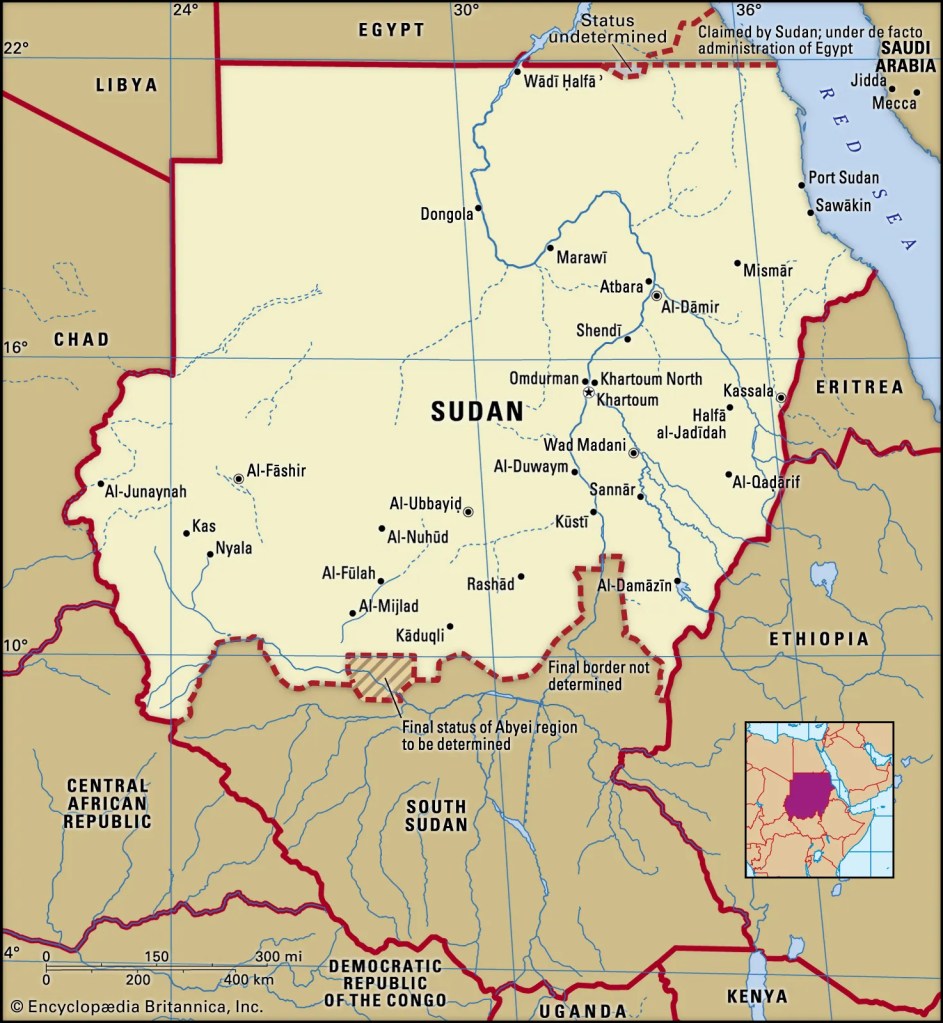


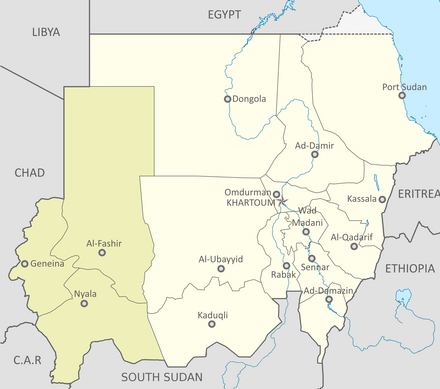


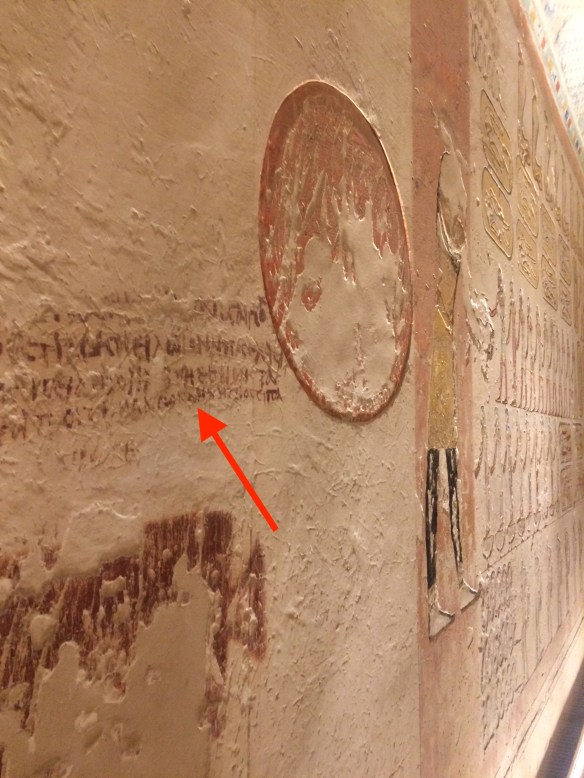



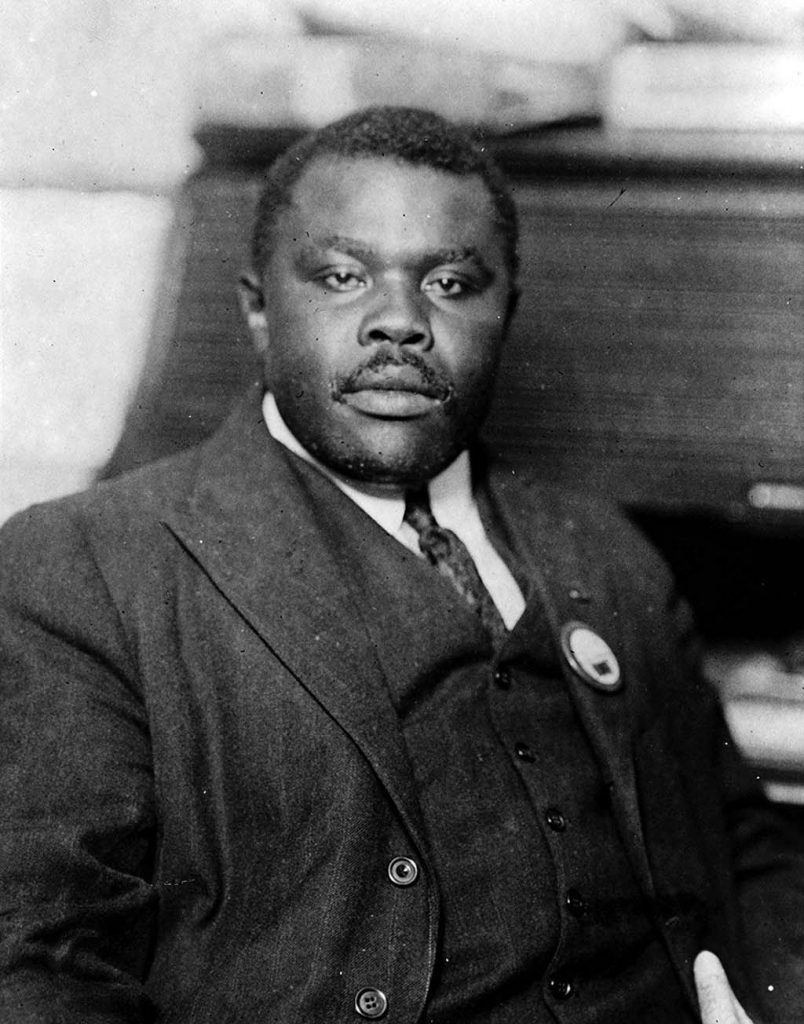


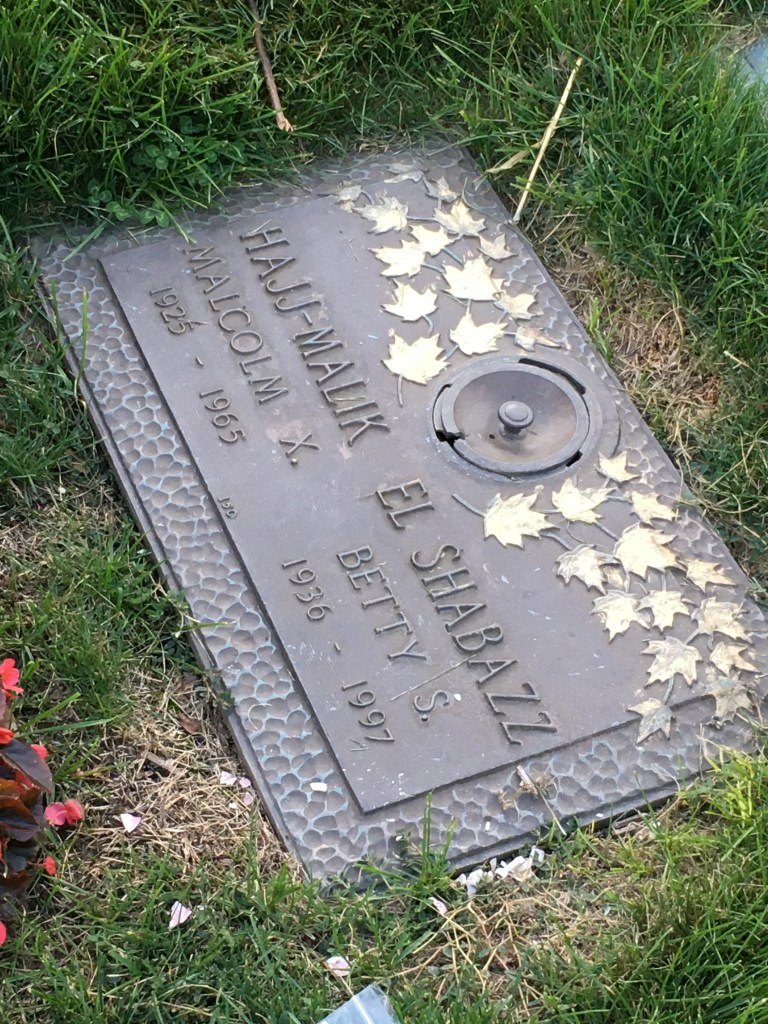
 The Maurchives
