
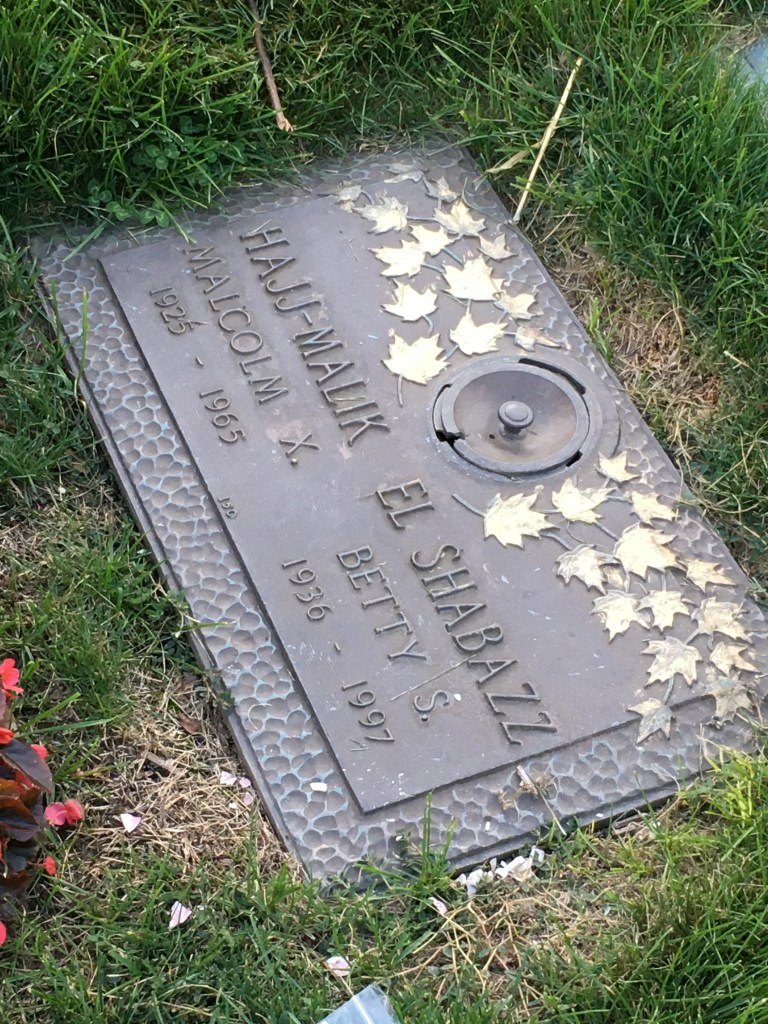
Sunday May 19, 2024 marked the 59th Ziyara (commemorative visitation) to the grave site of El Hajj Malik Shabazz (Malcolm X) and Dr. Betty Shabazz at Ferncliff Cemetary in Hartsdale, NY. As many know, the African American community cannot agree on many things but Malcolm is a rallying point for the forward-thinking trajectories within the community. This was evidenced by the peaceful coexistence of Sabian and Hanif traditions practiced by the intellectual, political, and spiritual offspring of Malik Shabazz at the annual Ziyara.
It was not always this way. In the aftermath of Malcolm’s murder it was a struggle to to keep his name alive let alone his ideas and his work. Only a few brave souls had the guts to open their doors and speak at his funeral. Joseph E. Hall and the Unity Funeral Home allowed the viewing of his body, the Faith Temple Church of God in Christ, allowed his wake, Shaykh Hesham Jaaber, who along with Shaykh Ahmad Hassoun washed and wrapped his body according to the Islamic tradition, Ahmad Osman, Ossie Davis who spoke, and the list of attendees like the late John Lewis, James Farmer, Andrew Young and many others… Their names will be forever etched in history. Similarly, Malcolm’s older sister and confidant Ella Collins sought to keep an accurate depiction of his character, philosophy, and direction by holding the annual Ziyara.
I will point out that these brave people were Hanifs. Despite the association of Hanif religions with conformity and reactionary politics the Black resistance to oppression required the strength and courage only inspired by true faith. That was the place of Malcolm, Betty Shabazz, Ella Collins, Martin Luther King, James Farmer, Mutulu Shakur, Sekou Odinga and countless other freedom fighters. Many of whom were practicing Muslims and Christians.
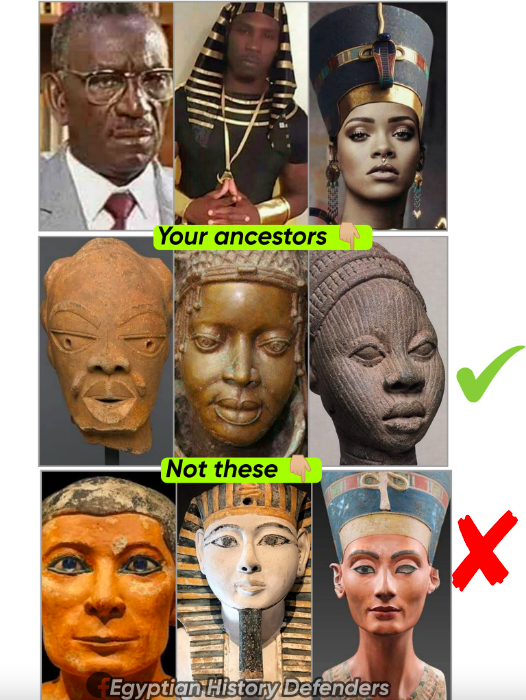
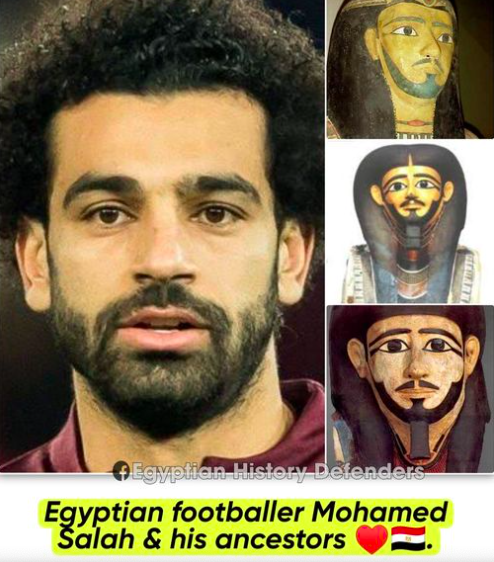
The Sabian dimension, like their ancient counterparts, has always contributed to the philosophical development of our people. A philosophy that pushes the boundaries of intellectual inquiry and imagination of how Africans can be in this world spiritually, mentally, and physically. Their contributions on the Black intellectual tradition should not be disregarded, as it was the likes of John Henrik Clarke and Dr. Ben Jochanan (both intellectual offspring of Malcolm), who forged a path for Black Studies in the universities to the chagrin of white intellectuals who controlled the narrative on African history. They were able to pry open the grip that white Africanists had on the field prior to the 1960’s. Their contributions continue to reverberate with regards to the study of ancient Egypt (Kemet), which Africans on the continent and in the Diaspora rightfully claim a connection to despite the protests of some modern Egyptians.
This is not to say that they did not have lapses in knowledge, especially regarding the history of Islam. Their lack of contact with learned continental African Muslims and lack of acquaintance with the Islamic intellectual tradition in Africa and around the world has led to their over reliance on the sources of white Africanist and Orientalist scholars. Similarly, their logical fallacies that equate the Islamic experience with the Christian experience and inability to view things outside of the American paradigm has crippled their understanding of Hanif religions and led to an uncritical embrace of Sabian religion and spiritual thought. Their rejection of religion, while claiming a form of “spirituality,” has warranted them the label Sabian, whose etymological meaning refers to “one who has left religion.”
Beyond the ceremonious nature of the gathering, there was undoubtedly a political message. One that stood on the legacy of the Black Radical Tradition. This was orchestrated by Prof. James Small, a living progenitor of Malcolm. Not only was he the body guard of Malcolm’s older sister Ella Collins, but he was also imam of Muslim Mosque, Inc. and a leader within the Organization for Afro-American Unity (OAAU), the two organizations started by Malcolm before his death. Not only that, but he later acquired authorizations in the priesthoods of several African systems of spirituality and served as a point person for many Black revolutionary activists and freedom fighters since the 60’s. He is therefore an authority in African American Sabian, Hanif, and radical political traditions. As he emceed the event, he stressed the universality of these traditions and some of the speakers’ connection to Islam. He introduced the all-star round up of speakers consisting of scholars, revolutionaries, and leaders of the past and the future, like Dr. Leonard and Rosalind Jeffries, Sundiata Acoli, Pam Africa, Mfundishi Jhutyms, Jihad Abdul Mumit, Baba Zayid, Brother Reggie, Adéyínká “Muhammad” Mendes, and others. They shared prayers and spoke in brief about the legacy of Malcolm. Imam Talib Abdurrashid was noticeably absent from this gathering due to health issues, but members of the Mosque of Islamic Brotherhood (MIB) in Harlem as well as the Jamaat of Shehu Uthman Dan Fodio were delegated to represent him in his absence.
A final point was made about the link between the Pan African struggle and that of Palestine. Contrary to the sentiments of Pan African social media influencers and personalities, who claim that Palestine is not a “black issue,” the veterans and students of Malcolm say it is, because the Black radical tradition stands for justice everywhere. Additionally, we should not allow morally degenerate politicians and media executives to frame our issues for us. The issues of Palestine are not race, religion, terrorism, anti-Semitism, or even freedom of speech. Rather they are colonialism, the right to self-determination, and the right to self-defense. Likewise, these were the issues of the Black Power struggle in the U.S.; a struggle I would deem as successful in many ways. Although police brutality remains a salient issue for many Black communities, there are undoubtedly marked changes from the Jim Crow era to now that almost no elder will deny. But those improvements were not made from the kindness of the hearts of politicians and law enforcement, they were made from decades of political pressure applied by the likes of Martin Luther King and Malcolm X and those who upheld their intellectual, political and spiritual legacies.





 The Maurchives