Imposter Syndrome: Unraveling Jewish Identity Through Qur’anic Terminology

Is it true that Ashkenazis are fake Jews or “converts” at best? Are the claims of a stolen Israelite legacy made by Black Hebrew Israelites substantiated? Are the claims of some anti-Zionist Jews that Judaism is primarily a religious designation rather than an ethnic one substantiated? And what clarifications can a close reading of the Qur’anic revelation offer us on this topic?

The Qur’an offers some interesting insights into the dubious identity of a segment of the population that identifies as Jews. The key to gaining these insights is through a close reading of the Qur’anic terms for Jews. Throughout the Qur’an we find four references to this population. The first is the overarching term ahl al-kitāb, commonly translated as “People of the Book.” The second is Banū Isrā’īl, the Children of Israel. The third is Yahūd (plural Hūd) and the fourth is alladhīna hādū, both of which are usually  translated as “Jews” but I will discuss the difference momentarily.

Ahl al-Kitāb

Ahl al-Kitāb can refer to “people” who followed revealed scriptures, primarily the Torah and the Gospels, or religions that follow a revealed law. This designation conveys a privileged status according to Islamic law and governance. Socially, this means that Muslims can eat their slaughtered meat, Muslim men can marry their women, and they can freely express their religion. Under an Islamic government, then Ahl al-Kitāb must pay a special tax, called jizyah, they can bear arms to defend themselves against external enemies as well as receive protection from a Muslim army, and they can govern themselves according to their own sacred law. Alternatively, the word ahl can refer to the “qualified” people of those religions i.e. the religious scholars and priests.

Muhammad al-Shahrastānī divides Ahl al-Kitāb into two groups. One that retains the name Ahl al-Kitāb and the other is called Ummī. Ummī can mean those who are illiterate or had no written scripture. To use the terms of the Jews and Christians they would be considered Goyim or Gentiles.

As for the Ahl al-Kitāb, they were the Jews and Christians that lived in Medina. They followed the religious methodology of the twelve sons of Israel (i.e. the Prophet Jacob or Yaʿqūb), who followed the apparent meaning of scripture and upheld the sacred law. Their direction of prayer was the Holy Sanctuary of Jerusalem and they opposed the blatant blasphemy of the likes of Pharaoh.

As for the Ummī, their capital was Mecca. Although they also claimed to follow the religious methodology of the Children of Israel, their direction of prayer was the Holy Sanctuary of Mecca (i.e. the Kaʿbah). They believed that they preserved the inner meanings of the sacred law and their enemies were the idolators and those who worshiped the heavenly bodies. (Shahrastānī and Muhammad, 1992, vol. 2, pp. 227-228). Shahrastānī’s description of the Ummī can be understood as the Ḥanīfs of Arabia.

Children of Israel

The term Children of Israel is often mentioned in a positive light throughout the Qur’an. From the lineage of Abraham, Israel refers to the prophet Jacob or Yaʿqūb the son of Isaac or Isḥāq, who had twelve sons:

  1. Reuben (Hebrew רְאוּבֵן‎ Rəʼūḇēn)
  2. Simeon (שִׁמְעוֹן‎ Šīməʻōn)
  3. Levi (לֵוִי‎ Lēwī)
  4. Judah (יְהוּדָה‎ Yəhūdā)
  5. Issachar (יִשָּׂשכָר‎ Yīssāḵār)
  6. Zebulun (זְבוּלֻן‎ Zəḇūlun)
  7. Dan (דָּן‎ Dān)
  8. Naphtali (נַפְתָּלִי‎ Nap̄tālī)
  9. Gad (גָּד‎ Gāḏ)
  10. Asher (אָשֵׁר‎ ’Āšēr)
  11. Benjamin (בִּנְיָמִן‎ Bīnyāmīn)
  12. Joseph (יוֹסֵף‎ Yōsēp̄)

It is said that their origin was from Canaan (current-day Palestine), but migrated to Miṣr (Miṣrīm) according to both the Biblical and Qur’anic narrative of the prophet Joseph or Yūsuf. I doubt that the Miṣr mentioned in the Bible and the Qur’an is present-day Egypt, as most of us commonly believe. There is substantial evidence to doubt the common belief but not enough evidence to establish its location definitively. However, Miṣr is suspected to be somewhere on the Arabian Peninsula. (For more on this topic see the works of Kamal Salibi and those who built on his theory).

Nevertheless, the Children of Israel were considered the correct believers in God and recipients of the succession of Biblical prophets until Jesus or ʿĪsā. God in the Qur’an speaks of a covenant He made with the Children of Israel. They were given blessings and merit over all people if they upheld certain commandments like only worshiping God, being good to their parents, family, orphans, and the poor. They were commanded to be good to people and to establish prayer and give charity as expressed in al-Baqarah: 83 for instance:

وَإِذْ أَخَذْنَا مِيثَاقَ بَنِي إِسْرَائِيلَ لَا تَعْبُدُونَ إِلَّا اللَّهَ وَبِالْوَالِدَيْنِ إِحْسَانًا وَذِي الْقُرْبَىٰ وَالْيَتَامَىٰ وَالْمَسَاكِينِ وَقُولُوا لِلنَّاسِ حُسْنًا وَأَقِيمُوا الصَّلَاةَ وَآتُوا الزَّكَاةَ ثُمَّ تَوَلَّيْتُمْ إِلَّا قَلِيلًا مِّنكُمْ وَأَنتُم مُّعْرِضُونَ

Remember when We took a covenant from the Children of Israel, [saying]: Do not worship but God and be good to parents, family, orphans, and the poor; and speak good to people, establish regular prayer, and give charity. Then you turned away except a few of you, and you are resistant.

As the Qur’an indicates, not all of the Children of Israel maintain their covenant with God. Some even committed the egregious sin of worshiping a golden calf during the time of Moses (Mūsā) and Aaron (Hārūn). While Biblical accounts attribute the creation of this idol to Aaron as his brother Moses received the Ten Commandments from God, the Qur’an absolves Aaron of such a deed and instead attributes to a man only known as al-Ṣāmirī.

The mandate for the Children of Israel was to maintain the apparent form of the sacred law. Shahrastānī states that the “divine light” of revelation was split between two camps: 1) the Children of Israel and 2) the Children of Ishmael. Israel represented its outer with its succession of prophets. Ishmael represented its inner dimensions by preserving its rituals and symbols, and concealing the state of the prophets (Shahrastānī and Muhammad, 1992, vol. 2, page 228).

The Killing of Prophets and the Disobedience of the Israelites from Blogging Theology

Yahūd

As noted above, one of the sons of Jacob was named Judah, whose Arabized name was Yahūd. In the 11th century BCE, this tribe conquered Canaan and established the Kingdom of Judah in the southern Levant next to the sister Kingdom of Israel. The Jewish religion is named for the tribe of Judah. The kingdom would eventually succumb to the Babylonians under the king Nebuchadnezzar II in 586 BCE. Solomon’s temple was destroyed and the Jews were exiled to Babylon. It was during this exile that a number of Jews begin to embrace aspects of the ancient Babylonian religion. The religion of Babylon, if we remember, is the Chaldean religion of the people of Abraham, which he refuted. They were also known as Sabians and Magians.

Alladhīna Hādū

In addition to Yahūd, the Qur’an uses a peculiar phrase to reference this group: alladhīna hādū, which either means “those who claim to be Jews” or “those who became Jews.” The word hādū is a past tense verb conjugated in the third-person plural form as opposed to Yahūd, which is a noun.

It is my opinion that “those who claimed to be Jews” and “those who became Jews” were a faction of the Sabians who adopted Jewish customs and rituals but secretly maintained their belief in Sabian doctrines such as the eternity of the universe, a belief in a demiurge, the worship of intermediary spirits, the use of occult sciences, killing the prophets, etc. The likes of the Persian polymath Abū Rayyān al-Bīrūnī claims that the true Sabians were the Jews of Babylon, who mixed the rites of Judaism with Magianism (Bīrūnī and Sachau, 1879, p. 188).

It is important to note that the Mandaeans of Iraq, a group Muslim sources have always identified as Sabians, claim to have once been of the Jews. However, they split from the body of Jews over the issue of Mary’s (Miryam) immaculate conception of Jesus. The Mandaeans as “those who claimed to be Jews” slandered Mary and opposed Jesus. Although the Mandaeans saw Mary as one of them, they claimed that she became pregnant by witchcraft and that Jesus was a demon and false prophet (Buckley, 2002, p. 4). This is alluded to in al-Nisā‘: 155-157:

فَبِمَا نَقْضِهِم مِّيثَـٰقَهُمْ وَكُفْرِهِم بِـَٔايَـٰتِ ٱللَّهِ وَقَتْلِهِمُ ٱلْأَنۢبِيَآءَ بِغَيْرِ حَقٍّۢ وَقَوْلِهِمْ قُلُوبُنَا غُلْفٌۢ ۚ بَلْ طَبَعَ ٱللَّهُ عَلَيْهَا بِكُفْرِهِمْ فَلَا يُؤْمِنُونَ إِلَّا قَلِيلًۭا ١٥٥

وَبِكُفْرِهِمْ وَقَوْلِهِمْ عَلَىٰ مَرْيَمَ بُهْتَـٰنًا عَظِيمًۭا ١٥٦

وَقَوْلِهِمْ إِنَّا قَتَلْنَا ٱلْمَسِيحَ عِيسَى ٱبْنَ مَرْيَمَ رَسُولَ ٱللَّهِ وَمَا قَتَلُوهُ وَمَا صَلَبُوهُ وَلَـٰكِن شُبِّهَ لَهُمْ ۚ وَإِنَّ ٱلَّذِينَ ٱخْتَلَفُوا۟ فِيهِ لَفِى شَكٍّۢ مِّنْهُ ۚ مَا لَهُم بِهِۦ مِنْ عِلْمٍ إِلَّا ٱتِّبَاعَ ٱلظَّنِّ ۚ وَمَا قَتَلُوهُ يَقِينًۢا ١٥٧

[The Children of Israel were condemned] for breaking their covenant, rejecting the signs of God, killing the prophets unjustly, and for saying, “Our hearts are locked!” Rather, it is God Who has sealed their hearts due to their disbelief. For none of them truly believe except for a few.

As well as for their slander against Mary.

And their claim, “We killed the Messiah, Jesus, son of Mary, the messenger of Allah.”

The Mandaean Sabians served as the wedge between the Yahūd and Naṣārā (Jews and Christians). Had the Sabians not slandered and caused confusion about Mary and Jesus then the Jews would have accepted them and the Christians would have continued to the practice the laws of the Children of Israel.

Concluding Thoughts

If understood properly, the Qur’an has accurately described the population associated with Judaism. The Qur’an often addresses them with linguistic nuance that can be understood through the lens of history. However, because these concepts are not commonly known there is still much research that must be done on them. Not the least of which is the ethnic and racial component. For instance, many Islamic historians who speak of Jews in Arabia do not make an ethnic distinction between pagans, Jews, and Christians on the peninsula. In fact, historians speak of them of having a common origin from Abraham, who simply differed in location, political affiliation (Rome or Persia), and religious law. Plainly speaking, the original Hebrews were not ethnically or racially distinct from the Arab peoples. Their differences were in religious methodology.

As Shahrastānī suggests, the Hebrew mandate was the preservation of the outer form of the divine law. This is the understanding of their “choseness,” which was conditional upon their adherence to the law set by the prophets and not changing scripture. However, they broke this covenant by constantly breaking the laws, killing the prophets, and corrupting the scripture.

Another insight from Shahrastānī that is often not addressed by historians is that of the numbers of the Children of Israel. Shahrastānī mentions that their ummah (religious community) was greater than that of the Christians (Shahrastānī and Muhammad, vol. 2, 1992, p. 229). If we think about it, the religion of the Children of Israel existed longer and existed among many tribes. As mentioned above, they were twelve tribes, only one of whom carried the name Yahūd (Jew). In much Islamic historical literature, the Jews or Children of Israel are represented in Arabia more than the Christians in early Islam.

There are currently about 15 million Jews in the world and almost 2.5 billion Christians. If the Children of Israel and their religion – not just the Jews and Judaism – endured until now, then where and what is their religion? Of course, the Black Hebrew Israelites in their various expressions attempt to address this question by proposing that the European Jews are imposters and do not represent the totality of the House of Israel and by theorizing that the tribes of Israel ended up in the Americas. However, their movement could benefit from a Qur’anic perspective and more rigorous and realistic look at history.

It is clear to me that the religion of the House of Israel was lost and distorted throughout time. If it was not, then there would have never been a need for a succession of prophets. Judaism represents a reconstruction of this religion by their scholars and rabbis without a divine chain to the prophets Jesus and Muhammad. As for the remaining tribes, then it would be realistic to look into the genealogies of the people of Arabia and greater Near East to understand their diffusion throughout the earth.

References

Buckley, Jorunn Jacobsen. The Mandaeans: Ancient Texts and Modern People. Oxford University Press, 2002.

Shahrastānī, Muhammad ibn ʿAbd al-Karīm al-, and Ahmad Fahmi Muhammad. Al-Milal Wa al-Niḥal. 2nd ed., Dār al-Kutub al-ʿIlmīyyah, 1992.

Nationalism in the Nile: Egyptians, Afrocentrism, and Kevin Hart

A small faction of Egyptian neo-nationalists on social media has announced that the wholesome American comedian, Kevin Hart, is not welcome in Egypt leading up to his February 21, 2023 performance in the country. Behind this supposed “viral” campaign is a small cadre of under-educated Egyptians who have recently learned of something called Afrocentrism. In turn, they have erroneously made him the symbol of Afrocentrism due to some internet pictures of him dressed as an ancient Egyptian and some vague statements he made. A few people have brought this controversy to my attention and sought my opinion on it as someone who has bridged the gap between Afrocentricity and the Arab world in the past. As perhaps my final post from the city of Cairo, I will address this controversy and offer a voice of reason on the topic that I hope all interested parties can benefit from.

The Egyptian Neo-Nationalists Behind the Posts

The people behind the hashtags and the posts reflect a misplaced Egyptian nationalistic sentiment that only directs their energy at topics of no consequence for their country. They offer no solutions to class disparities, education, or discrimination within Egyptian society but they seem adamant that confronting Afrocentrism and banning African Americans will solve their problems. These neo-nationalists reject the fact that many of the ancient Egyptians were dark skinned; which can be considered a central tenant of Afrocentric thought. Furthermore, they might have encountered a hostile Hotep who might have spewed some rhetoric about taking back their ancestral homeland of Egypt in one of their vitriolic rants. But does this really warrant a protest movement? And what does it have to do with Kevin Hart?

Ahmad Youness

On December 13, he posted a video speaking out against the upcoming Kevin Hart show and Afrocentrism in general. He claims that the Egyptians of today are the Egyptians of the ancient past and he encouraged Egyptians to not tolerate the appropriation of their history by anyone, especially not “Africans.” Ahmad Youness is a 40-something year old radio personality who has been in the business since 2003. He is known for telling horror stories on the Radio 9090 station. According to his Wikipedia page, has a “license” (a low-level degree) in the English language but not much more of an educational background beyond that.

In one video, he states what could be translated as the following:

This is Ahmad Youness with you, an Egyptian media personality. Recently we heard about a show that will be held by the African actor, Kevin Hart. It should be a comedy show, but I don’t really see anything funny about it. The only funny thing about it is that there are people within Egypt who invited him and there is an Egyptian company that supports and organizes it…

This guy called Kevin Hart is one of the supporters of Afrocentrism. Afrocentrism, if you don’t know, is a movement that says that the ancient Egyptian civilization is not ours but it belongs to Africans and that we stole it. It has since then been falsely attributed to us and that they will take it back one way or another. They have a lot of supporters within and outside their ranks as well. There are also those who secretly support them. You might think that the idea is not widespread but it is very popular. The topic of Afrocentrism is one that has been discussed at length and there are big names that support it.

He shouldn’t come here to Egypt and we shouldn’t welcome him. He is not here. He is not welcome here. And he will not enter Egypt!

Of course, there are many things wrong with his diatribe. Kevin Hart is not an African actor but an American actor who happens to be African American. Racist Arabs often drop the American aspect of an African American’s identity to demean them. This was done to Barack Obama often in the Arab media throughout his presidency. While Kevin Hart might believe how most African Americans (and probably most non-Black Americans) believe, that the ancient Egyptians were Black Africans or dark skinned people, but he is not the poster boy for Afrocentrism by any means. In the US, Kevin Hart has a reputation as a wholesome comedian who is funny but not as edgy or raunchy as other well-known comedians such as Dave Chappelle or Chris Rock. His opposition to Kevin Hart amounts to nothing but a safe target of his campaign. Ahmad Youness is a labeling Kevin Hart with a term that he never claimed in the first place. And he is accusing him of something so minute that Hart probably has no clear recollection of.

Egyptian History Defenders

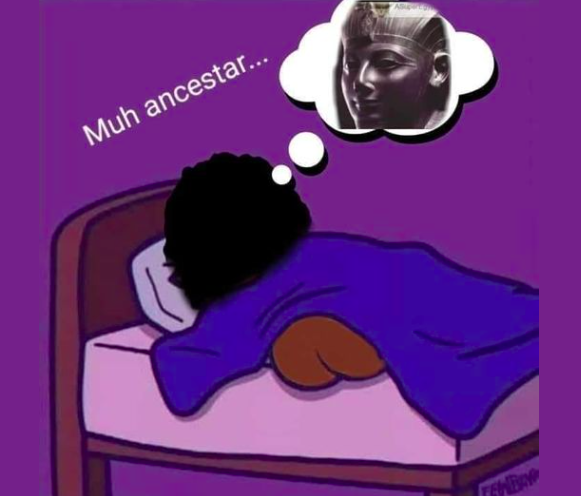
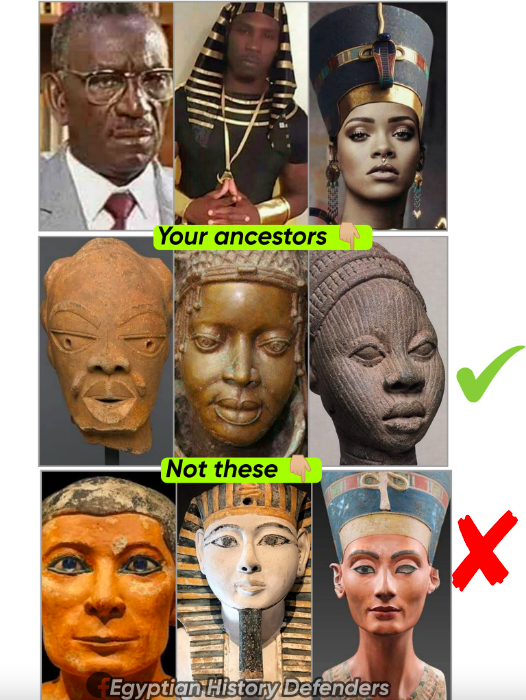
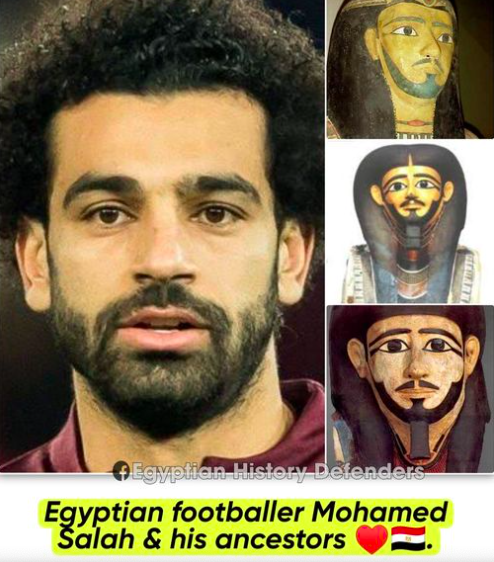
Another front in the campaign against Kevin Hart is the social media handle Egyptian History Defenders. Their social media accounts are full of anti-African American memes concerning their so-called appropriation of Egyptian history. These memes are directed at Afrocentric claims that Black people are at the root of Egyptian civilization. However, it is clear that they cannot differentiate between an Afrocentrist and an African American. Indeed, probably most African Americans believe that the ancient Egyptians were Black, but that does not make them Afrocentrists. This group probably only heard of the term Afrocentrism without researching it, then began to label everything that resembles it by that term. In truth, Afrocentrism is a scholarly approach stemming from the Black Studies movement that began to take shape in the mid-20th century. At its core, it intends to center the perspectives and experiences of Africans on the continent (Egyptians included) and throughout the diaspora in various fields of study starting with history. Molefi Asante, perhaps the most vocal proponent of the term who has since disavowed the concept, rejected the use of Afrocentrism as a response to Eurocentrism. Rather, he used the term Afrocentricity to denote a proactive cultural movement among Africans that shapes the adherent’s paradigm on various areas of human interest. The neo-nationalists have instead reduced Afrocentrism to a mere musing on the ancestors.

Interestingly enough, these Egyptian neo-nationalists in their anti-intellectualism have slipped into the same methodological fallacy as some Afrocentrists. Just as Afrocentrists juxtapose paintings and sculptures from ancient civilizations to pictures of contemporary African Americans to show that these ancient people would be classified as Black by present American standards, they too have taken to juxtaposing pictures of ancient Egyptians to show that they would be classified as Egyptians by today’s standards. While interesting to look at, this is not proof of descent, not for African Americans and not for current-day Egyptians.

On both sides, we should acknowledge that many changes have taken place on earth since the ancient days. While it is obvious that the original Egyptians were Black as we know it today that does not exclude any other people from greatness. Many of those dark skinned people continue to live in the region where you find most of the ancient Egyptian monuments in Luxor and Aswan along with many other Ṣaʿāyada (people of Upper Egypt), who all Egyptians identify as sumr (dark skinned). Why neo-nationalist Egyptians ignore them is indicative of their racism and colonial mindset. They are blinded by the metropolitan north which is dominated by descendants of Central Asians, Greeks, Anatolians, Circassians, and other people of European descent including the French and Germans, that they don’t even realize the dark skinned people that dominate the south of the country where the markers of ancient Egyptian civilization are found. But most Egyptians care nothing about ancient Egypt until foreigners show an interest in it.

No Protests Against European Egyptologists

Why don’t Egyptian neo-nationalists oppose European Egyptologists? They have done more damage than Afrocentrists ever have. In fact, Afrocentrists pose no threat to Egyptian society despite their fiery rhetoric. Yet, white Americans and Europeans are the only groups who have a proven track record of attacking Egypt and distorting its historical narrative under the guise of research. Not only did the French and British colonize Egypt, and the U.S. continues to influence its politics, but they stole artifacts, introduced the question of the ancient Egyptians’ race, and interfered in Egyptian politics, society, and media. Not only that, but it was the West who took the civilization away from Egypt and labeled it “world heritage,” effectively handing their history and artifacts over to the “world,” which just happens to be located in Western countries.

The debate over the race of the ancient Egyptians was started by European orientalists, who founded the field of Egyptology with the intention of barring indigenous scholarship and participation in it. But there are no hashtags and strong words from media personalities for them. The “red line” they draw supposedly at the tampering with Egyptian history is only for the imaginary threat of Black Americans and not the real threat of White Westerners. The neo-nationalist Egyptians should thank Africans and African Americans trained in the West like Carter G. Woodson, Cheikh Anta Diop, George G.M. James, Ivan van Sertima, and John Henrik Clarke among others, who loosened the grip of White colonialists on the narrative of ancient Egypt. In addition, it was the movie Black Panther that sparked the recent sentiment of returning antiquities to their countries of origin. This is an Afrocentric sentiment that Egyptians are tangibly benefiting from. If ancient Egypt is indeed world heritage, then scholars of all backgrounds with the interest and necessary qualifications should be able to contribute to the scholarship of that heritage.

Concluding Thoughts

One of the major accomplishments of the Afrocentric movement was that they dispelled the myth of colonizing European Egyptologists who spread the lie that the ancient Egyptians were “white” like them. I don’t know a single African American or other ethnicity from America for that fact who does not believe that the ancient Egyptians were dark skinned African people. Does Ahmad Youness and his cadre seek to disinvite all foreigners who hold these views regardless of race? Or is this ban exclusively for African Americans? I have lived in Egypt six years and met Egyptians who believe that the ancient Egyptians were Black Africans as well. Do they also think those Egyptians should be expelled? If so, when does the madness end?

Plus, who gave these people the authority to say who is and is not welcome in Egypt? They are not government officials or even intellectuals. They do not speak for the majority of Egyptians who have no idea what Afrocentrism is and more than likely do not care. Kevin Hart’s coming to Egypt would stimulate a depressed economy, which is suffering greatly now. It will also bring joy to a depressed people. Who are these protesters who care nothing about the poor condition of their country and their people? Tourists of all types, including African Americans, stimulate the Egyptian economy every year by taking tours throughout the country. What these protesters want to do effectively is deprive their country of this essential income for their economy. What did not make the headlines was the cancellation of the annual Afrocentric conference that takes place in Luxor. We can presume that it was at the behest of the same neo-nationalists. Baba James Small alerted me to this earlier in the year and I thought it was a bit uncharacteristic of the Egyptian tourist industry, which jumps at just about any and every opportunity to make a dollar. It is clear that Afrocentrism has benefited Egyptians financially and intellectually, more than it has harmed them. If only its detractors would research the matter more seriously.

What I see as vital to resolving the issues between my Afrocentric and Egyptian brethren is opening the lines of communication and the venues for dialogue. From my readings of contemporary Egyptian scholars like Okasha El Daly and Nadim al-Sayyar, as well as classical Arabic scholarship on ancient Egypt, I feel like the two sides have more in common than they might think. Currently, the exchange is almost all hostile and emotionally charged based on their own cultural sensitivities. But if a few level heads came together to discuss things on an intellectual level I am sure we will learn a lot from each other. If there is anyone out there interested in such an exchange please let me know. Until then, enjoy the Kevin Hart show.

Is God the Universe?

It has become popular to refer to God as the Universe in recent years but few know that this practice is rooted in ancient philosophical debates over ḥulūl (pantheism) and the eternity of the universe. Sabians generally argued that the universe was eternal and thus equal to God. Because of this, they accepted the concept of pantheism, i.e. that God can be found within His creation as celestial bodies, inanimate objects, living things, a man or mankind in general, etc. On the other hand, Hanifs argued that eternity was an attribute of God alone and thus the universe was not eternal but a creation of God. As a consequence of this thinking, God was an entirely different genus from His creation and this, among other qualities, made Him worthy of worship.

While these debates are not prominent in popular contemporary discourse , they nonetheless influence much of our thinking, knowingly or unknowingly. Therefore, every time we hear someone praising the universe, we are hearing the residuals of Sabian thought echoing in the current day. While some might see these debates as benign or akin to splitting hairs, they most definitely have metaphysical, if not physical consequences on the masses past, present, and future. In this post, I will present the ancient debate and identify strains of Sabian thought in the modern day.

Al-Ghazālī vs. the Muslim Sabians

In the 11th century, Abū Ḥāmid al-Ghazālī penned his landmark work, Tahāfut al-Falāsifa (often translated as The Incoherence of the Philosophers). While the work is pivotal to Islamic theological debates as well as the intellectual history of philosophy from the ancient world to modern times, it is also relevant to the study of Sabian thought. Moreover, it allows us to understand the fallacies of Sabian thought from a Muslim perspective as well as how to recognize them and refute them in our times. He noticed a trend among the Muslim intellectuals of his day who, upon studying the works of the ancient Greeks, would adopt their philosophies uncritically. This meant that they embraced the belief of the eternity of the universe, which led to other blasphemous ideas such as the weakness of God, the possibility of two deities, and the purposelessness of existence.

In addition to this mistake having detrimental effects on the personal faith of these Muslim philosophers, they would also submerge Muslim civilization in the same theological turmoil that the Naṣārā (Christians) suffered. If we recall from Islam and the Mystery Schools Part 10, the Naṣārā of the Roman Empire, Persia, and beyond were plunged into the philosophical debates of the Mystery Schools i.e. Sabians. Although they won debates about the supremacy of the prophet of their time (i.e. Jesus Christ/ʿĪsā), they compromised on the topic of ḥulūl or pantheism, with the caveat that only Christ occupies the position of God to the exclusion of others in His Creation. In the Muslim Ummah, the likes of al-Farābī and Ibn Sīnā would spearhead this dangerous slip into Sabian philosophy. To others, it was Ibn ʿArabī’s concept of waḥdat al-wujūd (the unity of existence). Wherever the concept was raised it was refuted.

We should understand that al-Ghazālī did not categorically refute the knowledge of the Sabian philosophers. Rather he enumerated 20 points in which the philosophers went wrong and jeopardized their metaphysical futures. While seemingly benign, al-Ghazālī is serious about the magnitude of these mistakes. As I read his words, I cannot help but see some similitude to our current situation. Here, I will turn to al-Ghazālī’s criticisms that are related to the nature of the universe.

Ancient Sabian philosophers argued that it was impossible that a temporal creation emanate from an intemporal creator, i.e., that a finite universe proceed from an eternal God. Instead, they argued that the universe always existed or always had the potential to exist. So, if the universe came into existence at a particular point in time, then why? In their line of questioning, they asked: Was God incapable of bringing the world into existence before this point, thus changing from weakness to power or impossibility to possibility or futility to purpose? They contended that if God was All-Powerful and All-Knowing, then all the conditions were met to bring the universe into existence prior to its existence. So, there must have been some catalyst or cause to bring it into existence.

Al-Ghazālī responds to this conundrum by stating that the creation of the universe at the point that it came into existence was part of God’s eternal will and essentially that God sees the big picture and man does not and cannot. Man might ascribe perceived changes in God’s will to some sort of flaw based on man’s experience and dispositions but these experiences and dispositions do not apply to God. Therefore, the burden of proof is on the philosopher to demonstrate that the creation of the universe was not God’s will. (Ghazālī, 1963, 14-19) Indeed the entire debate is God’s will. We only need to choose the side on which we stand.

Malachi Z. York (leader of the Nuwaubians)

Sabians in the Modern Day

If we turn our attention to the current American metaphysical landscape, we find that our communities are infested with Sabian “manifestations” (or perhaps man-infestations). The New Age movements, Black conscious community, and woke culture represent Sabian thought in our day. Movements such as the Nation of Islam and the Five Percenters have adopted the concept of hulūl, when they deem the Black man as God. The Nuwaubians, with their multifarious deifications of Malachi York have done the same. Some Afrocentric Egyptophiles are also guilty of this in their claims that the Black woman is God, while also postulating their pseudo-intellectual arguments for the existence of multiple gods in the form of ancestors.

Even though modern-day Sabians often pose their questions as intellectual speculation, their intent is mostly mockery of God and His prophets with the aim of leading people to confusion and disbelief in God. Their speculation into the nature of God and the universe is not aimed at a higher Truth but confusion. You will barely find one who can understand the ancient arguments of the Sabians, let alone debate an intelligent Hanif. Their solution is to embrace a multitude of beliefs because in reality they do not believe in anything.

Though modern-day Sabians go by many names, they all have similar traits, like the veneration of the creation over the Creator. Equating the universe to God is tantamount to denying God because it omits the initial Cause and opens up the gates of pantheism, which allows creation to be regarded as God or part of God. These ideas were accepted by the ancient Sabians but opposed by the Hanifs, whose strongest proponents were the Muslims. Yet, within the ranks of the Muslim world these ideas would need to be refuted when they gained traction in its societies. But few among the Muslims are debating these ideas in our times. Even among the droves of Muslim students of knowledge, who study ʿaqīda, kalām, the works of al-Ghazālī, and Muslim philosophers, we have not raised conscious minds who understand the Sabian-Hanif dichotomy and can construct strong rebuttals of the modern Sabians. Rene Guenon (Abd al-Wahid Yahya) was perhaps one of the last to champion Traditional (Hanif) religion over the aberrations of the Spiritualists (Sabians) of his time. I call on my Hanif brethren among the Muslims and the People of the Book to stand up to the Sabian confusion of the current day with knowledge and grace by which we can restore the order of the universe to its proper place.

Reference

Ghazālī, Abu Hamid. Al-Ghazali’s Tahāfut al-Falāsifah: Incoherence of the Philosophers. Translated by Sabih Ahmad Kamali, Pakistan Philosophical Congress, 1963. lib.aucegypt.edu Library Catalog, https://www.ghazali.org/books/tf/index.htm.

Islam and the Ancient Mystery Schools Part 12

I would like to return to my original thesis that was sparked by George G.M. James’ Stolen Legacy several years ago (see Islam and the Ancient Mysteries Part 1and Part 2). Although this thesis has undergone modifications since I began my research, the premise has remained the same. In the midst of this series I have found that the word Ṣābi’a is the general term in Arabic for the Ancient Mystery Schools, while theorizing that other terms such as Naṣārā and Chaldean refer to the leaders of temporal and geographic Mystery Schools. In the following post, I will summarize my theory and trace the genealogy of Sabian/Mystery School thought to this day.

Islam and the Revival of the Ancient Mysteries

The Sabians mentioned throughout classical Arabic literature are what the Greeks called the Mysteries. Like the Jews and Christians before them, the Muslims wrestled with the perceived harms and benefits of Sabian thought. On the one hand, the scriptures of the Abrahamic traditions were deeply critical of the theological distortions in Sabian doctrine. Abrahamic doctrines and rituals were in response to the beliefs and practices of the Sabians, which opened up the gates of polytheism among the unlearned laymen. On the other hand, the Sabians had benefited the world by their advances in other areas of human knowledge. The Abbasid Caliphate, like Eastern Christianity, came to terms with the knowledge produced by the Sabians. However, the Muslims strived not to take the road of the Christians, whose doctrine ultimately succumbed to the philosophical influences of the Sabians.

What we witness from the 9th to 11th century in the Islamic world with the codification of both traditional religious knowledge as well as the translation of ancient empirical and occult texts, is a race to retain knowledge of the Prophet Muhammad, while also reviving the knowledge of the Sabians (i.e. the Mystery Schools). The Islamic empire and its scholars sought to uphold the Abrahamic doctrine in the face of Sabian doctrine by calling people to Islam and granting protection (i.e. dhimmi status) to the People of the Book, i.e. Jews and Christians. At the same time, they were vehemently opposed to the polytheistic elements of Sabian thought.

As such, the Muslims had revived the Mystery Schools under the Abrahamic creed of Islam. This, however, was not without its conflicts. As certain groups of Muslims had the tendency to slip back into the beliefs of the Sabians, such as:

  • The Khawārij, who embraced the Stoic (Mystery School) concept of perfection and sinlessness as a sign of righteousness.
  • The Muʿtazilites would later stress the primacy of reason over revelation, which placed the philosopher sage on level with and sometimes over the prophets and rekindle the notion that human beings attain prophethood through their own efforts and merits rather than the grace and ordinance of God.
  • Al-Ghazālī’s criticism of the Muslim philosophers (primarily Ibn Sīnā) in his Incoherence of the Philosophers, identifies certain ancient beliefs held by these philosophers, which he believes led them to apostasy. This, while maintaining the utility of ancient Sabian empirical knowledge.
  • Ibn Rushd (Averroes) would later take issue with al-Ghazālī’s conclusions, claiming that the “craft of ḥikma” (wisdom/ancient knowledge) needed to be passed down like any other craft.

Ibn Rushd’s defense of Sabian philosophy would be rejected or ignored by the greater Muslim world, but the means by which Sabian knowledge would gain interest and popularity in Western Europe.

Modern Day Mysteries

In the last few centuries, Western civilization has become the battleground between Abrahamic and Sabian thought since the so-called European Renaissance. As such, Renè Guenon considered the beginning of the West’s decline to be Renè Descartes’ hyper-skepticism. Even as the West was philosophizing itself out of the Abrahamic tradition, it was making a dash for Eastern empirical and esoteric knowledge, which they harbored in their secret societies. This would lead to the separation of religion from science, politics, sociology, and the many other sciences needed for human civilization.

In the 20th century, Western philosophy and esotericism trickled down to the populace by way of clandestine organizations, theosophy, and counterculture movements. In no place were these ideas more prevalent than in the United States. As a result, we witness Sabian thought proliferate in the society everyday. More specifically, Sabian thought has entered African American communities through such groups as the Moorish Science Temple, the Nation of Islam, the Five Percenters, Nuwaubians, and Afrocentrists. All of these groups have explicitly or implicitly embraced the erroneous notion that they can reconstruct the Mystery Schools. I understand that this is a bold claim, but I will show the parallels between their theosophies and ancient Sabian thought. I will argue that they based their movements on incomplete knowledge of the ancient Mysteries because they did not received their knowledge through an unbroken chain of living teachers. This knowledge of the Mysteries/Sabians has been filtered by the Abrahamic faiths, primarily Islam in the current day, and cannot be accessed except through these traditional channels.