
Martin Luther King Jr. was a dedicated freedom fighter; who lived and died in the pursuit of the liberation of the so-called African American. As time passes, generations have less of a connection with what he truly represented even as studies on his life and legacy become more nuanced. I would hope that our communities can see MLK for who he really was and how we can build upon his work rather than the caricatures of him that have originated both in and outside of African American communities. I hope that we can move beyond King “the Uncle Tom,” King “the Pacifist,” King “the Charlatan,” and the latest, King “the Hotep.” These caricatures of MLK serve no purpose but to distract people from the hard work of continuing his legacy. In this post, I will briefly summarize MLK’s writing on the Mystery Schools and Christianity, for which some members of the Conscious community take as proof of his “consciousness.” I will then dismiss their claims and speak to the reality of MLK’s intellectual legacy.
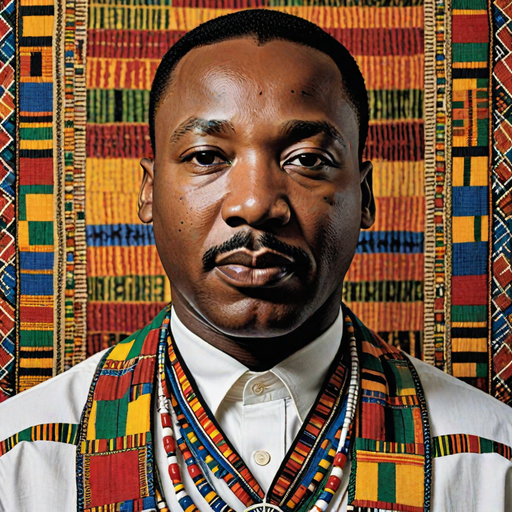
MLK on the Mysteries
At the tinder age of 20 or 21, a young MLK, half way through his graduate seminary degree, wrote a paper titled “The Influence of the Mystery Religions on Christianity.” In this piece, the young Dr. King is making the argument that a number of mystery cults of the Greek and Roman world influenced aspects of Christian thought. While this term paper is not an exhaustive listing of these influences he puts forth five cults in which he has identified influence: 1) Cybele and Attis, 2) Adonis, 3) Osiris and Isis, 4) Eleusis, and 5) Mithras. In the Cybele and Attis myth along with the Osiris and Isis myth from Egypt he sees congruences in the idea of the virgin mother and savior son, and the trinity. In the Eleusis myth he equates the spring celebration of a new life with the modern Christian Easter celebration of Christ’s rising from the dead and promise of salvation. And in Mithraism he finds several similarities regarding Sunday as the holy day, celebrating the birth on December 25, the practice of baptism, the concept of a convert being reborn, the struggle and ultimate triumph of good over evil, the belief in a mediator between God and man, among other things. He also mentions that Paul was raised in Tarsus, one of the centers of Mithraism, and insinuates that these beliefs found their way into the teachings of Paul.
Furthermore, the astute reader may notice an accute contradiction in this paper. In his introduction MLK appears to state that there is a direct relationship between the beliefs and practices of the Mystery religions and Christianity. See the following two statements:
“This triumph [over the Mystery religions] may be attributed in part to the fact that Christianity took from its opponents their own weapons, and used them: the better elements of the mystery religions were transferred to the new religion.”
“It is inevitable when a new religion comes to exist side by side with a group of religions, from which it is continually detaching members, introducing them into its own midst with the practices of their original religions impressed upon their minds, that this new religion should tend to assimilate with the assimilation of their members, some of the elements of these existing religions.”
Yet, elsewhere in his paper he is careful not to characterize this influence as a deliberate affectation, as he states in the conclusion: “it was generally a natural and unconscious process rather than a deliberate plan of action.“ This view is undoubtedly shared (or enforced) by his professor, who commented:
“It is not so much that Christianity was influenced by the Mystery Cults, or borrowed from them, but that in the long process of history this religion developed. It, Christianity, is the expression of the longing of people for light, truth, salvation, security.”
While MLK was not the first or the last to make these claims, it is particularly odd to find that he wrote them. After all, he was from a family of Baptist clergymen and was himself a Baptist minister. This sparks many questions about MLK’s motives to write such a paper or how this knowledge carried over into his leadership of the African American community.
MLK and the Black Conscious Community
While many may be surprised that MLK ever wrote about the Mystery Schools, this idea has circulated through some Black Consciousness circles. Yet, they pay little attention to the full scope of his paper and only focus on what he had to say about the ancient Egyptian Mysteries (i.e., the Osiris and Isis myth). Their point is to make MLK a closeted “hotep,” or at least a Christian who viewed his Christianity as a syncretic veil of this ancient African spirituality. They might even cite the fact that he did not do a lot of calling to the Christian faith nor did he preach much about common themes found in a church such as salvation through the blood of Jesus, the Holy Ghost, sin, and the like. Not only are the Conscious characterizations of MLK far-fetched, but they are based on an extremely selective reading of a term paper MLK wrote for a course when he was 21 years old! Indeed, other influential Black intellectuals wrote more extensively about ancient Egypt like WEB DuBois, Carter G. Woodson, William Leo Hansberry, etc. So why the hoopla about MLK?
Conscious characterizations also ignore other potential influences in his life such as membership in the Greek-letter fraternity Sigma Pi Phi (the Boulè), the pervading ideas of Theosophy and perennialism, as well as Freemasonry, who all had a history of introducing Americans to concepts similar to MLK’s topic in this paper. Despite any criticisms the Black Conscious community might have of these groups, it is possible that MLK imbibed information about the Mysteries from one of these channels.
It is also possible that he is only responding to academic questions of his time. Jan Bremmer mentions that scholars in the early 20th century were enthralled with the question: to what extent did the Mysteries influence Christianity? She credits Isaac Casaubon (1559–1614), a medieval philologist, with starting this line of questioning (although unnamed scholars prior to him also held this view). Casaubon’s works were later revived in the 20th century by Dame Frances Yates (1899–1981) and Fritz Graf (1922-2017). These issues would be debated by the likes of Austrian Theosophist Rudolf Steiner (1861-1925), German Egyptologist Eduard Meyer (1855-1930), and English religious scholar Arthur Darby Nock (1902-1963) (Bremmer, 2014, pp. 142-148). George G.M. James also published his pivotal Afrocentric work, “Stolen Legacy” in 1954. So MLK was not doing anything special in the broader scope of things.
MLK’s Perennial Legacy
Perhaps, what I find to be more interesting from this paper are the two questions he ends with:
The staggering question that now arises is, what will be the next stage of man’s religious progress? Is Christianity the crowning achievement in the development of religious thought or will there be another religion more advanced?
He hints to an acceptance of evolutionary perennialism. He appears to ask: with the advancement of mankind, will there also be an advancement in religious thought beyond Christianity? Of course, a Muslim would answer in the affirmative and claim this advancement for Islam. Regardless of the answer, he does not seem to be calling to a regression in religious thought that will take us back to the ancient Egyptian religion and ancestor worship.
It should come as no surprise that one of Black America’s most prodigious leaders should be astute on certain details of history. The great Rev. Dr. Martin Luther King Jr. was known for his leadership in the Civil Rights Movement and his commitment to non-violent direct political action, but before that he qualified himself by engaging with the salient ideas of his time. Furthermore, it was confirmed in the early 1990s that he had plagiarized parts of his doctoral dissertation at Boston University, so his legacy as a scholar is tarnished. However, MLK is not known for his scholarship or teaching, but for his oratory, activism, and leadership and that should be the criteria by which we judge his legacy.
References
Bremmer, Jan N. Initiation into the Mysteries of the Ancient World. Münchner Vorlesungen Zu Antiken Welten 1. Boston: De Gruyter, 2014.
Garrow, David J. “King’s Plagiarism: Imitation, Insecurity, and Transformation.” The Journal of American History 78, no. 1 (1991): 86–92. https://doi.org/10.2307/2078086.
King, Martin Luther. “The Influence of the Mystery Religions on Christianity.” Essay. The Martin Luther King, Jr. Research and Education Institute, November 29, 1949. https://kinginstitute.stanford.edu/king-papers/documents/influence-mystery-religions-christianity.







 The Maurchives


