The Conscious King: Why did Martin Luther King Write About the Mystery Schools?

Martin Luther King Jr. was a dedicated freedom fighter; who lived and died in the pursuit of the liberation of the so-called African American. As time passes, generations have less of a connection with what he truly represented even as studies on his life and legacy become more nuanced. I would hope that our communities can see MLK for who he really was and how we can build upon his work rather than the caricatures of him that have originated both in and outside of African American communities. I hope that we can move beyond King “the Uncle Tom,” King “the Pacifist,” King “the Charlatan,” and the latest, King “the Hotep.” These caricatures of MLK serve no purpose but to distract people from the hard work of continuing his legacy. In this post, I will briefly summarize MLK’s writing on the Mystery Schools and Christianity, for which some members of the Conscious community take as proof of his “consciousness.” I will then dismiss their claims and speak to the reality of MLK’s intellectual legacy.
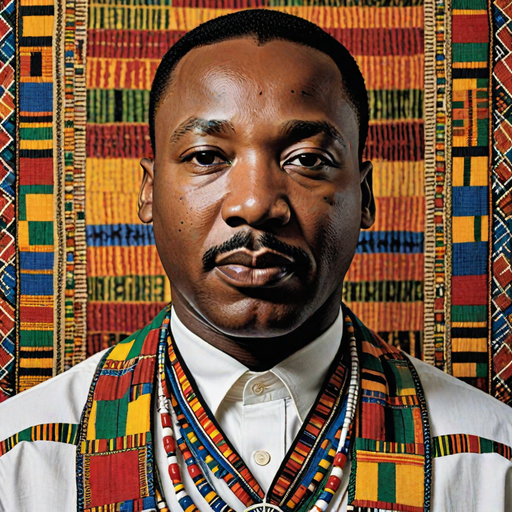
MLK on the Mysteries

At the tinder age of 20 or 21, a young MLK, half way through his graduate seminary degree, wrote a paper titled “The Influence of the Mystery Religions on Christianity.” In this piece, the young Dr. King is making the argument that a number of mystery cults of the Greek and Roman world influenced aspects of Christian thought. While this term paper is not an exhaustive listing of these influences he puts forth five cults in which he has identified influence: 1) Cybele and Attis, 2) Adonis, 3) Osiris and Isis, 4) Eleusis, and 5) Mithras. In the Cybele and Attis myth along with the Osiris and Isis myth from Egypt he sees congruences in the idea of the virgin mother and savior son, and the trinity. In the Eleusis myth he equates the spring celebration of a new life with the modern Christian Easter celebration of Christ’s rising from the dead and promise of salvation. And in Mithraism he finds several similarities regarding Sunday as the holy day, celebrating the birth on December 25, the practice of baptism, the concept of a convert being reborn, the struggle and ultimate triumph of good over evil, the belief in a mediator between God and man, among other things. He also mentions that Paul was raised in Tarsus, one of the centers of Mithraism, and insinuates that these beliefs found their way into the teachings of Paul.

Furthermore, the astute reader may notice an accute contradiction in this paper. In his introduction MLK appears to state that there is a direct relationship between the beliefs and practices of the Mystery religions and Christianity. See the following two statements:

“This triumph [over the Mystery religions] may be attributed in part to the fact that Christianity took from its opponents their own weapons, and used them: the better elements of the mystery religions were transferred to the new religion.”

“It is inevitable when a new religion comes to exist side by side with a group of religions, from which it is continually detaching members, introducing them into its own midst with the practices of their original religions impressed upon their minds, that this new religion should tend to assimilate with the assimilation of their members, some of the elements of these existing religions.”

Yet, elsewhere in his paper he is careful not to characterize this influence as a deliberate affectation, as he states in the conclusion: “it was generally a natural and unconscious process rather than a deliberate plan of action.“ This view is undoubtedly shared (or enforced) by his professor, who commented:

“It is not so much that Christianity was influenced by the Mystery Cults, or borrowed from them, but that in the long process of history this religion developed. It, Christianity, is the expression of the longing of people for light, truth, salvation, security.”

While MLK was not the first or the last to make these claims, it is particularly odd to find that he wrote them. After all, he was from a family of Baptist clergymen and was himself a Baptist minister. This sparks many questions about MLK’s motives to write such a paper or how this knowledge carried over into his leadership of the African American community.

MLK and the Black Conscious Community

While many may be surprised that MLK ever wrote about the Mystery Schools, this idea has circulated through some Black Consciousness circles. Yet, they pay little attention to the full scope of his paper and only focus on what he had to say about the ancient Egyptian Mysteries (i.e., the Osiris and Isis myth). Their point is to make MLK a closeted “hotep,” or at least a Christian who viewed his Christianity as a syncretic veil of this ancient African spirituality. They might even cite the fact that he did not do a lot of calling to the Christian faith nor did he preach much about common themes found in a church such as salvation through the blood of Jesus, the Holy Ghost, sin, and the like. Not only are the Conscious characterizations of MLK far-fetched, but they are based on an extremely selective reading of a term paper MLK wrote for a course when he was 21 years old! Indeed, other influential Black intellectuals wrote more extensively about ancient Egypt like WEB DuBois, Carter G. Woodson, William Leo Hansberry, etc. So why the hoopla about MLK?

Conscious characterizations also ignore other potential influences in his life such as membership in the Greek-letter fraternity Sigma Pi Phi (the Boulè), the pervading ideas of Theosophy and perennialism, as well as Freemasonry, who all had a history of introducing Americans to concepts similar to MLK’s topic in this paper. Despite any criticisms the Black Conscious community might have of these groups, it is possible that MLK imbibed information about the Mysteries from one of these channels.

It is also possible that he is only responding to academic questions of his time. Jan Bremmer mentions that scholars in the early 20th century were enthralled with the question: to what extent did the Mysteries influence Christianity? She credits Isaac Casaubon (1559–1614), a medieval philologist, with starting this line of questioning (although unnamed scholars prior to him also held this view). Casaubon’s works were later revived in the 20th century by Dame Frances Yates (1899–1981) and Fritz Graf (1922-2017). These issues would be debated by the likes of Austrian Theosophist Rudolf Steiner (1861-1925), German Egyptologist Eduard Meyer (1855-1930), and English religious scholar Arthur Darby Nock (1902-1963) (Bremmer, 2014, pp. 142-148). George G.M. James also published his pivotal Afrocentric work, “Stolen Legacy” in 1954. So MLK was not doing anything special in the broader scope of things.

MLK’s Perennial Legacy

Perhaps, what I find to be more interesting from this paper are the two questions he ends with:

The staggering question that now arises is, what will be the next stage of man’s religious progress? Is Christianity the crowning achievement in the development of religious thought or will there be another religion more advanced?

He hints to an acceptance of evolutionary perennialism. He appears to ask: with the advancement of mankind, will there also be an advancement in religious thought beyond Christianity? Of course, a Muslim would answer in the affirmative and claim this advancement for Islam. Regardless of the answer, he does not seem to be calling to a regression in religious thought that will take us back to the ancient Egyptian religion and ancestor worship.

It should come as no surprise that one of Black America’s most prodigious leaders should be astute on certain details of history. The great Rev. Dr. Martin Luther King Jr. was known for his leadership in the Civil Rights Movement and his commitment to non-violent direct political action, but before that he qualified himself by engaging with the salient ideas of his time. Furthermore, it was confirmed in the early 1990s that he had plagiarized parts of his doctoral dissertation at Boston University, so his legacy as a scholar is tarnished. However, MLK is not known for his scholarship or teaching, but for his oratory, activism, and leadership and that should be the criteria by which we judge his legacy.

References

Bremmer, Jan N. Initiation into the Mysteries of the Ancient World. Münchner Vorlesungen Zu Antiken Welten 1. Boston: De Gruyter, 2014.

Garrow, David J. “King’s Plagiarism: Imitation, Insecurity, and Transformation.” The Journal of American History 78, no. 1 (1991): 86–92. https://doi.org/10.2307/2078086.

King, Martin Luther. “The Influence of the Mystery Religions on Christianity.” Essay. The Martin Luther King, Jr. Research and Education Institute, November 29, 1949. https://kinginstitute.stanford.edu/king-papers/documents/influence-mystery-religions-christianity.

Imposter Syndrome: Unraveling Jewish Identity Through Qur’anic Terminology

Is it true that Ashkenazis are fake Jews or “converts” at best? Are the claims of a stolen Israelite legacy made by Black Hebrew Israelites substantiated? Are the claims of some anti-Zionist Jews that Judaism is primarily a religious designation rather than an ethnic one substantiated? And what clarifications can a close reading of the Qur’anic revelation offer us on this topic?

The Qur’an offers some interesting insights into the dubious identity of a segment of the population that identifies as Jews. The key to gaining these insights is through a close reading of the Qur’anic terms for Jews. Throughout the Qur’an we find four references to this population. The first is the overarching term ahl al-kitāb, commonly translated as “People of the Book.” The second is Banū Isrā’īl, the Children of Israel. The third is Yahūd (plural Hūd) and the fourth is alladhīna hādū, both of which are usually  translated as “Jews” but I will discuss the difference momentarily.

Ahl al-Kitāb

Ahl al-Kitāb can refer to “people” who followed revealed scriptures, primarily the Torah and the Gospels, or religions that follow a revealed law. This designation conveys a privileged status according to Islamic law and governance. Socially, this means that Muslims can eat their slaughtered meat, Muslim men can marry their women, and they can freely express their religion. Under an Islamic government, then Ahl al-Kitāb must pay a special tax, called jizyah, they can bear arms to defend themselves against external enemies as well as receive protection from a Muslim army, and they can govern themselves according to their own sacred law. Alternatively, the word ahl can refer to the “qualified” people of those religions i.e. the religious scholars and priests.

Muhammad al-Shahrastānī divides Ahl al-Kitāb into two groups. One that retains the name Ahl al-Kitāb and the other is called Ummī. Ummī can mean those who are illiterate or had no written scripture. To use the terms of the Jews and Christians they would be considered Goyim or Gentiles.

As for the Ahl al-Kitāb, they were the Jews and Christians that lived in Medina. They followed the religious methodology of the twelve sons of Israel (i.e. the Prophet Jacob or Yaʿqūb), who followed the apparent meaning of scripture and upheld the sacred law. Their direction of prayer was the Holy Sanctuary of Jerusalem and they opposed the blatant blasphemy of the likes of Pharaoh.

As for the Ummī, their capital was Mecca. Although they also claimed to follow the religious methodology of the Children of Israel, their direction of prayer was the Holy Sanctuary of Mecca (i.e. the Kaʿbah). They believed that they preserved the inner meanings of the sacred law and their enemies were the idolators and those who worshiped the heavenly bodies. (Shahrastānī and Muhammad, 1992, vol. 2, pp. 227-228). Shahrastānī’s description of the Ummī can be understood as the Ḥanīfs of Arabia.

Children of Israel

The term Children of Israel is often mentioned in a positive light throughout the Qur’an. From the lineage of Abraham, Israel refers to the prophet Jacob or Yaʿqūb the son of Isaac or Isḥāq, who had twelve sons:

  1. Reuben (Hebrew רְאוּבֵן‎ Rəʼūḇēn)
  2. Simeon (שִׁמְעוֹן‎ Šīməʻōn)
  3. Levi (לֵוִי‎ Lēwī)
  4. Judah (יְהוּדָה‎ Yəhūdā)
  5. Issachar (יִשָּׂשכָר‎ Yīssāḵār)
  6. Zebulun (זְבוּלֻן‎ Zəḇūlun)
  7. Dan (דָּן‎ Dān)
  8. Naphtali (נַפְתָּלִי‎ Nap̄tālī)
  9. Gad (גָּד‎ Gāḏ)
  10. Asher (אָשֵׁר‎ ’Āšēr)
  11. Benjamin (בִּנְיָמִן‎ Bīnyāmīn)
  12. Joseph (יוֹסֵף‎ Yōsēp̄)

It is said that their origin was from Canaan (current-day Palestine), but migrated to Miṣr (Miṣrīm) according to both the Biblical and Qur’anic narrative of the prophet Joseph or Yūsuf. I doubt that the Miṣr mentioned in the Bible and the Qur’an is present-day Egypt, as most of us commonly believe. There is substantial evidence to doubt the common belief but not enough evidence to establish its location definitively. However, Miṣr is suspected to be somewhere on the Arabian Peninsula. (For more on this topic see the works of Kamal Salibi and those who built on his theory).

Nevertheless, the Children of Israel were considered the correct believers in God and recipients of the succession of Biblical prophets until Jesus or ʿĪsā. God in the Qur’an speaks of a covenant He made with the Children of Israel. They were given blessings and merit over all people if they upheld certain commandments like only worshiping God, being good to their parents, family, orphans, and the poor. They were commanded to be good to people and to establish prayer and give charity as expressed in al-Baqarah: 83 for instance:

وَإِذْ أَخَذْنَا مِيثَاقَ بَنِي إِسْرَائِيلَ لَا تَعْبُدُونَ إِلَّا اللَّهَ وَبِالْوَالِدَيْنِ إِحْسَانًا وَذِي الْقُرْبَىٰ وَالْيَتَامَىٰ وَالْمَسَاكِينِ وَقُولُوا لِلنَّاسِ حُسْنًا وَأَقِيمُوا الصَّلَاةَ وَآتُوا الزَّكَاةَ ثُمَّ تَوَلَّيْتُمْ إِلَّا قَلِيلًا مِّنكُمْ وَأَنتُم مُّعْرِضُونَ

Remember when We took a covenant from the Children of Israel, [saying]: Do not worship but God and be good to parents, family, orphans, and the poor; and speak good to people, establish regular prayer, and give charity. Then you turned away except a few of you, and you are resistant.

As the Qur’an indicates, not all of the Children of Israel maintain their covenant with God. Some even committed the egregious sin of worshiping a golden calf during the time of Moses (Mūsā) and Aaron (Hārūn). While Biblical accounts attribute the creation of this idol to Aaron as his brother Moses received the Ten Commandments from God, the Qur’an absolves Aaron of such a deed and instead attributes to a man only known as al-Ṣāmirī.

The mandate for the Children of Israel was to maintain the apparent form of the sacred law. Shahrastānī states that the “divine light” of revelation was split between two camps: 1) the Children of Israel and 2) the Children of Ishmael. Israel represented its outer with its succession of prophets. Ishmael represented its inner dimensions by preserving its rituals and symbols, and concealing the state of the prophets (Shahrastānī and Muhammad, 1992, vol. 2, page 228).

The Killing of Prophets and the Disobedience of the Israelites from Blogging Theology

Yahūd

As noted above, one of the sons of Jacob was named Judah, whose Arabized name was Yahūd. In the 11th century BCE, this tribe conquered Canaan and established the Kingdom of Judah in the southern Levant next to the sister Kingdom of Israel. The Jewish religion is named for the tribe of Judah. The kingdom would eventually succumb to the Babylonians under the king Nebuchadnezzar II in 586 BCE. Solomon’s temple was destroyed and the Jews were exiled to Babylon. It was during this exile that a number of Jews begin to embrace aspects of the ancient Babylonian religion. The religion of Babylon, if we remember, is the Chaldean religion of the people of Abraham, which he refuted. They were also known as Sabians and Magians.

Alladhīna Hādū

In addition to Yahūd, the Qur’an uses a peculiar phrase to reference this group: alladhīna hādū, which either means “those who claim to be Jews” or “those who became Jews.” The word hādū is a past tense verb conjugated in the third-person plural form as opposed to Yahūd, which is a noun.

It is my opinion that “those who claimed to be Jews” and “those who became Jews” were a faction of the Sabians who adopted Jewish customs and rituals but secretly maintained their belief in Sabian doctrines such as the eternity of the universe, a belief in a demiurge, the worship of intermediary spirits, the use of occult sciences, killing the prophets, etc. The likes of the Persian polymath Abū Rayyān al-Bīrūnī claims that the true Sabians were the Jews of Babylon, who mixed the rites of Judaism with Magianism (Bīrūnī and Sachau, 1879, p. 188).

It is important to note that the Mandaeans of Iraq, a group Muslim sources have always identified as Sabians, claim to have once been of the Jews. However, they split from the body of Jews over the issue of Mary’s (Miryam) immaculate conception of Jesus. The Mandaeans as “those who claimed to be Jews” slandered Mary and opposed Jesus. Although the Mandaeans saw Mary as one of them, they claimed that she became pregnant by witchcraft and that Jesus was a demon and false prophet (Buckley, 2002, p. 4). This is alluded to in al-Nisā‘: 155-157:

فَبِمَا نَقْضِهِم مِّيثَـٰقَهُمْ وَكُفْرِهِم بِـَٔايَـٰتِ ٱللَّهِ وَقَتْلِهِمُ ٱلْأَنۢبِيَآءَ بِغَيْرِ حَقٍّۢ وَقَوْلِهِمْ قُلُوبُنَا غُلْفٌۢ ۚ بَلْ طَبَعَ ٱللَّهُ عَلَيْهَا بِكُفْرِهِمْ فَلَا يُؤْمِنُونَ إِلَّا قَلِيلًۭا ١٥٥

وَبِكُفْرِهِمْ وَقَوْلِهِمْ عَلَىٰ مَرْيَمَ بُهْتَـٰنًا عَظِيمًۭا ١٥٦

وَقَوْلِهِمْ إِنَّا قَتَلْنَا ٱلْمَسِيحَ عِيسَى ٱبْنَ مَرْيَمَ رَسُولَ ٱللَّهِ وَمَا قَتَلُوهُ وَمَا صَلَبُوهُ وَلَـٰكِن شُبِّهَ لَهُمْ ۚ وَإِنَّ ٱلَّذِينَ ٱخْتَلَفُوا۟ فِيهِ لَفِى شَكٍّۢ مِّنْهُ ۚ مَا لَهُم بِهِۦ مِنْ عِلْمٍ إِلَّا ٱتِّبَاعَ ٱلظَّنِّ ۚ وَمَا قَتَلُوهُ يَقِينًۢا ١٥٧

[The Children of Israel were condemned] for breaking their covenant, rejecting the signs of God, killing the prophets unjustly, and for saying, “Our hearts are locked!” Rather, it is God Who has sealed their hearts due to their disbelief. For none of them truly believe except for a few.

As well as for their slander against Mary.

And their claim, “We killed the Messiah, Jesus, son of Mary, the messenger of Allah.”

The Mandaean Sabians served as the wedge between the Yahūd and Naṣārā (Jews and Christians). Had the Sabians not slandered and caused confusion about Mary and Jesus then the Jews would have accepted them and the Christians would have continued to the practice the laws of the Children of Israel.

Concluding Thoughts

If understood properly, the Qur’an has accurately described the population associated with Judaism. The Qur’an often addresses them with linguistic nuance that can be understood through the lens of history. However, because these concepts are not commonly known there is still much research that must be done on them. Not the least of which is the ethnic and racial component. For instance, many Islamic historians who speak of Jews in Arabia do not make an ethnic distinction between pagans, Jews, and Christians on the peninsula. In fact, historians speak of them of having a common origin from Abraham, who simply differed in location, political affiliation (Rome or Persia), and religious law. Plainly speaking, the original Hebrews were not ethnically or racially distinct from the Arab peoples. Their differences were in religious methodology.

As Shahrastānī suggests, the Hebrew mandate was the preservation of the outer form of the divine law. This is the understanding of their “choseness,” which was conditional upon their adherence to the law set by the prophets and not changing scripture. However, they broke this covenant by constantly breaking the laws, killing the prophets, and corrupting the scripture.

Another insight from Shahrastānī that is often not addressed by historians is that of the numbers of the Children of Israel. Shahrastānī mentions that their ummah (religious community) was greater than that of the Christians (Shahrastānī and Muhammad, vol. 2, 1992, p. 229). If we think about it, the religion of the Children of Israel existed longer and existed among many tribes. As mentioned above, they were twelve tribes, only one of whom carried the name Yahūd (Jew). In much Islamic historical literature, the Jews or Children of Israel are represented in Arabia more than the Christians in early Islam.

There are currently about 15 million Jews in the world and almost 2.5 billion Christians. If the Children of Israel and their religion – not just the Jews and Judaism – endured until now, then where and what is their religion? Of course, the Black Hebrew Israelites in their various expressions attempt to address this question by proposing that the European Jews are imposters and do not represent the totality of the House of Israel and by theorizing that the tribes of Israel ended up in the Americas. However, their movement could benefit from a Qur’anic perspective and more rigorous and realistic look at history.

It is clear to me that the religion of the House of Israel was lost and distorted throughout time. If it was not, then there would have never been a need for a succession of prophets. Judaism represents a reconstruction of this religion by their scholars and rabbis without a divine chain to the prophets Jesus and Muhammad. As for the remaining tribes, then it would be realistic to look into the genealogies of the people of Arabia and greater Near East to understand their diffusion throughout the earth.

References

Buckley, Jorunn Jacobsen. The Mandaeans: Ancient Texts and Modern People. Oxford University Press, 2002.

Shahrastānī, Muhammad ibn ʿAbd al-Karīm al-, and Ahmad Fahmi Muhammad. Al-Milal Wa al-Niḥal. 2nd ed., Dār al-Kutub al-ʿIlmīyyah, 1992.

The Myth of “Arabized Islam” & Other Fallacies of Pseudo-Islam (Part 1)

Whoever the Most High is a witness for Truth, he need not claim it. The claim is a sign of his veiling from Truth and Peace.

A quote from dhū al-nūn from al-Sha’rānī, ’Abd al-Wahhāb. Lawāqiḥ Al-Anwār al-Qudusīyya Fī Manāqib al-ʿUlamā Wa al-Ṣūfīyya. Maktabat al-Thaqāfa al-Dīnīyya, 2005, p. 129.

In recent years, the Moorish Science Temple (MST) has become one of the many groups on the conscious chit’lin circuit; some of them Hanifs, most of them Sabians. Unfortunately, the unscrupulous reader might mistake the Sabians among them for Muslims or, even worse, a factual representation of history. As a Muslim researcher with a specialization in the Arabic language and Islamic history, it is my responsibility to debunk the bogus claims propagated by such groups.

In one recent YouTube presentation on TITANS TV, a Moorish Science researcher and self-proclaimed Arabic teacher by the name of Kemetian Adept Hieruphant attempted to advocate for his Sabian-inspired MST doctrine using George G. M. James’ Stolen Legacy, orientalist mythology about the Egyptian Sufi, Dhū al-Nūn (more on this in another post), and a hodgepodge of information to confuse you. I beseech the reader not to confuse claims to knowledge for actual knowledge, as was the message of Dhū al-Nūn. In this post, I will focus on deconstructing Kemetian’s treatment of Stolen Legacy and the history of the Moors.  

While Kemetian uncritically accepts James’ thesis, he provides little to no detail to demonstrate the MST position. Kemetian throws a lot of images and texts at you, but his attempt to connect the so-called Moors to the ancient Egyptians is weak because it has no basis in the actual history of North Africa or the Islamic world. He, like many so-called conscious folk, suffers from debilitating confirmation bias; believing his point of view is the only way of seeing the information. Why does he perpetuate a bogus conspiracy theory about the death of James? (A past professor of mine researched and debunked this claim) Why does he think that by virtue of genetic lineage he has a rightful claim to the knowledge of ancient Kemet without actually studying it? And what is a mystery school today other than a university? Kemetian’s misinformation not only reduces his credibility but also the credibility of anyone who takes this topic seriously.

Kemetian Adept | Moors Custodians Of Kemet’s Wisdom Teachings

George GM James’ Misunderstood Stolen Legacy

Kemetian introduces his presentation with the passage from Stolen Legacy that opens Islam and the Ancient Mysteries Vol. 1. In my book, I put forth a better way to understand James’ thesis, which lies in answering three main questions:

  1. Who were the Moors discussed by James.
  2. What knowledge did the ancient Egyptians possess?
  3. How did the Moors acquire ancient Egyptian knowledge?

First, the Moors of history were not followers of Noble Drew Ali or members of an organization called the Moorish Science Temple. “Moor” was an epithet used by Europeans during the Middle Ages to refer to people with dark features and Muslims in general, and North African Muslims specifically. Whatever its original meaning, it was lost on European people by the Middle Ages. They were not calling North African Muslims “gods” or anything of that nature.

If we take the European usage of Moor at face value, it means someone who is dark (relative to the average European phenotype) and/or from North Africa and/or Muslim. This is a broad span of people, which can encompass SubSaharans, Berbers, Arabs, Persians, and Indians and often times it has referred to Jews, Christians, and Muslims living in Muslim-controlled lands.

Johannes Andreas Maurus, a Spanish convert from Islam to Christianity (original pen and ink drawing by Maurice Hines)

Secondly, we must have an understanding of what knowledge was attributed to the ancient Egyptians. While James touches on this, he is not completely clear as to what that knowledge was. On the one hand, James characterizes this ancient knowledge as a secret, exclusively for Egyptians, transmitted orally from teacher to student, and forbidden to be written down. On the other hand, he writes that this knowledge was kept in books at temples and libraries, which were eventually copied and plagiarized by the Greeks (particularly Aristotle), and then they became the domain of the Greeks, Freemasons, Theosophists, and occultists. How James deduces this can be challenged on the grounds that he retrofits the concepts of contemporary esoteric movements on to ancient Egyptian Mystery Schools. This is only James’ speculation, not concrete proof.

Additionally, James reconstructs the ancient Egyptian curriculum using a mixture of Christian and pre-Christian Greek sources, whose works he sees to be untrustworthy since the pre-Christian Greeks allegedly stole knowledge from the Egyptian Mysteries and the Christians attempted to annihilate them. Nevertheless, the curriculum according to James was made up of the seven liberal arts, secret languages and mathematical symbolism, as well as magic. This included memorizing the books of Hermes that teach the hieroglyphs, cosmography, geography, astronomy, typography, how to slaughter animals, law, theology, medicine, among other subjects.

Many of these subjects where known and practiced all over the ancient world including ancient Babylon and India, as James alludes to, as well as in Europe and the Americas. There simply is no concrete proof that this curriculum originated in Egypt, no matter how much we want to believe it. In one aspect, it was a secret that died with the last Egyptian priest. Any other empirical knowledge they developed could also be reconstructed by other people with similar aims. Not only that, but both the Islamic civilization and later the current European civilization surpassed the ancient Egyptians in the empirical sciences (no matter what our criticisms of those civilizations are). It is also much more logical and backed by evidence to think that the world’s knowledge was an intergenerational, multi-ethnic collective effort rather than the work of one people.

Finally, how did ancient knowledge transfer to the the hands of the so-called Moors and then to Western Europe? I demonstrate this process in Islam and the Ancient Mysteries Vol. 1. I firmly demonstrate that Muslim civilization under the Hanif creed absorbed the knowledge of ancient Near East, serving as a bridge between the ancient and modern world. The following is a summary of this history.

The True History of the Moors

What’s lost on Kemetian and the Moors are the key players in history that represented this passage of knowledge. If we were to question MST folk to name some of the Moors who conveyed knowledge from the ancient Mysteries, they would be hard pressed to name one. Yet, I have researched several of them for my book: the Ḥarrānian Thābit ibn Qurrah, the Persian family Āli Nawbakht, the Abbasid Translation Movement, and particular Muslim philosophers like Ibn Sina, al-Ghazali, and Ibn Rushd and their respective philosophical positions. There are countless more that historians have researched.

A synopsis of this history starts with the decline of the Mysteries, prior to Christianity. In the Greco-Persian wars, Alexander massacred Iran and sought to extinguish the Persian-Babylonian Mysteries and the knowledge they acquired. He brought their manuscripts to current-day Egypt and had them translated into Greek and Coptic and destroyed the Persian originals. The Greeks were therefore consolidating the knowledge of ancient Egypt and Babylon. As of the 4th and 3rd centuries BCE, this knowledge was most readily available in Greek and Coptic (an advanced form of the ancient Egyptian language).

Christianity was a Hanif system that challenged the Sabianism that proliferated among Judaism and the so-called Philosophers. The disciples spread the monotheistic message of Jesus, which eventually became mixed with the ideas of gnostics (i.e. Sabians), such as Simon Magus, Menander, and yes, Paul. The early scholars of Christianity were educated in the schools of the Greeks and were able to argue the Sabians in their own terms. Though the Christians opposed the Sabians, they ended up absorbing much of the ancient knowledge in the Eastern Church, which split from the Western Church relatively early in the history of Christiandom.

In the meanwhile, the Persians sought to reconstruct their mysteries by reviving the manuscripts found at the extremities of the Persian empire near India and China. They were open to various sects of Christianity such as the Nestorians. Many of those Christians preserved ancient knowledge they inherited from the Greeks in the Syriac language. By the time the Muslims conquered, these works began to be translated into Arabic. This proliferated during the Abbasid Caliphate that funded the Translation Movement; translating the works of the ancient mysteries primarily from Greek, Syriac, and Persian, because knowledge from the ancient world was largely consolidated in these languages.

While the likes of Thābit ibn Qurrah, the Nawbakht family, and Ibn Muqaffaʿ played key roles in this Translation Movement, the effort cannot be attributed to one tribe, ethnic group, race, or religion. Thābit’s ethnicity cannot be ascertained although he was a native Syriac speaker and also spoke Greek and Arabic. The Nawbakht family were from a lineage of Persian Magians who specialized in astrology. Likewise, Ibn Muqaffaʿ was a Persian litterateur responsible for translating numerous books from the Persian and Indian literary heritage. Muslim and Arabic-speaking scholars of other faiths engaged these works for nearly a millennium, including the questionable works on astrology and magic. Yet, the most controversial issues centered on the philosophical concepts of the creation of the universe, pantheism, and the like, which I covered in the post Is God the Universe?  

Social media scholars from the MST and other so-called conscious groups cannot accurately describe how or why this passed from Muslim lands to Western Europe. The Christian Crusades against Muslims began in the 11th century, at the height of the Translation Movement. One should also observe that during this time, many Europeans were “orientalists,” meaning that they admired Arabic language, culture, and knowledge; see (Burnett, 2008, p. 22). Many in Western Europe, who have long since been cut off from the ancient Greeks, rediscovered the knowledge compiled in Greek through Arabic. As political enmity grew between Western European Christiandom and Islamdom, the intellectual affinity grew. One might notice that some of the most erudite scholars from Andalus, migrated to Egypt during the Inquisitions such as al-Qurṭubī and Abū Ḥayyān al-Andalusī, etc. Khaled El-Rouayheb performed an excellent study on the influence of Maghribī scholars on theology and logic in Ottoman-controlled Egypt and prior. Many of whom were from the Ṣanhajah Berber ethnic group.

No narrative about the Moors’ passage of knowledge to Europe would be complete without mentioning the 12th century CE polymath Ibn Rushd (the grandson). In addition to being from a scholarly lineage based in Córdoba, he was a jurist, physician, and Aristotelian philosopher. In fact, he was known as the chief commentator on the works attributed to Aristotle. The untrained reader must remember that Aristotelian philosophy was at the core of Sabian doctrine, which was a proponent of the eternity of the universe. Ibn Rushd wrote a vehement defense of philosophy and Aristotelian concepts in his Faṣl al-Maqāl and Tahāfut al-Tahāfut against Abū Ḥāmid al-Ghazālī’s Tahāfut al-Filāsifah. Although Ibn Rushd’s positions were rejected by most Muslim scholars, many European orientalists were enamored with his works. This even prompted the Christian theologian, Thomas Aquinas to write a response opposing the eternity of the universe.

Conclusion

The perspectives propagated by the Sabian factions of the MST amounts to nothing short of pseudoscience and a creative re-telling of history. Only simpletons are impressed. History does not begin with the interpretations of pseudo-scholars, but the collective evidence established by a body of researchers. Unfortunately, the MST lacks members who have advanced through the degrees of scholarship: sufficient tertiary education, specializations, peer-reviewed publications, academic integrity and humility, etc. Furthermore, there is nothing novel about their teachings. Their teachings are simply Sabian-Noir doctrines; the same doctrines that have confused our people for generations. In another post, I will unravel some of their doctrines and their erroneous characterizations of Sufism.

Is God the Universe?

It has become popular to refer to God as the Universe in recent years but few know that this practice is rooted in ancient philosophical debates over ḥulūl (pantheism) and the eternity of the universe. Sabians generally argued that the universe was eternal and thus equal to God. Because of this, they accepted the concept of pantheism, i.e. that God can be found within His creation as celestial bodies, inanimate objects, living things, a man or mankind in general, etc. On the other hand, Hanifs argued that eternity was an attribute of God alone and thus the universe was not eternal but a creation of God. As a consequence of this thinking, God was an entirely different genus from His creation and this, among other qualities, made Him worthy of worship.

While these debates are not prominent in popular contemporary discourse , they nonetheless influence much of our thinking, knowingly or unknowingly. Therefore, every time we hear someone praising the universe, we are hearing the residuals of Sabian thought echoing in the current day. While some might see these debates as benign or akin to splitting hairs, they most definitely have metaphysical, if not physical consequences on the masses past, present, and future. In this post, I will present the ancient debate and identify strains of Sabian thought in the modern day.

Al-Ghazālī vs. the Muslim Sabians

In the 11th century, Abū Ḥāmid al-Ghazālī penned his landmark work, Tahāfut al-Falāsifa (often translated as The Incoherence of the Philosophers). While the work is pivotal to Islamic theological debates as well as the intellectual history of philosophy from the ancient world to modern times, it is also relevant to the study of Sabian thought. Moreover, it allows us to understand the fallacies of Sabian thought from a Muslim perspective as well as how to recognize them and refute them in our times. He noticed a trend among the Muslim intellectuals of his day who, upon studying the works of the ancient Greeks, would adopt their philosophies uncritically. This meant that they embraced the belief of the eternity of the universe, which led to other blasphemous ideas such as the weakness of God, the possibility of two deities, and the purposelessness of existence.

In addition to this mistake having detrimental effects on the personal faith of these Muslim philosophers, they would also submerge Muslim civilization in the same theological turmoil that the Naṣārā (Christians) suffered. If we recall from Islam and the Mystery Schools Part 10, the Naṣārā of the Roman Empire, Persia, and beyond were plunged into the philosophical debates of the Mystery Schools i.e. Sabians. Although they won debates about the supremacy of the prophet of their time (i.e. Jesus Christ/ʿĪsā), they compromised on the topic of ḥulūl or pantheism, with the caveat that only Christ occupies the position of God to the exclusion of others in His Creation. In the Muslim Ummah, the likes of al-Farābī and Ibn Sīnā would spearhead this dangerous slip into Sabian philosophy. To others, it was Ibn ʿArabī’s concept of waḥdat al-wujūd (the unity of existence). Wherever the concept was raised it was refuted.

We should understand that al-Ghazālī did not categorically refute the knowledge of the Sabian philosophers. Rather he enumerated 20 points in which the philosophers went wrong and jeopardized their metaphysical futures. While seemingly benign, al-Ghazālī is serious about the magnitude of these mistakes. As I read his words, I cannot help but see some similitude to our current situation. Here, I will turn to al-Ghazālī’s criticisms that are related to the nature of the universe.

Ancient Sabian philosophers argued that it was impossible that a temporal creation emanate from an intemporal creator, i.e., that a finite universe proceed from an eternal God. Instead, they argued that the universe always existed or always had the potential to exist. So, if the universe came into existence at a particular point in time, then why? In their line of questioning, they asked: Was God incapable of bringing the world into existence before this point, thus changing from weakness to power or impossibility to possibility or futility to purpose? They contended that if God was All-Powerful and All-Knowing, then all the conditions were met to bring the universe into existence prior to its existence. So, there must have been some catalyst or cause to bring it into existence.

Al-Ghazālī responds to this conundrum by stating that the creation of the universe at the point that it came into existence was part of God’s eternal will and essentially that God sees the big picture and man does not and cannot. Man might ascribe perceived changes in God’s will to some sort of flaw based on man’s experience and dispositions but these experiences and dispositions do not apply to God. Therefore, the burden of proof is on the philosopher to demonstrate that the creation of the universe was not God’s will. (Ghazālī, 1963, 14-19) Indeed the entire debate is God’s will. We only need to choose the side on which we stand.

Malachi Z. York (leader of the Nuwaubians)

Sabians in the Modern Day

If we turn our attention to the current American metaphysical landscape, we find that our communities are infested with Sabian “manifestations” (or perhaps man-infestations). The New Age movements, Black conscious community, and woke culture represent Sabian thought in our day. Movements such as the Nation of Islam and the Five Percenters have adopted the concept of hulūl, when they deem the Black man as God. The Nuwaubians, with their multifarious deifications of Malachi York have done the same. Some Afrocentric Egyptophiles are also guilty of this in their claims that the Black woman is God, while also postulating their pseudo-intellectual arguments for the existence of multiple gods in the form of ancestors.

Even though modern-day Sabians often pose their questions as intellectual speculation, their intent is mostly mockery of God and His prophets with the aim of leading people to confusion and disbelief in God. Their speculation into the nature of God and the universe is not aimed at a higher Truth but confusion. You will barely find one who can understand the ancient arguments of the Sabians, let alone debate an intelligent Hanif. Their solution is to embrace a multitude of beliefs because in reality they do not believe in anything.

Though modern-day Sabians go by many names, they all have similar traits, like the veneration of the creation over the Creator. Equating the universe to God is tantamount to denying God because it omits the initial Cause and opens up the gates of pantheism, which allows creation to be regarded as God or part of God. These ideas were accepted by the ancient Sabians but opposed by the Hanifs, whose strongest proponents were the Muslims. Yet, within the ranks of the Muslim world these ideas would need to be refuted when they gained traction in its societies. But few among the Muslims are debating these ideas in our times. Even among the droves of Muslim students of knowledge, who study ʿaqīda, kalām, the works of al-Ghazālī, and Muslim philosophers, we have not raised conscious minds who understand the Sabian-Hanif dichotomy and can construct strong rebuttals of the modern Sabians. Rene Guenon (Abd al-Wahid Yahya) was perhaps one of the last to champion Traditional (Hanif) religion over the aberrations of the Spiritualists (Sabians) of his time. I call on my Hanif brethren among the Muslims and the People of the Book to stand up to the Sabian confusion of the current day with knowledge and grace by which we can restore the order of the universe to its proper place.

Reference

Ghazālī, Abu Hamid. Al-Ghazali’s Tahāfut al-Falāsifah: Incoherence of the Philosophers. Translated by Sabih Ahmad Kamali, Pakistan Philosophical Congress, 1963. lib.aucegypt.edu Library Catalog, https://www.ghazali.org/books/tf/index.htm.

Islam and the Ancient Mystery Schools (Part 11)

If we cede that the primordial religion was a comprehensive spiritual and intellectual tradition resembling what we know as the Ancient Mystery Schools, then we should be able to map them to a single origin, whose name and appearance differed throughout time and space, but whose essence remained the same.To better illustrate the relationship between the major religions of the Near East and the Ancient Mystery Schools see the graphic below. Following that, I will provide a brief description of each of these names for Near Eastern religions with the aims of illuminating the similarities and differences.

The various forms of Near Eastern Mystery Schools

Chaldeans

The priests of the Mystery Schools in Prophet Ibrahim’s day were referred to as the Chaldeans. This is the Latinized form of the Semitic term, Kasdīm. Seated in ancient Iraq, they were known for their knowledge of astrology and worshipful reverence of the stars. When they went astray, Ibrahim was sent to rectify their religion. Those that followed him were known as Ḥanīfs. The Muslim polymath, al-Fārābī believed that the Chaldeans were the first to harvest the “wisdom teachings,” which they transmitted to the Egyptians, who transmitted them to the Greeks, who transmitted them to the Syrians (i.e. Naṣārā), who ultimately transmitted them to the Arab Muslims (43).

Sabians

The leaders of the Mystery Schools of Egypt and the lands that fell under their rule were known as Sabians (Ṣābi’a). This is attested to in Mandaean sources as well as in hieroglyphics. Dr. Nadim al-Sayyar found in a papyrus scroll that the word for knowledge was ṣabāwi (صباوٍ), which is derived from the word ṣabā, which means guidance in the ancient Egyptian language. Moreover, another derivative of this root is the word for teachings, ṣabāyat, which also indicates a scripture or a message (Sayyār, 1995, 274-5). He also demonstrates that this root carried connotations to the stars (Sayyār, 2020, 142).

How this Egyptian term entered the Arabic lexicon is a matter of speculation, but it suffices us to say that historians writing in Arabic after the advent of Islam used the term to refer to the unreformed Mystery Schools and the antithesis to Ḥanīf. This is attested to by the Andalusian Jewish scholar, Maimonides in his Guide For the Perplexed, Ṣa’id al-Andalusī’s Biographies of the Nations, and Muhammad al-Shahrastānī’s Sects and Creeds.

Ḥanīfs

Though the term Ḥanīf referred to Ibrahim and his followers who taught an unwavering monotheism and deference to human prophets as opposed to the angels, the term was inverted by many Semitic languages and religions. Other groups took it to mean pagan among other things discussed in Part 10 of this series. The Arabic of the Qur’an corrected this understanding and freed Ibrahim of any allegations of polytheism (as discussed in Part 9).

In later Arabic writings, the term Ḥanīf could be understood as the reformed versions of the Mystery Schools guided by the prophets as opposed to the Sabians, who represented the unreformed versions. While Muslim jurists, theologians, and historians acknowledged that Sabian beliefs had a foundation in monotheism, they also invented ideas that misled the masses into polytheism. Therefore, later religions would lie on the continuum between Sabian, a kind of proto-polytheism, and Ḥanīf, an orthodox monotheism.

Yahūd

It is my understanding that the Bani Isra’il (the Children of Israel) represented the Ḥanīf opposition to Egyptian, Chaldean, and Arabian Sabianism, as expounded by Maimonides. The Yahūd, on the other hand, are frequently spoken of negatively in the Qur’an, in contrast to Bānī Isrā’īl. Thus it is plausible that the Yahūd were those Jewish priests who relapsed into the practices and beliefs of the Sabians, particularly those of Northern Arabia where the kingdoms of Israel and Judah (perhaps a cognate to the Arabic word, Yahūd) were located. As we know, the Kingdom of Judah was conquered by the Assyrians and fell under the influence of the Chaldeans of their day.

One should note that the Mandaean Sabians believed themselves to have once been of the Jews, who were called Yahutai in Aramaic. However, they were from the faction who doubted the immaculate conception of Miriam (Buckley, 4), meaning they contributed to the distortion of the revealed doctrine. It should also be noted that Madaeans see the ancient Yahutai (i.e. Yahūd) and the Chaldeans (their spiritual predecessors) as one and the same. This can account for the Qur’an’s repeated critique of the Yahūd and other Sabian-style beliefs. A deeper look into the language of the Qur’an will reveal that most of their mentions in the Qur’an refer to them as “those who claim to be Jews” (الذين هادوا) revealing that God is casting doubt on their claims.

http://history-of-israel.org/history/chronological_presentation11.php

Philosophers

The Greek Philosophers, though not mentioned directly in the Qur’an, are generally known as Sabians among Muslim scholars. Ibn Taymīya, for instance, stated as such in his Al-Radd ʿalā al-Shādhulī. He believed that the philosophers were originally rightly guided (al-Ṣābi’a al-Ḥunafā’), just as the Yahūd and Naṣārā were originally rightly guided. However, only those among them who did not contradict the prophets remained guided (Ibn Taymīya, 136-7). We should also note that the Greek philosophers are also most commonly associated with the Mystery Schools. The likes of Pythagoras, Socrates, and Zeno were all associated with versions of the Mysteries, although there were philosophers also not associated with a particular Mystery school.

Naṣārā

As discussed in Part 10 of this series, the Naṣārā were most likely the Nasoraeans, a Neo-Platonic priestly class that became infused with the prophetic lineage (i.e. Ḥanīf) following the advent of Īsā. They were apparently Judeo-Christian in their beliefs and practice, but they retained a philosophical element inherited from the Sabians that influenced their approach to the prophetic tradition. As such, God in the Qur’an rebukes those beliefs that came from the Sabians such as the Trinity, the divinity of Christ, and his sonship of God, while affirming the Ḥanīfs among them as Ahl al-Kitāb (People of the Book). The concepts of the Trinity, divination of man, and pantheism are all recurring themes in Sabianism and the ancient Egyptian, Greek, and Roman mysteries.

Majūs

As for the Majūs, they are only mentioned once in the Qur’an among those who claim to be Jews, Sabians, and Naṣārā. They were the priestly class of the Zoroastrians, the Persian Mystery Schools. Medieval European Biblical scholars referred to Zoroastrians as Eastern Chaldeans and Sabians (Elukin, 624).

The Abbasid court astrologer, Abū Sahl ibn Nawbakht, gives a testimony to the Persian Mysteries in Ibn al-Nadīm’s al-Fihrist. According to Abū Sahl, Hermes taught the “wisdom teachings” to the people of Babylon, which included present-day Iran, then he traveled to Egypt to teach to them. The knowledge taught by Hermes remained in Persia uninterrupted until the invasion of Alexander, in which he killed the leader Dara II, defaced the inscriptions on their buildings, and looted all their manuscripts. Alexander then took these works on medicine, astronomy, etc. and had them translated into Greek and Coptic, then burned the Persian originals. Following this catastrophe, the Persian kings began the process of reconstructing their knowledge by acquiring manuscripts from the peripheries of the Persian Empire like those of India and China and re-establishing their chains of transmission in Persia. This project persisted into the Muslim conquest of Persia and was continued until the height of the Abbasid empire (Ibn al-Nadīm, 333-4).

Summary

Now that we have provided a synopsis for each of these terms, we see that the common denominator is that these terms primarily referred to the learned class within their respective traditions, whose nomenclature varied depending on the locale and time period. Secondly, these traditions all had similar trajectories. For instance, they all excelled at the empirical and occult sciences, especially astrology. However, the standard for measuring the veracity of a tradition was how close it conformed to the Ḥanīf system, which was championed by the prophets, as opposed to the Sabian system, championed by the polytheists (i.e. Mushrikūn). Finally, many exegetes of the Qur’an interpreted al-Baqara: 62 and its cognate verses to mean: Whosoever affirms a belief in God as taught by the Prophet Muhammad among the Yahūd, Sabians, Naṣārā, and Majūs will not be treated unjustly by God in the end. An unraveling of this nomenclature and their respective beliefs has relevance for 21st century America. As many individuals, young and old, gravitate to expressions of Sabianism in one form or another, it is necessary to know where these ideas came from and the pre-modern debates that ensued around them. I will touch on these discussions in subsequent posts.

References

Buckley, Jorunn Jacobsen. The Mandaeans: Ancient Texts and Modern People. Oxford University Press, 2002.

Elukin, Jonathan. “Maimonides and the Rise and Fall of the Sabians: Explaining Mosaic Laws and the Limits of Scholarship.” Journal of the History of Ideas, vol. 63, no. 4, 2002, pp. 619–37. JSTORhttps://doi.org/10.2307/3654163.

Farabi al-. Al-Farabi’s Philosophy of Plato and Aristotle. Translated by Muhsin Mahdi, Free Press of Glencoe, 1962.

Ibn Nadīm, Abū al-Faraj Muḥammad ibn Isḥaq. Al-Fihrist. Dar al-Ma’rifah, 937.

Ibn Taymiyya, Taqī al-Dīn Abū’l-’Abbās Aḥmad, and ʿAlī Muhammad ʿUmrān. Al-Radd ʿalā al-Shādhulī Fī Ḥizbayhi Wa Mā Ṣannafahu Fī Ādāb al-Ṭarīq. Dār ʿĀlam al-Fawā’id, 2008.

Sayyār, Nadīm al-. Qudamāʼ Al-Misṛīyīn Awwal al-Muwahḥịdīn. 2nd ed., 1995.

Sayyār, Nadīm al-. Laysū Āliha Wa Lākin Malā’ika. 2020.

Is Fusha Elitist? The Maurchives

This episode is also available as a blog post: https://maurchives.com/2020/05/22/is-fusha-elitist/
  1. Is Fusha Elitist?
  2. Sabian Mumbo Jumbo: Ishmael Reed and the Polemics of the Modern Sabians
  3. Nationalism in the Nile: Egyptians, Afrocentrism, and Kevin Hart
  4. Is God the Universe?
  5. America is Not Egypt

Islam and the Ancient Mystery Schools (Part 10)

In this post, I would like to revisit the notion of Naṣarā mentioned in Islam and the Ancient Mystery Schools (Part 5). If you recall, the results from our readings of Fadil al- Rabi’i’s were inconclusive. Upon further exploration, I have come across some information that has provided me a bit more perspective on who was intended by this term in the Quran. However, before we get into this exploration, let’s review some of the most compelling arguments espoused by Al-Rabi’i:

  • Nasrani/Naṣarā is not a relative adjective describing a person from Nazareth. This means that the Naṣarā are not called as such solely on their affiliation with Jesus of Nazareth.
  • The root of the word Naṣarā is related to the word meaning to be “uncircumcised.” This means that the Naṣarā were known for their opposition to or at least their ambivalence to the practice.
  • In Muslim writings, the pre-Islamic Naṣarā were few in number and often associated with the Hanifs. This should make us ask: why do these few people warrant such attention in the Quran? If they were Christians, why didn’t they build a church? And why have they been historically classified as Hanifs?
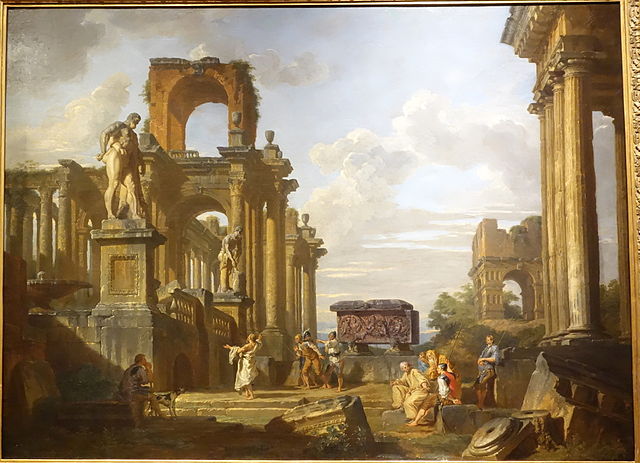
Panini, Giovanni Paolo. An Architectural Capriccio of the Roman Forum with Philosophers and Soldiers among Ancient Ruins. oil on canvas, c.  -1750 1745, https://commons.wikimedia.org/wiki/File:An_Architectural_Capriccio_of_the_Roman_Forum_with_Philosophers_and_Soldiers_among_Ancient_Ruins_…,_by_Giovanni_Paolo_Panini,_c._1745-1750,_oil_on_canvas_-_National_Museum_of_Western_Art,_Tokyo_-_DSC08515.JPG. National Museum of Western Art, Tokyo, Japan.

I posit that the Naṣarā were a type of Hanīf or Sabian that was found in pre-Islamic Arabia. Most likely remnants of Neoplatonic Mysteries from the Roman Empire, who were dispersed into Asia Minor, Persia, Arabia, and the interior of Africa. More specifically, they probably considered themselves a priestly class of the Greater Mysteries who pontificated on a number of metaphysical matters of the day, which fomented much confusion in pre-Islamic times. Let’s first look at the historical links between the Mystery Schools of Rome and religion in pre-Islamic Arabia.

Christianity and the Mystery Schools

Christianity emerged in the Roman Empire as a reviled religion, with clear Semitic roots. It was opposed by the emperors because they were considered the ultimate legal and religious authorities. They believed that there was only one religion, the Mysteries. Different schools of the Mysteries had different expressions of it based on their culture and language because religion was associated with citizenship (Ando, 2021,13). Constantine, upon his conversion to Christianity in the early 4th century was the first Roman emperor to ease the repression of Christians in the empire. By the end of the century, Theodosious would make Christianity the official religion of the Roman Empire and commence the official closing of the Mystery Schools. Justinian would continue this project of closing the Mysteries in the 6th century. In turn, many of its die-hard members who refused to convert to the state religion fled to Asia Minor, like the city of Ḥarrān, Persia, the Arabian peninsula, and the interior of Africa (Errington, 2006, 249-52).

Quraysh and the Mystery Schools

As for those who fled to the Arabian peninsula, it is possible that the Quraysh tribe was one such group. Scholars are unsure of their exact origins, but some have proposed that they were one of the groups that who fled Byzantium. This would make sense since the Quraysh only emerge in the 5th century and appear to take over the most important shrine in Arabia (Ḍayf, 1960, 49). Furthermore, prior to the prophetic mission of Muhammad, the Quraysh exhibited traits common to followers of the Mysteries. First, the Dār al-Nadwa that managed the affairs of Mecca only allowed wealthy men over the age of forty. In the Mysteries, this age was significant because it represented the age at which men attained wisdom and the position of teacher and leadership. They were also learned in advanced mathematics because they set interest rates and performed the duties of bankers. Similarly, they were also the religious authorities because they controlled the rites of the pilgrimage to the Kaʿba, which they believed to be a Saturnalia shrine. For these reasons, it is likely that there was a substantial influence on the pre-Islamic Arabs from the Ancient Mystery Schools.

Naṣārā and the Mystery Schools

When we look into the Qur’an, we find numerous mentions of Naṣārā, but never of Masīḥiyīn, a more direct translation of the word Christians. I believe this was the case because Naṣārā actually referred to a group known as the Nāṣūrati or Nasoraeans, who scholars call a Jewish-Christian Gnostic sect that emerged during the post-Christian religious milieu in the Near East (Bladel, 2017, 6). However, they are more commonly associated with the Mandaeans of southern Iraq; the only group in the world commonly labeled Sabians. Members of their priestly class are called Nasoraeans, who assiduously guard the secret rituals and doctrines of the Mandaeans, which they perceive as having a more ancient origin. Much like the Mystery Schools, the Nasoraeans function as the Greater Mysteries that requires a much more rigorous training in the secret arts, while the rank-and-file Mandaean constitutes the Lesser Mysteries that is open to those who are inclined to Gnosticism. Their doctrine consists of a worshipful regard for angels and the stars and opposition to the practice of circumcision. Indeed, they are those that many Muslim jurists, historians, and theologians identified as the last visages of the Qur’anic Sabians.

Concluding Remarks

With the above understanding, we can gather that:

1) the Nasoraeans were around and active in the Near East before and during the time of the Prophet Muhammad

2) the Nasoraeans constitute a hybrid of the Ancient Mystery Schools and Judeo-Christian beliefs and practices

3) the Nasoraean’s minority status and secretive nature explains why no “Naṣrānī” church was established in the heart of Arabia

4) if the Naṣārā are the Nasoraeans, then this is cause to reconsider the identities of the Yahūd (or “those who became Jews”) and the Majūs

Linking the Naṣārā of the Qur’an to the Nasoraeans of the Mandaean religion will introduce us to a different way of understanding certain arguments put forth in the Qur’an. I will show in future posts how verses that discuss the angels and pre-Islamic ideas about nature and prophethood are actually a polemic against the positions of the Nasoraeans. In addition, we will see that the Qur’an’s criticism of other religions is based on the degree to which they adopted beliefs associated with the Nasoraeans and other Sabians, which were remnants of the Ancient Mystery Schools in Islamic lands. The Naṣārā who were deemed as Christians were those who were closer to the Ḥanīfs in their beliefs. Not only will we witness the historical implications of this information, but we will begin to see how these doctrines continue to shape the current religious discourse.

References

Ando, Clifford. “Religious Affiliation and Political Belonging from Cicero to Theodosius.” Acta Classica, vol. 64, no. 1, 2021, pp. 9–28. https://doi.org/10.1353/acl.2021.0013.

Bladel, Kevin Thomas Van. From Sasanian Mandaeans to Ṣābians of the Marshes. Brill, 2017.

Ḍayf, Shawqi. Al-ʿAṣr al-Jāhilī. 11th ed., vol. 1, Dār al-Ma’ārif, 1960.

Errington, R. M. Roman Imperial Policy from Julian to Theodosius. University of North Carolina Press, 2006.

Islam and the Ancient Mystery Schools (Part 6)

In my post, Islam and the Ancient Mystery Schools (Part 5), I stated the theory of the contemporary Iraqi thinker, Fadil al-Rabi’i, that identified the Nasara of the Qur’an as the Hanifs. In this post, I will examine the linguistic evidence for his theory.

Raphael Tuck & Sons, The Holy Land. Nazareth, Fountain of the Virgin, Post Card, 1903, The Newberry Library, https://archive.org/details/nby_LL8170/page/n1/mode/1up.

Al-Rabi’i is from the line of scholarship that does not believe that the prophet ‘Isa/Jesus (peace be upon him) was from Palestine. Therefore, he rejects the claim that the word Nasara is related to the Palestinian town of Nazareth, the purported birthplace of ‘Isa. If this was the case, he argues, then everyone from this area would be called Nasara regardless of their religious affiliation. Jews, pagans, and other religious groups who happened to be from this town will thus be labeled Nasara, but this was never the case.

He subsequently follows up on the problematic etymology of the word initiated by Arabic language scholars such as Ibn Manzur (d. 1311/1312), author of the authoritative Arabic lexicon, Lisan al-“Arab. Al-Rabi’i finds doubt in Ibn Manzur’s treatment of the word. When discussing the words Nazareth and Nasara under the root nasara (ن – ص – ر), Ibn Manzur adds the statement of Ibn Sidah’s that this is a weak opinion and rare for a relative adjective (nisba) to take this form.

In addition, al-Rabi’i identifies the verb, ansara (أنصر), to be uncircumcised, as the origin of the word Nasara. In a hadith of the Prophet Muhammad (prayers and peace be upon him), he stated:

You should not let an uncircumcised man lead you, nor one who holds his bladder or one who is habitually delusional.

The word anṣar, as used in this hadith, means uncircumcised. Al-Rabi’i believes that the word Nasara is really derived from this aspect of the word and was thus used for any group that did not practice circumcision. These groups sought to distinguish themselves from the Jews. Although, it was used for Christians and pagans who did not practice circumcision, it remained a term reserved for the Christians who continued not to practice it or did not see it as a religious duty.

Interestingly, some Arab tribes who rejected circumcision, practiced slitting the ears of a she-camel as a symbolic alternative to circumcision. This can be witnessed in the practice of the people of Salih, who were commanded not to abuse the she-camel that God provided to them.[1]

While al-Rabi’i makes some convincing claims, he also complicates our understanding of the Hanifs. According to this information, the Hanifs, if synonymous with Nasara, did not systematically practice circumcision as is commonly thought. Rather, it was left optional, leaving some to continue the practice and others to abandon it altogether. Al-Rabi’i’s theory is significant to unfolding the mystery of the Hanifs, but it is not conclusive. Yet no conversation on pre-Islamic religious history can be complete without an exploration of Sabianism, which I will undertake in a future post.

[1] Fadel al-Rabi’i, Al-Masih al-Arabi: Al-Nasraniyyah Fi al-Jazira al-Arabiyya Wa al-Sira’ al-Bizanti al-Farisi (Beirut: Riad El-Rayyes Books, 2009), 27-31.

Afrocentric Madness: Anti-Religiosity in Afrocentric Thought

Afrocentricism is a valid methodology of looking at history. With the idea that all history is subjective (HIStory, as they like to say), it is worth looking at history from the perspectives of Africans. However, the popularization of Afrocentricism in African American communities throughout the 20th century, and now into the 21st century, has taken a highly anti-religious tone, which has resulted in the dismissal of anyone associated with the three main Abrahamic religious paths. In this post, I will address some aspects of the methodology of those who have usurped Afrocentricism and highlight some of their fallacies using a video lecture from the 2000’s by Dr. Phil Valentine.

Classic Fallacies of Afrocentricism

In an attempt to avoid the pitfalls of religious communities, Dr. Phil Valentine, like others of his ilk, falls into a classic fallacy by regurgitating anti-religious rhetoric. His first course of action is to attack the history of the Christian Church in Europe and how it was used to colonize and enslave Africans. Then he looks at the Black Christian today, often attacking his character and psychology. Finally, he turns to other religious expressions adopted by African Americans, like Islam and the Hebrew Israelites.

Most Afrocentric thinkers make this false-equivalence, refusing to recognize: 1) the complex history of Christianity, 2) the complex history of Islam and other religions, 3) their own blind-spot regarding racial identity, and 4) their biases and prejudices.

Dr. Phil Valentine speaks on religion.

1) Failure to recognize the complex history of Christianity

  • Afrocentric thinkers do not always recognize that Christianity had “Western” versions and “Eastern” versions that diverged pretty early in its history. These doctrinal differences drew a wedge between them philosophically and geographically, resulting in completely different historical experiences.
  • Acknowledgment of these various forms of Christianity are almost always along racial lines rather than doctrinal lines. However, doctrinal differences under the Roman Empire at the advent of Christianity often trumped racial differences.

2) Failure to recognize the complex history of Islam and other religions

  • Islam has its own complex history that is starkly different from that of European Christianity.
  • Direct experience with God was never discouraged.
  • Power of interpretation was regional and lied with whoever possessed the knowledge, not upon charisma, descent, race, class, etc. (although debates existed)
  • There was no wide-scale dark age and rejection of science, systematic disenfranchisement of women and minorities, or even slavery based solely on race.
  • Not all societies see religion as a means for political and social control as it is imagined in the West.

3) Afrocentric blind-spot concerning race

  • Almost all Afrocentrics operate on a construct of race invented in the United States.
  • This is the duality of Blackness and Whiteness.
  • That Blackness is equivalent to African and Whiteness is equivalent to European.
  • Any noticeable amount of African descent counts as Black, except for Arabs.
  • Black Arabs must choose to identify either with their “Black African mothers” or with their “White Arab fathers.”
  • There is no room in this construct for a “Black” person to see oneself as possessing multiple identities or to reject them altogether. Any lack of conformity to this construct evokes ridicule.

4) Biases and Prejudices

  • Most Afrocentrics are Egyptophiles and have an unquestioning reverence for Kemet (ancient Egypt). This causes them to ignore information about it that might seem distasteful to them like homosexuality, violent conquest, honor killings, etc.
  • They are theoretically in favor of Blacks and Africans in all they do until their thinking and actions do not fit the mold that they have constructed. Therefore, African Christians and Muslims are all brainwashed; Africans that marry outside of their race are all self-hating; etc.
  • They are prejudiced against:
    • Europeans for slavery and oppression in America.
    • Arabs primarily for corner stores in Black neighborhoods, secondly due to post-9/11 propaganda, and tangentially for their history of slavery in East Africa.
  • They are prejudice against all Muslims for the actions of Arabs and Black Christians for the actions of Europeans.

Kemetan Exceptionalism

At one point in Dr. Valentine’s lecture, the crowd turns its attention directly to Islam and Muslims. One can observe that he does not know much about Islam and he would rather avoid the topic, but since audience members ask, he is compelled to say something. At around the (1:04:15) mark in the video, he makes the comment:

“Islam is an off shoot of the same triumvirate. Judaism, Christianity, and Islam all have the same prophets. If they share the same prophets, they share the same bullsh*t.”

After being prodded with specifics, Dr. Valentine states that the Muslims took the act of women covering from the ancient Africans. He said that it was done for protection from the sun and to guard against male pheromones that would cause them to ovulate. Then he said that it degenerated into something to keep a woman down. When addressing men praying in front and women in the back, he said that was also taken from Kemet. In his interpretation, women behind men meant that they were the support. He goes on to say that when the Arabs came and saw the hieroglyphs, they interpreted it to mean subservience based on their cultural values.

While Dr. Valentine appears to confirm the “correctness” of these Islamic practices in as much as they are conform to his brand of scientism and Kemetanism, he denies Muslims the intellectual capacity for having a similar reasoning. He assumes that the Muslim woman’s veil and her praying behind men are necessarily oppressive when coming from Muslims and cannot be interpreted in any other way. One person in the crowd states that he heard from a Muslim that women praying in front of or along side men could be a distraction, but he does not address this comment.

The conversation devolves into a rant against Christianity. In the process, he mentions a hallmark that distinguishes cultural nationalists from revolutionaries. He believes that at some point in the future when all Black people recognize their true selves, only then will we live happily ever after. This grand approach is not all dissimilar from some religious dogma that posit that everyone should believe the same in order for us to live happily ever after. It can also be argued that such a unity of thought and belief is pure fantasy and has never been achieved along racial or religious lines in history.

Revolutionaries, however, tend to take a different approach. They meet people where they are at and do not obligate them to buy into a particular paradigm before attempting to make a positive impact on people’s lives. Conflicts and controversy have always existed, and religious movements have historically helped people wade these waters. In waiting for an imaginative collective consciousness, Afrocentrics and other cultural nationalists fix a permanent chip on their shoulders and ensure that they will always have a reason to not take action.

Islam and the Ancient Mystery Schools (Part 5)

On the topic of the Hanifs, I have come across an interesting perspective worth sharing. It is a theory emanating from the contemporary Iraqi scholar Fadil al-Rabi’i, who has presented a fresh perspective on Arabian Christianity in his 2009 publication, Al-Masih al-Arabi: al-Nasraniyyah fi al-Jazira al-Arabiyya wa al-Sira’ al-Bizanti al-Farisi (The Arab Messiah: Christianity in the Arabian Peninsula and the Byzantine-Persian Conflict).

According to al-Rabi’i, the Hanifs were a collective of people searching for the religion of Abraham. Their only common denominator was their disillusionment with the pagan practices of Arabia as well as the philosophical Christianity out of Byzantine (Rome) that was gaining hegemony wherever they ruled. However, al-Rabi’i notes that they varied in time, space, and beliefs, as he counts among them the likes of As’ad ibn Karb al-Himyari, a king in Yemen, Abu Bakr, and Waraqah ibn Nawfal (al-Rabi’i, 16).

In addition, al-Rabi’i is of the opinion that all Hanifs were a type of Nasara, but further distinguishes the Nasara (the Qur’anic term for Christians) from Masihiyyin (Hellenistic Christianity, which was influenced by Greek philosophy). The Arab Nasara, in turn, followed a simple, monotheistic religion, in the way of the Prophet ‘Isa and free of philosophical speculation. He blames the philosophical undertones of the Hellenistic-era for what would later be deemed Christianity, which made the teachings of ‘Isa into a new religion that deified him. Due to the minimal and quietist presence of the Nasara in Arabia, it became overshadowed by the philosophical Christianity espoused by the Holy Roman Empire (al-Rabi’i, 14).

There were two historical elements that led to the prevalence of Hellenistic Christianity in Arabia:

  • the evolving philosophical debates on the nature of Christ
  • Constantine’s acceptance of Christianity and making it the official religion of Rome (al-Rabi’i, 17)

Al-Rabi’i asserts that the Nasara hid among the Christian monasteries throughout the Arabian peninsula. The true Nasara were therefore indistinguishable from the Hellenistic Christians, because they generally practiced their religion in isolation. (al-Rabi’i, 18) If we take the opinion that the Hanifs were the inheritors of the Mystery Schools, and all Hanifs were Nasara, this would corroborate James’ assertion that the survivors of the Mystery Schools fled into Arabia, Asia Minor, and the interior of Africa. (James, 31-32).

If we take this perspective as true, it fills in some gaps concerning the Hanifs. Their practices are largely unknown to us because they worshipped in secret, fearing reprisals from the heavy-handed theocratic Byzantine Empire. In addition, they were not simply a throw back to the ancient past, as one might conclude by their search for the religion of Abraham. Rather, they were aware of the religion of Abraham by following the prophet of their time, ‘Isa. Yet, the intellectual and military conflicts of the time led to distortions in his teachings, which the Hanifs/Nasara sought to avoid by distancing themselves from the influence of the state and the official church of Rome.

This connection between the Nasara and the Mystery Schools is further substantiated by the Coptic writings on the walls in the necropolis of Thebes. Anyone who has been to the site in Luxor, Egypt knows that it goes by the name Dayr al-Bahri (Monastery of the Northern Wind) because the tombs were used as monasteries and a place of refuge when they were fleeing Roman persecution.

Coptic writing on the tombs of Dayr al-Bahri.

It is also worth noting that Luxor is located in the southern part of current-day Egypt, which is home to its largely Nubian population. Christianity had taken a firm root in Nubia and Abyssinia by the advent of Islam in the 7th century. We also know that the Prophet Muhammad referred to this area as “a land of truth” when he encouraged his early followers to take refuge there (Ibn Hisham, 407-17).

We can therefore conclude that the Mystery Schools survived in the form of the Nasara who lived in Africa, Arabia, and Asia Minor. Due to persecution, isolation, and frequent migration, the chain of transmission to the Prophet ‘Isa was lost or distorted and ultimately their beliefs were subsumed or otherwise influenced by the pervading philosophical debates of the time about the divinity of Christ. This broken chain opened a new epoch for the restoration of man’s original spiritual path.

Sahih InternationalYou will surely find the most intense of the people in animosity toward the believers [to be] the Jews and those who associate others with Allah; and you will find the nearest of them in affection to the believers those who say, “We are Christians.” That is because among them are priests and monks and because they are not arrogant.

References

Al-Rabi’i, Fadel. Al-Masih al-Arabi: Al-Nasraniyyah Fi al-Jazira al-Arabiyya Wa al-Sira’ al-Bizanti al-Farisi. Beirut: Riad El-Rayyes Books, 2009.

Ibn Hishām, Abū Muḥammad ʻAbd al-Malik ibn Hishām ibn Ayyūb al-Ḥimyarī. Al-Sīrah al-Nabawīyah. al-Juzʼ al-Awwal. Edited by Majdi Fathi Al-Sayyid. 1st ed. Cairo: Dār al-Sahāba lil-Turāth, 1995.

James, George G.M. Stolen Legacy: Greek Philosophy Is Stolen Egyptian Philosophy. New York: Philosophical Library, 1954.