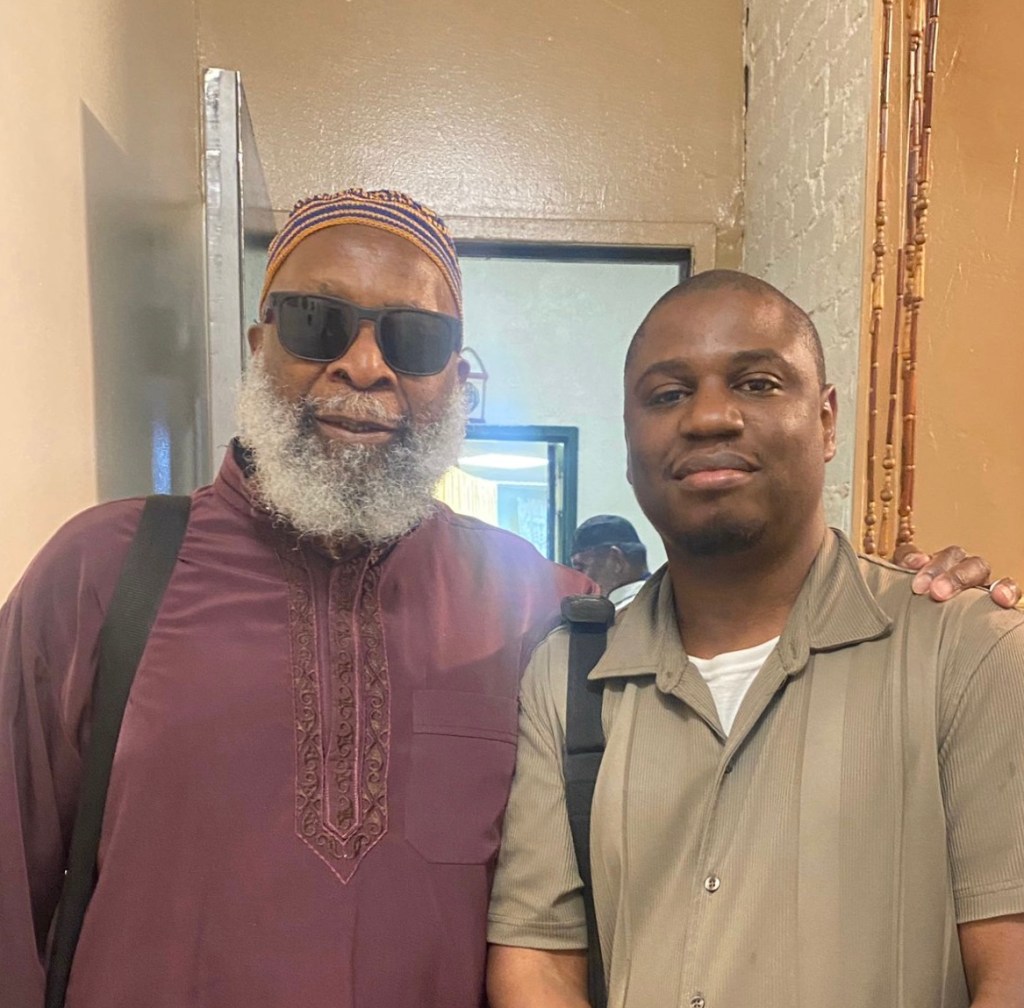
The Conscious King: Why did Martin Luther King Write About the Mystery Schools?

Martin Luther King Jr. was a dedicated freedom fighter; who lived and died in the pursuit of the liberation of the so-called African American. As time passes, generations have less of a connection with what he truly represented even as studies on his life and legacy become more nuanced. I would hope that our communities can see MLK for who he really was and how we can build upon his work rather than the caricatures of him that have originated both in and outside of African American communities. I hope that we can move beyond King “the Uncle Tom,” King “the Pacifist,” King “the Charlatan,” and the latest, King “the Hotep.” These caricatures of MLK serve no purpose but to distract people from the hard work of continuing his legacy. In this post, I will briefly summarize MLK’s writing on the Mystery Schools and Christianity, for which some members of the Conscious community take as proof of his “consciousness.” I will then dismiss their claims and speak to the reality of MLK’s intellectual legacy.
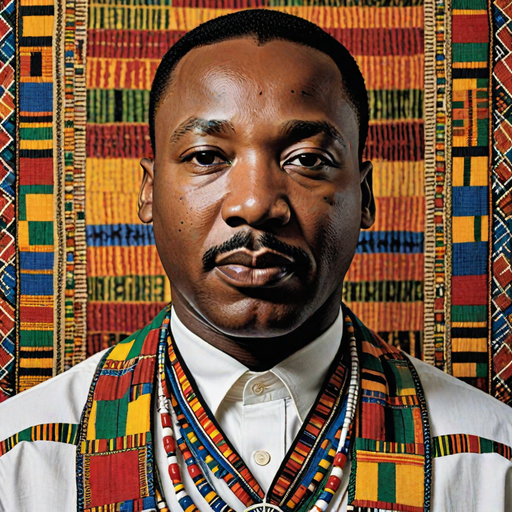
MLK on the Mysteries

At the tinder age of 20 or 21, a young MLK, half way through his graduate seminary degree, wrote a paper titled “The Influence of the Mystery Religions on Christianity.” In this piece, the young Dr. King is making the argument that a number of mystery cults of the Greek and Roman world influenced aspects of Christian thought. While this term paper is not an exhaustive listing of these influences he puts forth five cults in which he has identified influence: 1) Cybele and Attis, 2) Adonis, 3) Osiris and Isis, 4) Eleusis, and 5) Mithras. In the Cybele and Attis myth along with the Osiris and Isis myth from Egypt he sees congruences in the idea of the virgin mother and savior son, and the trinity. In the Eleusis myth he equates the spring celebration of a new life with the modern Christian Easter celebration of Christ’s rising from the dead and promise of salvation. And in Mithraism he finds several similarities regarding Sunday as the holy day, celebrating the birth on December 25, the practice of baptism, the concept of a convert being reborn, the struggle and ultimate triumph of good over evil, the belief in a mediator between God and man, among other things. He also mentions that Paul was raised in Tarsus, one of the centers of Mithraism, and insinuates that these beliefs found their way into the teachings of Paul.

Furthermore, the astute reader may notice an accute contradiction in this paper. In his introduction MLK appears to state that there is a direct relationship between the beliefs and practices of the Mystery religions and Christianity. See the following two statements:

“This triumph [over the Mystery religions] may be attributed in part to the fact that Christianity took from its opponents their own weapons, and used them: the better elements of the mystery religions were transferred to the new religion.”

“It is inevitable when a new religion comes to exist side by side with a group of religions, from which it is continually detaching members, introducing them into its own midst with the practices of their original religions impressed upon their minds, that this new religion should tend to assimilate with the assimilation of their members, some of the elements of these existing religions.”

Yet, elsewhere in his paper he is careful not to characterize this influence as a deliberate affectation, as he states in the conclusion: “it was generally a natural and unconscious process rather than a deliberate plan of action.“ This view is undoubtedly shared (or enforced) by his professor, who commented:

“It is not so much that Christianity was influenced by the Mystery Cults, or borrowed from them, but that in the long process of history this religion developed. It, Christianity, is the expression of the longing of people for light, truth, salvation, security.”

While MLK was not the first or the last to make these claims, it is particularly odd to find that he wrote them. After all, he was from a family of Baptist clergymen and was himself a Baptist minister. This sparks many questions about MLK’s motives to write such a paper or how this knowledge carried over into his leadership of the African American community.

MLK and the Black Conscious Community

While many may be surprised that MLK ever wrote about the Mystery Schools, this idea has circulated through some Black Consciousness circles. Yet, they pay little attention to the full scope of his paper and only focus on what he had to say about the ancient Egyptian Mysteries (i.e., the Osiris and Isis myth). Their point is to make MLK a closeted “hotep,” or at least a Christian who viewed his Christianity as a syncretic veil of this ancient African spirituality. They might even cite the fact that he did not do a lot of calling to the Christian faith nor did he preach much about common themes found in a church such as salvation through the blood of Jesus, the Holy Ghost, sin, and the like. Not only are the Conscious characterizations of MLK far-fetched, but they are based on an extremely selective reading of a term paper MLK wrote for a course when he was 21 years old! Indeed, other influential Black intellectuals wrote more extensively about ancient Egypt like WEB DuBois, Carter G. Woodson, William Leo Hansberry, etc. So why the hoopla about MLK?

Conscious characterizations also ignore other potential influences in his life such as membership in the Greek-letter fraternity Sigma Pi Phi (the Boulè), the pervading ideas of Theosophy and perennialism, as well as Freemasonry, who all had a history of introducing Americans to concepts similar to MLK’s topic in this paper. Despite any criticisms the Black Conscious community might have of these groups, it is possible that MLK imbibed information about the Mysteries from one of these channels.

It is also possible that he is only responding to academic questions of his time. Jan Bremmer mentions that scholars in the early 20th century were enthralled with the question: to what extent did the Mysteries influence Christianity? She credits Isaac Casaubon (1559–1614), a medieval philologist, with starting this line of questioning (although unnamed scholars prior to him also held this view). Casaubon’s works were later revived in the 20th century by Dame Frances Yates (1899–1981) and Fritz Graf (1922-2017). These issues would be debated by the likes of Austrian Theosophist Rudolf Steiner (1861-1925), German Egyptologist Eduard Meyer (1855-1930), and English religious scholar Arthur Darby Nock (1902-1963) (Bremmer, 2014, pp. 142-148). George G.M. James also published his pivotal Afrocentric work, “Stolen Legacy” in 1954. So MLK was not doing anything special in the broader scope of things.

MLK’s Perennial Legacy

Perhaps, what I find to be more interesting from this paper are the two questions he ends with:

The staggering question that now arises is, what will be the next stage of man’s religious progress? Is Christianity the crowning achievement in the development of religious thought or will there be another religion more advanced?

He hints to an acceptance of evolutionary perennialism. He appears to ask: with the advancement of mankind, will there also be an advancement in religious thought beyond Christianity? Of course, a Muslim would answer in the affirmative and claim this advancement for Islam. Regardless of the answer, he does not seem to be calling to a regression in religious thought that will take us back to the ancient Egyptian religion and ancestor worship.

It should come as no surprise that one of Black America’s most prodigious leaders should be astute on certain details of history. The great Rev. Dr. Martin Luther King Jr. was known for his leadership in the Civil Rights Movement and his commitment to non-violent direct political action, but before that he qualified himself by engaging with the salient ideas of his time. Furthermore, it was confirmed in the early 1990s that he had plagiarized parts of his doctoral dissertation at Boston University, so his legacy as a scholar is tarnished. However, MLK is not known for his scholarship or teaching, but for his oratory, activism, and leadership and that should be the criteria by which we judge his legacy.

References

Bremmer, Jan N. Initiation into the Mysteries of the Ancient World. Münchner Vorlesungen Zu Antiken Welten 1. Boston: De Gruyter, 2014.

Garrow, David J. “King’s Plagiarism: Imitation, Insecurity, and Transformation.” The Journal of American History 78, no. 1 (1991): 86–92. https://doi.org/10.2307/2078086.

King, Martin Luther. “The Influence of the Mystery Religions on Christianity.” Essay. The Martin Luther King, Jr. Research and Education Institute, November 29, 1949. https://kinginstitute.stanford.edu/king-papers/documents/influence-mystery-religions-christianity.
X Marks the Spot: Malcolm X, the Bridge Between Sabians and Hanifs

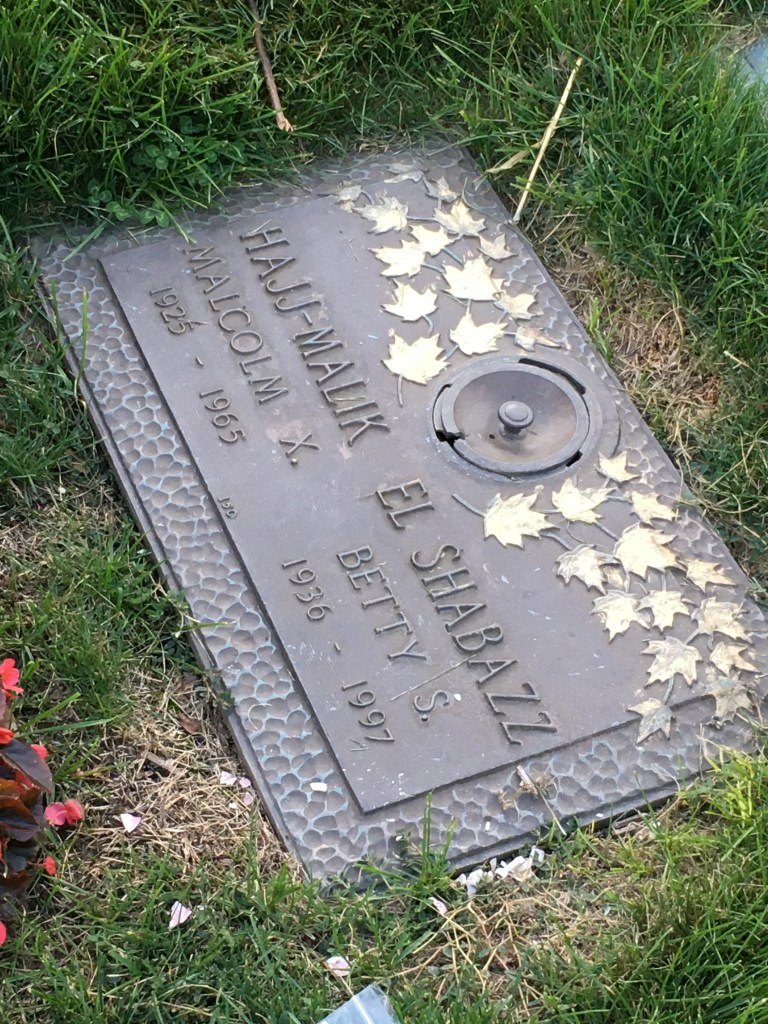
Sunday May 19, 2024 marked the 59th Ziyara (commemorative visitation) to the grave site of El Hajj Malik Shabazz (Malcolm X) and Dr. Betty Shabazz at Ferncliff Cemetary in Hartsdale, NY. As many know, the African American community cannot agree on many things but Malcolm is a rallying point for the forward-thinking trajectories within the community. This was evidenced by the peaceful coexistence of Sabian and Hanif traditions practiced by the intellectual, political, and spiritual offspring of Malik Shabazz at the annual Ziyara.

It was not always this way. In the aftermath of Malcolm’s murder it was a struggle to to keep his name alive let alone his ideas and his work. Only a few brave souls had the guts to open their doors and speak at his funeral. Joseph E. Hall and the Unity Funeral Home allowed the viewing of his body, the Faith Temple Church of God in Christ, allowed his wake, Shaykh Hesham Jaaber, who along with Shaykh Ahmad Hassoun washed and wrapped his body according to the Islamic tradition, Ahmad Osman, Ossie Davis who spoke, and the list of attendees like the late John Lewis, James Farmer, Andrew Young and many others… Their names will be forever etched in history. Similarly, Malcolm’s older sister and confidant Ella Collins sought to keep an accurate depiction of his character, philosophy, and direction by holding the annual Ziyara.

I will point out that these brave people were Hanifs. Despite the association of Hanif religions with conformity and reactionary politics the Black resistance to oppression required the strength and courage only inspired by true faith. That was the place of Malcolm, Betty Shabazz, Ella Collins, Martin Luther King, James Farmer, Mutulu Shakur, Sekou Odinga and countless other freedom fighters. Many of whom were practicing Muslims and Christians.

The Sabian dimension, like their ancient counterparts, has always contributed to the philosophical development of our people. A philosophy that pushes the boundaries of intellectual inquiry and imagination of how Africans can be in this world spiritually, mentally, and physically. Their contributions on the Black intellectual tradition should not be disregarded, as it was the likes of John Henrik Clarke and Dr. Ben Jochanan (both intellectual offspring of Malcolm), who forged a path for Black Studies in the universities to the chagrin of white intellectuals who controlled the narrative on African history. They were able to pry open the  grip that white Africanists had on the field prior to the 1960’s. Their contributions continue to reverberate with regards to the study of ancient Egypt (Kemet), which Africans on the continent and in the Diaspora rightfully claim a connection to despite the protests of some modern Egyptians.

This is not to say that they did not have lapses in knowledge, especially regarding the history of Islam. Their lack of contact with learned continental African Muslims and lack of acquaintance with the Islamic intellectual tradition in Africa and around the world has led to their over reliance on the sources of white Africanist and Orientalist scholars. Similarly, their logical fallacies that equate the Islamic experience with the Christian experience and inability to view things outside of the American paradigm has crippled their understanding of Hanif religions and led to an uncritical embrace of Sabian religion and spiritual thought. Their rejection of religion, while claiming a form of “spirituality,” has warranted them the label Sabian, whose etymological meaning refers to “one who has left religion.”

Beyond the ceremonious nature of the gathering, there was undoubtedly a political message. One that stood on the legacy of the Black Radical Tradition. This was orchestrated by Prof. James Small, a living progenitor of Malcolm. Not only was he the body guard of Malcolm’s older sister Ella Collins, but he was also imam of Muslim Mosque, Inc. and a leader within the Organization for Afro-American Unity (OAAU), the two organizations started by Malcolm before his death. Not only that, but he later acquired authorizations in the priesthoods of several African systems of spirituality and served as a point person for many Black revolutionary activists and freedom fighters since the 60’s. He is therefore an authority in African American Sabian, Hanif, and radical political traditions. As he emceed the event, he stressed the universality of these traditions and some of the speakers’ connection to Islam. He introduced the all-star round up of speakers consisting of scholars, revolutionaries, and leaders of the past and the future, like Dr. Leonard and Rosalind Jeffries, Sundiata Acoli, Pam Africa, Mfundishi Jhutyms, Jihad Abdul Mumit, Baba Zayid, Brother Reggie, Adéyínká “Muhammad” Mendes, and others. They shared prayers and spoke in brief about the legacy of Malcolm. Imam Talib Abdurrashid was noticeably absent from this gathering due to health issues, but members of the Mosque of Islamic Brotherhood (MIB) in Harlem as well as the Jamaat of Shehu Uthman Dan Fodio were delegated to represent him in his absence.

A final point was made about the link between the Pan African struggle and that of Palestine. Contrary to the sentiments of Pan African social media influencers and personalities, who claim that Palestine is not a “black issue,” the veterans and students of Malcolm say it is, because the Black radical tradition stands for justice everywhere. Additionally, we should not allow morally degenerate politicians and media executives to frame our issues for us. The issues of Palestine are not race, religion, terrorism, anti-Semitism, or even freedom of speech. Rather they are colonialism, the right to self-determination, and the right to self-defense. Likewise, these were the issues of the Black Power struggle in the U.S.; a struggle I would deem as successful in many ways. Although police brutality remains a salient issue for many Black communities, there are undoubtedly marked changes from the Jim Crow era to now that almost no elder will deny. But those improvements were not made from the kindness of the hearts of politicians and law enforcement, they were made from decades of political pressure applied by the likes of Martin Luther King and Malcolm X and those who upheld their intellectual, political and spiritual legacies.

Hamitic Arabs: A Revolutionary Approach to Race and Resistance

As we close out Black History Month 2024 with the trials facing Gaza, the West Bank, and throughout the Muslim world, Arab world, and Africa, I would like to highlight a movement that is often not acknowledged, but serves as one of the bridges between Pan-Arabism, African American Muslims, and social justice. Addeynu Allahe Universal Arabic Association is an American orthodox Muslim movement that has operated below the radar for almost a century and has an interesting take on identity that might raise eyebrows in Black and Arab communities alike. However, as we will see, some of its progeny have been at the forefront of Black and Third World liberation movements. In this post, I will examine a manuscript I obtained from Abdurrashid Ishaq, a member of Addeynu Allahe who attended my Arabic classes in Greensboro, NC in 2012. His memory was fading and he could not tell me much about the document before he returned to Allah in 2019, but I will do my best to analyze the anonymous text and speak on one aspect of Addeynu Allahe’s legacy.

“Who Am I?”: A Forgotten Treatise on Black American Identity

The document is a manuscript of perhaps a talk given in 1969. It is directed to Elizabeth, NJ Board of Education following student requests to teach “Black Heritage” in its public schools. It consists of 28 pages, typed with a typewriter, containing prose, footnotes, a chart, and appendices of quotes from various Orientalist authors that elucidate some aspect of Arab and Hamitic identity.

The document was published a little over 30 years since the founding of AA in 1938 and almost 10 years after the death of Professor Muhammad Ezzeldeen. It presents him as a son of “Hamitic Arab” parents and someone whose post-secondary education came from traveling to countries such as Morocco, Libya, Turkey, and Egypt. He is even said to have worked as an Egyptologist and obtained a doctorate from al-Azhar University.[1]

With regards to identity, the author seeks to deconstruct the aptness of the terms Negro and Black. Negro, he says, is equivalent to the Latin word for dead and Black is insufficient because it conceals the national heritage of our people. Rather, he sought to connect so-called African Americans to Ham, son of Noah, who represents ancient Egypt, Ethiopia, and the rest of Africa. On top of that, he recognized the connection between the ancient Egyptian language and Arabic.

The author also provides a linguistic analysis of the Arabic words in question. He pulls from Hans Wehr’s Arabic Dictionary to demonstrate the positive connotations to the root s-w-d (سود) from which the word black aswad (أسود) is derived. He does the same with the word Ham, assigning it to the root ḥ-m-y (حمي), which connotes protection, rather than ḥ-m-w (حمو), which connotes warmth. Nor does he connect it with the ancient Egyptian root Kham (black) as in Khemet.

Additionally, the author takes a brief historical approach to this identity. He discusses Moorish exploration to the Americas prior to Columbus and Muslims taken as slaves. He concludes by saying their origins were from parts of Africa, Arabia, Asia, and Europe that were ruled by Hamites and visually maps this genealogy in a chart.

Chart of Hamitic genealogy from “Who Am I?”

An Analysis of Language and Identity

This document is significant because it is a rare approach to identity; one that is controversial. Some debate the Hamitic Arab identity on grounds that it seeks kinship with a people who are not “Black” or may even be “anti-Black,” which is tantamount to cultural apostasy. Others my decry it as another form of cultural appropriation perpetrated by a lost and confused people. Others might take issue with its use of antiquated Biblical terms or the fact it conflates ethnic identity with religious identity.

Cultural Apostasy

With regards to the critique that the Hamitic Arab approach is cultural apostasy, the author makes it clear that that is not the case. Assuming that Black is an appropriate descriptor, the author sought to show that it has a negative connotation in English, but a positive connotation in Arabic. Similarly, he acknowledges that Bilād al-Sūdān was the name of the lands in Africa from which our ancestors came. This further solidifies the historical continuity between so-called African Americans and the Blacks of Africa.

Arabism

While the thought of African Americans calling themselves Arabs is an odd proposition, and is certainly not explained in depth in this piece, on face value can be considered cultural apostasy from an African American perspective and cultural appropriation from an Arab perspective. Yet the pretext for such an assertion comes from the Arabic saying that is often mistaken for a hadith: an Arab is whoever speaks the Arabic language (من تكلم بالعربية فهو عربي). To Arabs, this is a much more sound definition of Arab identity than one that favors biological lineage. Arabs are the descendants of people who were not biologically Arab, which would thus cause a paradox. So the criteria of Arabness or ʿUrūbah is proficiency in spoken Arabic. Perhaps the unintended result of such a definition is that it allows people from various backgrounds to acquire an Arab identity by acquiring the language. This is how many populations in the Levant and North Africa were able to acquire an Arab identity without intermarriage or conversion to Islam. This further debunks assertions that Islam is an Arab religion.

Terminology

The reliance on the Biblical term Hamitic can be considered antiquated and difficult to define. It is interesting that the author prefers to define Ham by an Arabic definition rather than a Hebrew or ancient Egyptian definition. His choice of etymology is also unconventional. Hans Wehr has an entry for Ham that is not at all informative, but he chose to relate it the word for protection. I am not convinced that the connection between the two is verified linguistically.

We generally understand that Ham from the Bible was the son of Noah who is considered the progenitor of the civilizations and people in which dark-skin dominates, Cush, Mizraim, Phut and Canaan. What the text does not address is the so-called “Curse of Ham,” which Noah actually pronounced on Canaan after Ham supposedly sodomized his father or witnessed his nakedness while he slept in a drunken stupor, according to the Biblical narrative. There is no such reference in the Arabic scripture and is categorically rejected by Islam, which upholds the piety of all the prophets of God. No doubt a Christian audience may have pause in embracing a Hamitic identity, not to mention an Arab one.

Ethnicity or Religion

Salahdeen Shakur (Photo credit: Stephen Shames)

Another criticism of the author’s approach is that it focuses primarily on ethnic identity rather than a religious identity or morality. The author does not explicitly connect this inherited identity to spirituality although it underlies his argument. Perhaps, it is because he was addressing the Board of Education, a government entity that cannot endorse religion, that he is silent on this aspect. Or perhaps, during the 60’s, when Islam was not known to most African Americans and its most popular expression was heterodox, it was preferable not to get into specifics. Whatever the reason, the author does not bridge that gap despite its religious undertones.

In total, the entire philosophy of Addeynu Allahe cannot be gleaned from this one piece. However, we get a keen look into the author’s thought process and the tools by which he arrives at his conclusions concerning the true identity of African Americans. While on the surface, his conclusions seem to endorse cultural apostasy, promote Arabism, make use of problematic terms, and conflate between ethnicity and religion, he is debating and drafting an ontology of racial discourse that runs counter to the unquestioned status quo discourse on race. Perhaps this does not sound revolutionary nowadays, the truth of their legacy is to the contrary.

A Revolutionary Legacy

I gained some clarity on the contents of this document from the American Muslim Centennial Banquet held in Edison, NJ February 17, 2024. Shaykh Muhammad Jaaber’s talk followed the same historical sequence as the document updated with newer information and more recent figures in the history of Islam in America. His presentation highlighted the presence of Addeynu Allahe and orthodox Muslims in the fabric of Black history.

Just a month before, I attended the funeral of Baba Sekou Odinga, which was held at Brooklyn’s Masjid At-Taqwa. It was attended by his immediate and extended family, the local Muslim and conscious community, and a cohort of the living luminaries of the Black liberation movement, like Baba James Small, Dhoruba Bin Wahad, Bilal Sunni Ali, Dr. Kokayi Patterson, and many more. Baba Sekou is remembered as one of the liberators of Assata Shakur and member of the celebrated Shakur family and Black Liberation Army (BLA). However, it might be easy to overlook his spiritual lineage, which goes back to Prof. Muhammad Ezzeldin.

Baba Sekou and I at Masjid M.I.B. in Harlem (17 June, 2023)

El-Hajj Salahdeen “Aba” Shakur was a member of both Addeynu Allahe Arabic Association under Imam Hesham Jaaber and Malcolm X’s Organization of Afro-American Unity. He was the father of the revolutionaries, Zayd Malik Shakur and Lumumba Shakur. As members of their circle embraced Islam and political consciousness, they were absorbed into the Shakur family similar to the mawālāt system in early Islam in which Arab Muslim tribes would adopt non-Arab Muslim groups, eventually absorbing them into the tribe. Baba Sekou was from that circle and upheld his commitment to the political struggle as well as to his Islam until his death.[2]

The Shakur tribe of Hamitic Arabs have militantly stood against the oppression of Black people in the United States as well as oppressed people around the world. They serve as the bridge between the younger generations and the generation of Prof. Ezzeldeen, Malcolm, Shaykh Daoud Faisal, and our Maroon ancestors, merging social justice with the moral rectitude of Islam. Much of this story has yet to be told.

Notes

[1] It has yet to be determined the influence of the Young Muslim Men’s Association (Jamʿīyat Al-Shubbān al-Muslimūn) in Cairo, which sought to revive the Arab identity and culture in the early half of the 20th century. If he was involved with this organization during the 1930’s when he was there, he would have rubbed elbows with the likes of a young Maḥmūd Shākir and ʿIzz al-Dīn al-Qassām, two figures who would defend the Arab world in drastically different ways.

[2] Special thanks to Akil Fahd for compiling much of this information.